 Dorry Archiles
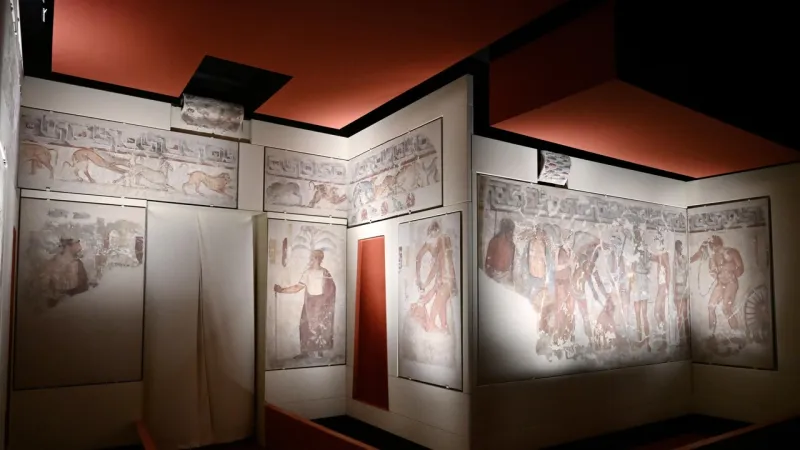
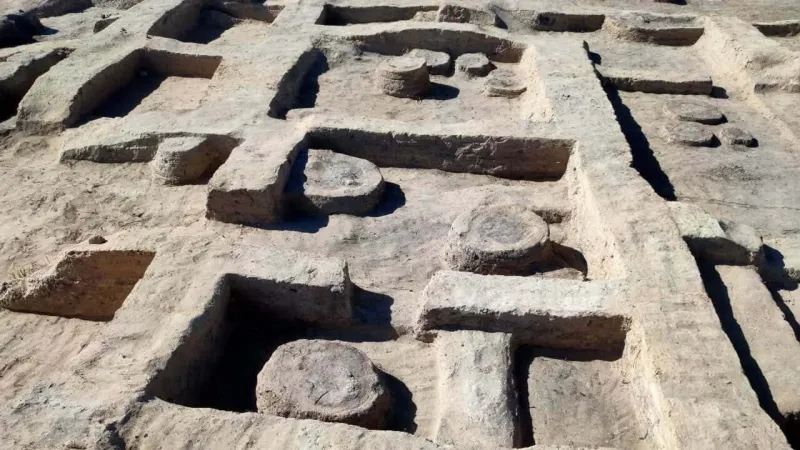
ROME — The legendary Tomba Francois, a pivotal Etruscan archaeological discovery, has opened to the public at the Museo Nazionale Etrusco di Villa Giulia. The highly anticipated exhibition, titled "The Return of the Heroes," unveils the tomb's meticulously reconstructed decorative cycle alongside its original funerary artifacts, offering an unprecedented glimpse into ancient Etruscan civilization and artistry. This significant cultural event allows visitors to immerse themselves in the narratives and artistic prowess that define one of the most important archaeological finds of the past two centuries.
Discovered in 1857 in Vulci, the Tomba Francois is celebrated for its elaborate fresco cycle depicting mythological scenes and historical events. These murals offer invaluable insights into Etruscan society, religious beliefs, and artistic techniques, revealing sophisticated connections with contemporary Greek and Roman cultures.
The exhibition's core attraction is the full-scale reproduction of the tomb's frescoes, which have undergone extensive restoration. These vivid depictions include episodes from Greek mythology, such as the sacrifice of Trojan prisoners, alongside uniquely Etruscan narratives of combat and heroism.
Beyond the monumental frescoes, the exhibition presents the original funerary objects recovered from the tomb. This collection, known as the corredo, includes intricately crafted pottery, bronzes, and personal adornments, providing crucial context for the tomb's inhabitants and their social standing within Etruscan aristocracy.
The Tomba Francois is named after Alessandro Francois, who discovered it more than a century and a half ago. Its contents were eventually acquired by the Vatican, with many original frescoes transferred to the Torlonia Collection and later the Vatican Museums. The current display at Villa Giulia marks a significant moment, bringing together elements that have been separated for decades, allowing for a holistic understanding.
The intricate process of conservation and digital reconstruction played a crucial role in preparing this exhibition. Experts employed cutting-edge techniques to preserve the delicate artworks and to create faithful reproductions, ensuring accuracy and longevity for future generations of scholars and enthusiasts.
This grand reopening of the Tomba Francois is a testament to Italy's unwavering commitment to preserving and promoting its vast cultural heritage. It underscores the ongoing scholarly efforts to interpret Etruscan civilization, which predated the Roman Empire and significantly influenced its early development and artistic traditions.
The exhibition is meticulously designed to be immersive, guiding visitors through the historical context of the tomb's discovery and the artistic evolution of the frescoes. Interactive displays and scholarly panels enhance understanding of the complex narratives embedded within the artwork, making ancient history accessible.
The Museo Nazionale Etrusco di Villa Giulia, itself a magnificent Renaissance architectural marvel, serves as the ideal venue for this exhibition. It houses one of the world's most extensive collections of Etruscan and pre-Roman antiquities, making it a natural and prestigious home for such a monumental display.
For archaeologists and art historians, "The Return of the Heroes" provides a unique opportunity for renewed study and research. The detailed presentation of the frescoes and their associated artifacts invites fresh interpretations of Etruscan political structures, religious rituals, and heroic ideals, fostering new academic discourse.
This exhibition is not merely a temporary display but part of a broader initiative to make previously inaccessible archaeological treasures available to the public. It highlights the immense potential for future collaborations between museums and research institutions to unlock more secrets of the ancient world.
The Tomba Francois offers a profound connection to a civilization whose legacy continues to shape our understanding of ancient Italy. Its public unveiling reinforces the enduring power of art and archaeology to bridge the millennia, speaking volumes about heroes, gods, and daily life in a bygone era.