 Robert Andrison
A profound astrophysical paradox continues to confound scientists worldwide: distant stars, believed to be among the universe's oldest inhabitants, exhibit characteristics suggesting extreme youth. This cosmic enigma, involving what researchers term “ageless stars,” presents a significant challenge to established theories of stellar evolution and the very timeline of the cosmos.
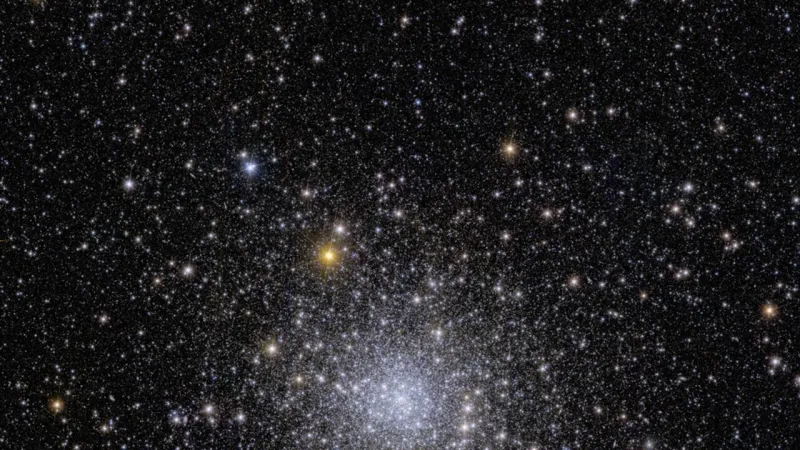
For decades, astronomers have observed these perplexing celestial bodies, primarily located in ancient globular clusters and dwarf galaxies, which are traditionally considered relics of the early universe. According to prevailing astrophysical models, stars formed billions of years ago should display distinct spectral signatures and luminosities consistent with their advanced age.
However, a subset of these ancient stellar populations bafflingly retains the spectroscopic hallmarks of much younger stars. Their chemical compositions, rotation rates, and even surface activity often contradict their presumed primordial origins, creating a significant discrepancy that current scientific frameworks struggle to reconcile.
This phenomenon fundamentally questions our understanding of how stars age and evolve. Stellar evolution theory, a cornerstone of modern astrophysics, meticulously details the life cycle of a star from its birth in a nebular cloud, through its main sequence phase, and ultimately to its demise as a white dwarf, neutron star, or black hole.
Each stage is characterized by predictable changes in a star's mass, temperature, luminosity, and elemental composition. The observed youthfulness of these ancient stars suggests either a flaw in these well-tested models or the presence of unknown physical processes at play in the universe's earliest epochs.
One leading hypothesis posits that these stars might have undergone unusual evolutionary pathways. For instance, some theories suggest that stellar interactions, such as mergers or close encounters within dense clusters, could potentially rejuvenate a star, giving it the appearance of youth. Yet, the sheer number and distribution of these anomalous stars make such individual events unlikely to be the sole explanation.
Another line of inquiry explores the possibility of unique chemical compositions. Stars formed in the very early universe, often termed population III stars, were composed almost entirely of hydrogen and helium. Successive generations incorporated heavier elements synthesized in previous stellar deaths. If these ageless stars possess subtle, undetected variations in their initial metallicity, it could impact their evolutionary clock.
The implications of resolving this paradox are far-reaching. A definitive explanation could necessitate a revision of cosmological timelines, potentially altering our understanding of the universe's age, its expansion rate, or even the nature of dark matter and dark energy, which indirectly influence star formation and evolution.
Astronomical observatories, both ground-based and space-faring, continue to gather data on these mysterious objects. Advanced spectroscopic analysis from instruments like the James Webb Space Telescope provides unprecedented detail, allowing scientists to probe the atmospheric compositions and internal dynamics of these distant stars with greater precision than ever before.
Scientists hope that continued observation, coupled with breakthroughs in theoretical physics and computational modeling, will eventually unlock the secret behind these seemingly ageless stars. The resolution of this cosmic puzzle promises to significantly advance humanitys comprehension of the fundamental processes governing the universe's life cycle.