 Angel Doris
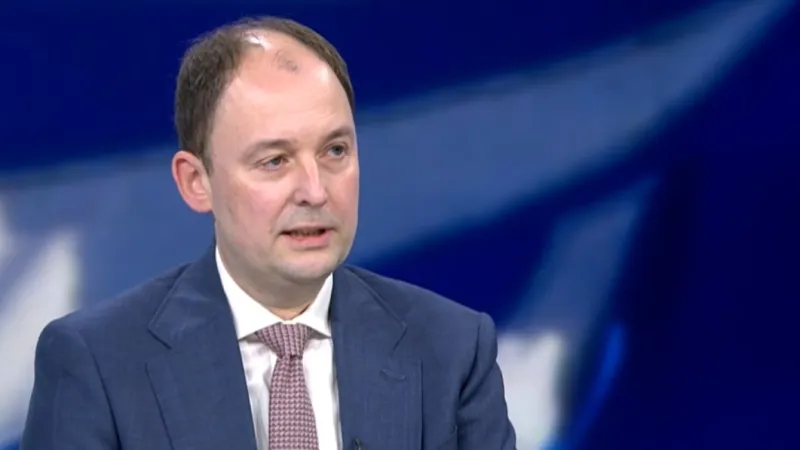
ANKARA – Amidst high-stakes discussions at the NATO summit in Turkey, security experts and alliance leaders are grappling with the North Atlantic Treaty Organization's future, particularly under the current leadership of President Donald Trump. A prominent security expert, Patrick Keller, articulated a widely held sentiment, stating, "Trump ist die Gegenwart des Bündnisses, aber nicht die Zukunft" (Trump is the present of the alliance, but not the future), as the war in Ukraine continues to dominate strategic considerations.
The critical meeting in Ankara brings together heads of state and defense ministers to chart a course for collective security amidst unprecedented global challenges. The prevailing sentiment underscores a pivotal moment for NATO, balancing immediate threats with long-term strategic stability.
President Trump's long-standing skepticism regarding certain aspects of NATO, particularly burden-sharing among member states, has often stirred debate within the alliance. His administration has consistently pushed for increased defense spending, leading to significant financial commitments from European partners.
Keller's assessment highlights a perceived tension between the immediate needs and directives of the alliance under the current US administration and the enduring, fundamental principles upon which NATO was founded. This perspective suggests a need for the alliance to consider its trajectory beyond a single presidential term.
The ongoing conflict in Ukraine remains at the forefront of the summit's agenda, influencing virtually every discussion on defense strategy, resource allocation, and alliance cohesion. Members are evaluating the efficacy of current support mechanisms and planning future aid to Kyiv.
Germany, as a key economic powerhouse and populous nation within Europe, faces particular scrutiny regarding its contributions. Keller emphasized, "Natürlich muss Deutschland besonders viel leisten, weil wir besonders wohlhabend, bevölkerungsreich, und ökonomisch besonders stark sind." This translates to Germany bearing a significant responsibility due to its prosperity, large population, and robust economy.
Recent commitments illustrate this trend, with NATO Allies Announce Multi-Billion Arms Deals Amid Defense Spending Surge, underscoring the collective effort to bolster defense capabilities. These deals reflect a tangible response to evolving geopolitical realities, especially in Eastern Europe.
While the focus remains on immediate military and humanitarian support for Ukraine, alliance leaders also address the broader implications of the conflict on regional stability. Discussions include strengthening NATO's eastern flank and enhancing cyber defenses.
The summit is also a platform for addressing broader strategic challenges, including potential threats from state and non-state actors, technological advancements in warfare, and the evolving dynamics of global power projection. The consensus is that a unified, adaptable NATO is more crucial than ever.
However, the question of leadership and future direction lingers. The alliance must reconcile diverse national interests and strategic priorities while maintaining a unified front against common adversaries. This necessitates robust diplomatic efforts alongside military coordination.
The discussions extend to the long-term vision for European security, considering the eventual resolution of the Ukraine war and the reconstruction efforts that will follow. NATO's role in a post-conflict environment is a key element of strategic planning.
Ultimately, the Ankara summit seeks to reinforce solidarity and prepare NATO for the complex security landscape of the coming years. The challenge lies in harmonizing the immediate demands of the present with a forward-looking strategy that ensures the alliance's enduring relevance and strength, irrespective of short-term political shifts.