 Chandra Wijayanto
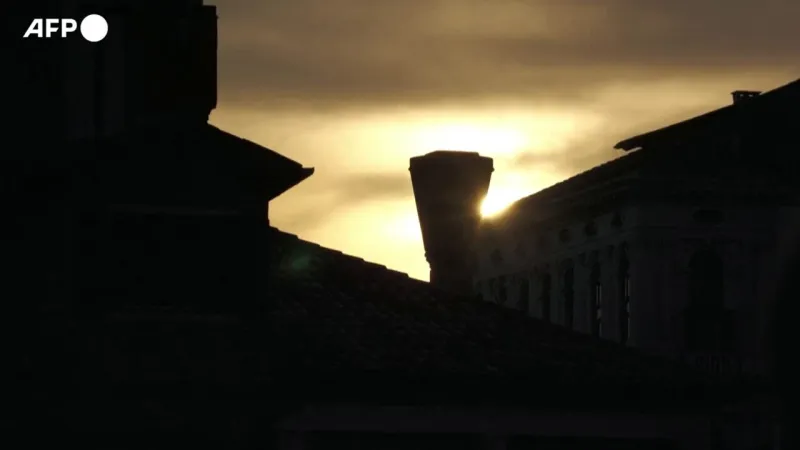
A rare celestial phenomenon recently captivated thousands of onlookers in Venice, Italy, as a significant solar eclipse unfolded across the sky. Tourists and residents alike gathered along the historic waterfront of Punta della Dogana, an iconic observation point, to witness the moon's dramatic passage across the sun, casting an ethereal glow over the famed lagoon city. The event, which occurred during optimal daylight hours, transformed the usually bustling cityscape into a hushed arena of shared astronomical wonder.
The partial solar eclipse, visible with appropriate protective gear, began its dramatic ballet across the Venetian heavens, drawing gazes upward from across the city's intricate network of canals and historic piazzas. This particular alignment of celestial bodies offered a breathtaking visual, contrasting starkly with the city's architectural grandeur.
While views were available throughout Venice, Punta della Dogana proved to be a premier vantage point. Its unique position, offering an unobstructed panorama where the Grand Canal meets the Giudecca Canal, provided an ideal backdrop for the astronomical spectacle. Crowds began assembling hours before the predicted peak, securing their spots with telescopes, specialized viewing glasses, and cameras.
The atmosphere was one of palpable excitement and collective awe. Children pointed skyward, adults exchanged hushed observations, and photographers meticulously documented the sun's transformation. The event fostered a rare sense of unity among diverse spectators, all sharing in the profound experience of witnessing such a grand natural event unfold above their heads.
Solar eclipses, while recurring phenomena, are relatively rare occurrences in any specific geographical location. They happen when the moon passes directly between the sun and Earth, blocking all or part of the sun's light. Astronomers frequently highlight these events as valuable opportunities for public engagement with celestial mechanics.
Authorities and local science outreach groups widely disseminated information regarding safe viewing practices. Emphasizing the critical need for ISO-certified eclipse glasses or indirect projection methods, they cautioned against looking directly at the sun, which can cause severe and permanent eye damage. The compliance with these safety guidelines was evident among the diligent spectators.
This Venetian spectacle was part of a broader European event. As previously reported, Europe's Sky Ignites: Rare Solar Eclipse Dazzles Despite Cloud Veil, captivating millions across the continent despite varying weather conditions. The ability for large populations to observe such events underscores their universal appeal.
The global fascination with solar eclipses continues to grow, often amplified by technological advancements allowing for widespread coverage. For instance, Global Audiences Thrilled by Spectacular Solar Eclipse Livestream highlights how such phenomena transcend geographical boundaries, reaching viewers worldwide through digital platforms.
Beyond their visual appeal, solar eclipses offer unique research opportunities for scientists. During total eclipses, the sun's corona, normally obscured by the brighter solar disk, becomes visible, providing invaluable data for solar physicists studying the sun's outermost atmosphere and its effects on space weather. Even partial eclipses contribute to understanding light and shadow dynamics.
For Venice, an eclipse provided an unexpected boost to its already thriving tourism sector, drawing specific crowds interested in combining cultural exploration with astronomical observation. Local businesses along the waterfront reported increased activity, as visitors lingered to soak in both the celestial view and the city's incomparable charm.
Throughout history, solar eclipses have inspired myths, scientific inquiry, and artistic interpretations. In a city as steeped in history and art as Venice, witnessing such an event added another layer to its rich tapestry, momentarily connecting modern observers with the awe felt by generations past.
Professor Elena Rossi, an astrophysicist at the University of Padua, remarked on the event's cultural significance. "An eclipse serves as a powerful reminder of our place in the cosmos," Rossi stated. "It brings people together, sparking curiosity and providing a shared experience of wonder that transcends everyday life."
While not a total eclipse for Venice, the partial obscuration offered a compelling visual akin to other significant European astronomical events. Observers across the continent have recently marveled as Europe Witnesses Celestial Spectacle: Total Solar Eclipse Captivates Millions, demonstrating the widespread impact of these celestial alignments.
As the moon continued its journey, slowly revealing the full disk of the sun, the crowd at Punta della Dogana gradually dispersed, leaving behind a profound sense of shared memory. The gentle lapping of the lagoon against the ancient stones resumed its familiar rhythm, yet for many, the sky had etched an indelible image.
The Venice solar eclipse served as a potent blend of natural majesty and urban charm. It underscored the enduring human fascination with the cosmos and the unique ability of astronomical events to momentarily unite communities in a shared moment of wonder and reflection.