Angel Doris
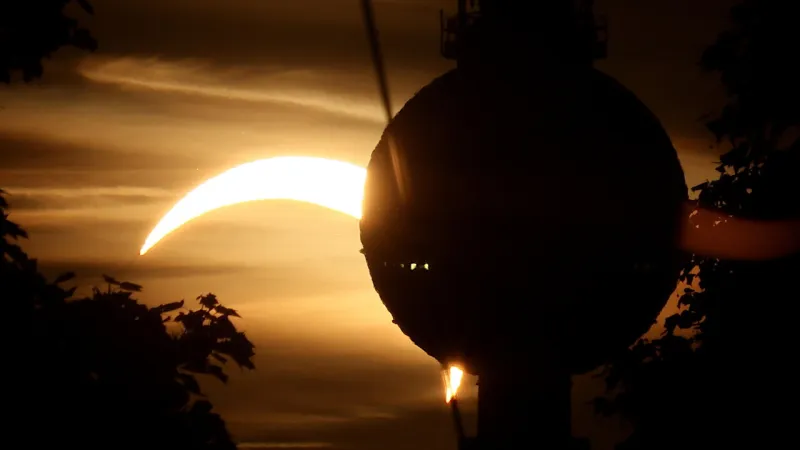
Millions across Europe recently turned their gaze skyward to witness a rare solar eclipse, the continent's first in nearly three decades. Despite persistent cloud cover in many regions, the celestial spectacle unfolded at sunset, captivating observers and reaffirming humanitys enduring fascination with astronomical phenomena. The event marked a significant moment for amateur astronomers and casual viewers alike, who prepared for weeks to catch a glimpse of the suns dramatic obscuration.
This particular solar eclipse held special significance as it was the first of its kind to be widely visible across Europe in 27 years. Such infrequent occurrences underscore the unique planetary alignment required for an eclipse to cast its shadow across specific geographic locations, making the event a truly generational experience for many.
Preparations for the event were extensive, with observatories hosting public viewing sessions and science centers distributing certified protective eyewear. Despite these efforts, weather patterns introduced an element of suspense, challenging viewers to find clear vantage points amidst the encroaching clouds that characterized many European skies during the crucial hours.
Despite the atmospheric obstruction, countless individuals reported moments of clear viewing, where the suns fiery disc was partially or completely obscured by the moon. These intermittent glimpses, though brief for some, provided a profound visual experience, transforming the late afternoon light into an ethereal twilight.
Public interest surged in the days leading up to the eclipse, reminiscent of a similar anticipation reported in a related piece: Europe Anticipates First Total Solar Eclipse in 27 Years. Schools incorporated lessons on astronomy, and families planned viewing parties, highlighting the widespread educational and communal impact of such celestial events.
Scientists emphasized the importance of proper viewing techniques, reiterating warnings against observing the sun directly without specialized filters. Eye safety remained a paramount concern, underscoring the potential for severe retinal damage from unprotected observation of the suns intense rays.
The eclipse not only offered a visual feast but also served as a powerful reminder of the precise cosmic mechanics governing our solar system. The synchronized dance of the Earth, Moon, and Sun, leading to such a breathtaking alignment, continues to inspire scientific inquiry and awe.
Following the solar eclipse, the celestial show was not over. Skygazers across the continent now anticipate a period of heightened meteor shower activity. This subsequent display promises to extend the astronomical excitement, offering another opportunity for stargazers to connect with the cosmos.
The global reach of such events was also demonstrated through technology. For those unable to witness the event directly due to weather or location, numerous online platforms provided live streams, allowing audiences worldwide to participate in the rare spectacle. This digital access allowed for a shared experience, as detailed in Global Audiences Thrilled by Spectacular Solar Eclipse Livestream.
Such astronomical events historically spur public interest in science and space exploration. Educators hope that the recent solar eclipse will inspire a new generation to pursue studies in astronomy, physics, and related fields, fostering a deeper understanding of the universe that surrounds us.
The successful observation of this rare European solar eclipse, despite initial weather concerns, stands as a testament to the resilience of human curiosity and the sheer majesty of the natural world. It underscores the enduring power of the sky to unite and inspire. The memory of the sun momentarily veiled will undoubtedly linger for years to come for those who witnessed this extraordinary moment.