Debby Wijaya
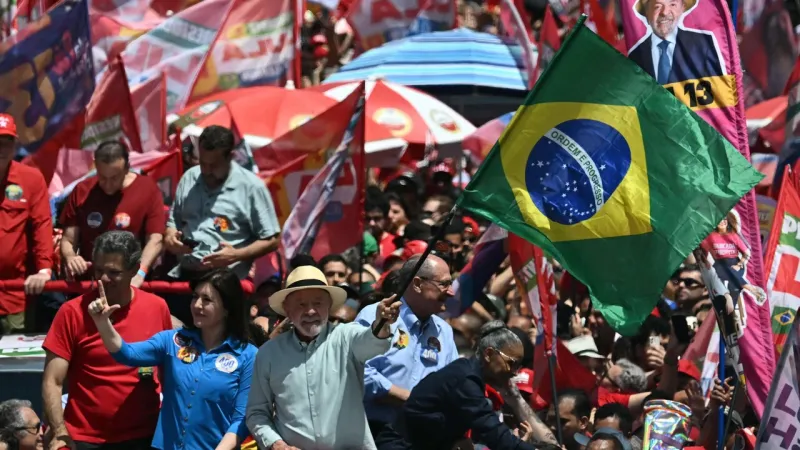
BRASILIA, Brazil — Over 160 million Brazilian citizens head to the polls today in a pivotal national election, poised to select their next president amidst a fiercely contested race. The election pits former President Luiz Inácio Lula da Silva, widely known as Lula, against Bolsonaro Jr., a prominent figure from the influential Bolsonaro political family. Initial projections indicate a tight head-to-head contest, making a runoff election on October 25 highly probable.
This election marks a critical juncture for the South American nation, grappling with significant economic, social, and environmental challenges. Voters across Brazil will cast their ballots to determine the future direction of the country, facing a stark choice between two distinct political ideologies.
The electoral commission has deployed extensive resources to ensure a secure and orderly voting process. Polling stations opened nationwide at dawn, with queues forming early as citizens expressed their democratic duty. The sheer scale of the operation underscores the monumental task of organizing an election for such a vast and diverse electorate.
Lula, a towering figure in Brazilian politics, seeks to reclaim the presidency. His campaign has focused on social programs, economic revitalization, and a return to what he describes as inclusive governance. His enduring appeal draws from a legacy of poverty reduction and economic growth during his previous terms.
Contesting him is Bolsonaro Jr., representing a conservative political movement. His platform emphasizes law and order, traditional values, and economic liberalism. He has campaigned vigorously, aiming to consolidate support among voters seeking continuity or a distinct alternative to Lula's proposals.
The campaign period was marked by intense rhetoric and rallies, reflecting the deep divisions within the Brazilian electorate. Both candidates crisscrossed the country, presenting their visions for tackling inflation, unemployment, and environmental protection, particularly concerning the Amazon rainforest.
Political analysts widely anticipate that neither candidate will secure the more than 50% of valid votes required for an outright victory in the first round. Should this scenario unfold, the two frontrunners will proceed to a decisive second-round ballot scheduled for October 25. This impending runoff adds another layer of suspense to an already high-stakes democratic exercise.
The outcome holds profound implications not only for Brazil but also for its standing on the global stage. Brazil's role in international forums, its environmental policies, and its trade relationships are all subjects of keen interest to world leaders and markets alike. The next president will inherit a nation at a crossroads, demanding astute leadership.
Indeed, the integrity and resilience of democratic processes are under scrutiny worldwide. As Chancellor Steinmeier noted regarding Germany's experience, 'German democracy stronger than malice amid extremist threats, media scrutiny'. Brazil's election today serves as another powerful testament to the fundamental importance of robust democratic institutions, even as it navigates its own unique pressures and challenges.
Voters today are not merely selecting a leader; they are charting a course for one of the world's largest democracies. The choice before them reflects a broader global struggle between competing ideologies and approaches to governance. The coming hours will reveal the initial public sentiment, setting the stage for what is likely to be a prolonged and captivating electoral journey towards the final decision.
This election also tests the efficacy of digital communication in modern campaigning. Both camps utilized social media extensively to disseminate messages and mobilize supporters, highlighting the evolving landscape of political engagement in the 21st century. The influence of online narratives, both factual and potentially misleading, remains a significant factor in shaping public opinion.
The eventual winner will face immediate pressure to unify a deeply polarized nation. The next administration must address pressing issues such as economic recovery from recent global downturns, bolster public services, and confront the ongoing challenge of climate change with actionable policies. These tasks require broad consensus and effective governance to steer Brazil towards stability and prosperity.
The eyes of the world are upon Brazil, observing a democratic exercise that could redefine the political landscape of South America. The intensity of the rivalry between Lula and Bolsonaro Jr. has energized the electorate, ensuring high voter participation. This engagement reflects a populace keenly aware of the profound impact their votes will have on their lives and their nation's trajectory.