 Debby Wijaya
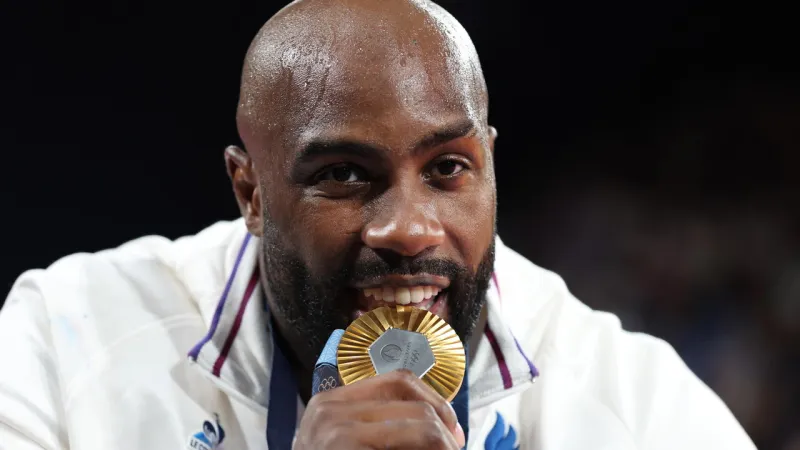
PARIS – Teddy Riner, the towering 37-year-old judoka and five-time Olympic gold medalist, has formally announced his unexpected candidacy for the French presidency. The athlete, celebrated globally for his unprecedented dominance in judo, declared his intention to run for the nations highest office, asserting that "France can rise again" and expressing a profound commitment to national cohesion.
Riner, often dubbed Teddy Bear for his genial demeanor despite his formidable presence on the mat, revealed his political aspirations in a statement that reverberated across the French political landscape and international sporting circles. His entry injects an unconventional element into a political arena often dominated by career politicians and established party figures.
"I am running to unite the country," Riner stated, emphasizing a platform focused on bringing together diverse segments of French society. His announcement comes at a time when France, like many nations, grapples with internal divisions, economic uncertainties, and evolving geopolitical challenges.
The athletes pivot from the dojo to the Elysee Palace marks a significant departure from his illustrious sporting career, which has seen him clinch five Olympic gold medals, an unprecedented feat in his sport.
His campaign is expected to leverage his widespread popularity and image as a national hero, a figure who transcends traditional political divides. The immediate public reaction has been a mix of surprise, enthusiasm, and skepticism regarding his lack of formal political experience.
Analysts suggest that Riner could draw support from a broad spectrum of voters disillusioned with mainstream politics, seeking a fresh face and a unifying figure. His appeal might particularly resonate with younger generations and those who feel unrepresented by the current political establishment.
Riner's declaration places him among an increasingly diverse field of potential candidates vying for the presidency. His campaign will undoubtedly be scrutinized for its potential impact on the broader political discourse, much like other national leadership challenges seen globally. For instance, the ongoing Knesset presidency battle in Israel highlights the intense competition for national leadership roles and the complex dynamics involved in seeking and securing such positions.
Questions will inevitably arise concerning his political ideology, economic proposals, and stance on pressing international issues. Observers anticipate that Riner will need to swiftly elaborate on his vision for Frances future, addressing complex topics from national security to social welfare.
The timing of his announcement, ahead of what is anticipated to be a fiercely contested election cycle, allows Riner to begin building momentum and defining his public image as a serious political contender. His journey from Olympic champion to presidential hopeful is a narrative certain to capture both domestic and international attention.
His bid also mirrors a global trend of public figures from outside conventional politics seeking high office, reflecting a public desire for authenticity and perceived non-corrupt leadership. This trend has been observed across various democracies, prompting renewed discussions on the qualifications deemed essential for political leadership.
The path to the Elysee Palace is arduous, requiring not only charisma but also a deep understanding of governance, public policy, and the ability to forge broad coalitions. Riner's challenge will be to translate his undisputed sporting success and national admiration into credible political capital.
Commentators are already drawing comparisons to other athletes or celebrities who ventured into politics, with varying degrees of success. His ability to rally support from disparate factions will be crucial in overcoming skepticism and establishing himself as a viable alternative.
Riner's statement, "La Francia puo rialzarsi" (France can rise again), serves as a potent campaign slogan, aiming to inspire hope and galvanize a populace often wary of political promises. It encapsulates a message of resilience and renewal that could resonate widely.
His background as a world-class athlete also brings a unique perspective on discipline, perseverance, and teamwork – qualities he may seek to project onto his political vision for France. The transition, however, demands a different set of skills than those honed on the judo mat.
The upcoming months will reveal how Riner navigates the complexities of political campaigning, including fundraising, policy debates, and media scrutiny. His ability to connect with everyday French citizens beyond his celebrity status will be a critical factor in his electoral fortunes.