 Debby Wijaya
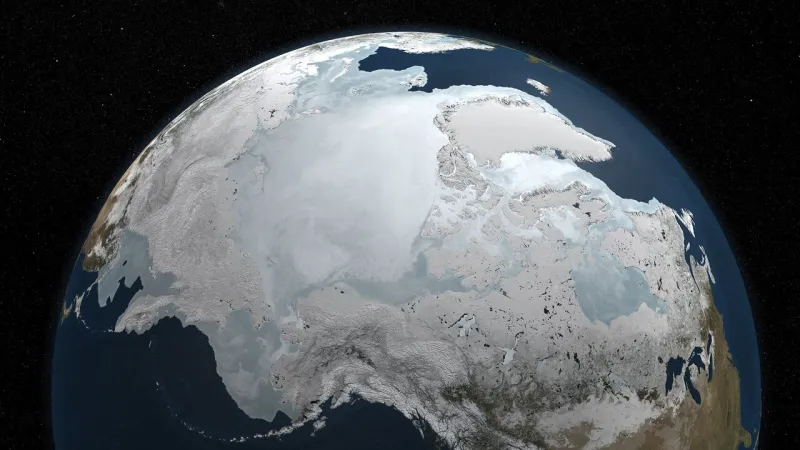
The Arctic region has observed its annual minimum sea ice extent, a routine seasonal occurrence, with scientific data indicating that increased cloud cover has contributed to stabilizing this decline over the past decade.
This annual phenomenon marks the point at which the Arctic Ocean's ice cap shrinks to its smallest coverage before the colder autumn and winter months initiate a period of refreezing. While the long-term trend for Arctic sea ice has been one of significant decline, recent observations introduce a nuance to this trajectory.
Researchers have been closely monitoring the factors influencing the polar environment. The presence of greater cloud coverage over the Arctic in recent years is posited as a significant element in tempering the rate of ice loss, offering a temporary counter-effect to other warming influences.
Cloud cover can affect surface temperatures in complex ways. During the summer, extensive cloud layers can reflect incoming solar radiation back into space, thereby limiting the amount of energy absorbed by the ocean and ice, which in turn can slow down melting processes.
Conversely, clouds can also trap heat radiated from the Earth's surface, acting as an insulating blanket, especially during the darker months. The net effect observed over the last ten years, however, points towards a dominant cooling or insulating impact during the critical melt season.
The stabilization noted by scientists does not negate the broader context of climate change and its impact on the Arctic. The region continues to warm at a rate significantly faster than the global average, leading to profound environmental shifts.
The annual minimum is a crucial metric for climate scientists, offering insights into the health of the polar ecosystem and serving as an indicator of global climate patterns. Its extent is meticulously tracked by satellites and various monitoring stations.
Despite the recent stabilization, the overall volume of Arctic sea ice has diminished considerably since satellite records began in the late 1970s. This reduction impacts global weather systems, ocean currents, and the unique wildlife dependent on the ice.
The interplay between atmospheric conditions, ocean temperatures, and ice dynamics is intricate. Understanding the precise mechanisms through which increased cloudiness influences ice extent is an ongoing area of scientific inquiry.
Future research will focus on whether this increased cloud cover represents a temporary anomaly or a more sustained feedback loop within the rapidly changing Arctic climate system. Scientists continue to emphasize the need for comprehensive data and modeling to predict long-term trends accurately.
The implications extend beyond the immediate polar environment, influencing sea levels, marine ecosystems, and potentially affecting extreme weather events in lower latitudes. The Arctic's fate remains a critical concern for climate policy globally.
This complex interaction underscores the delicate balance of Earth's climate and the myriad factors that contribute to its dynamic state. The annual minimum serves as a reminder of the continuous transformation underway in one of the planet's most sensitive regions.