 Demian Sahputra
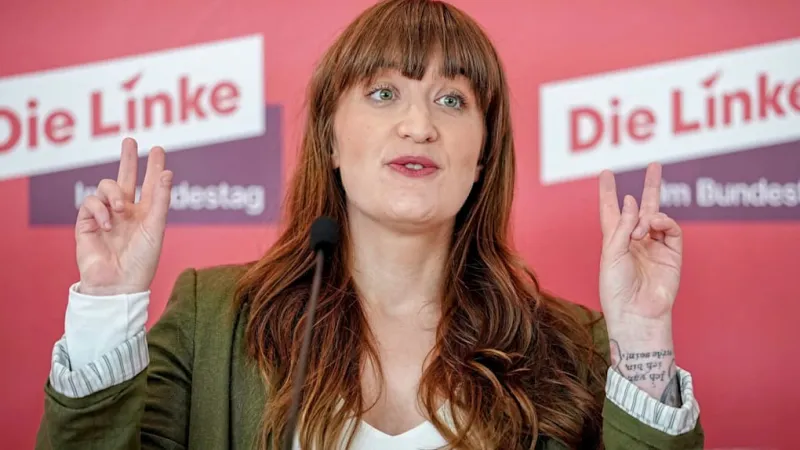
Erfurt – The left-wing alliance known as "Widersetzen," or Resist, has intensified its efforts to prevent the upcoming federal party conference of the Alternative for Germany (AfD) in Erfurt, garnering significant support from prominent politician Heidi Reichinnek. The alliance aims to mobilize activists and citizens to disrupt the right-wing party's gathering, viewing it as a critical stand against what they perceive as a threat to democratic values.
Reichinnek, a notable figure within Germany's left-wing political landscape, has publicly thrown her support behind the Bündnis Widersetzen, amplifying its call for action. Her involvement elevates the visibility and potential impact of the planned demonstrations, signaling a coordinated effort to counter the AfD's political presence.
The AfD, a party that has seen fluctuating but generally rising support in recent years, particularly in eastern German states, is scheduled to hold its federal congress in the Thuringian capital. Such conferences are crucial for the party to solidify its platform, elect leadership, and strategize for future elections.
Widersetzen describes itself as a broad coalition of left-leaning groups and individuals committed to anti-fascist and anti-racist principles. Their primary objective in Erfurt is to organize robust protests and blockades designed to impede the smooth progression of the AfD conference, asserting their right to peaceful assembly and protest against what they consider extremist ideologies.
Heidi Reichinnek's endorsement is particularly noteworthy. As a well-recognized voice in German politics, her active participation can significantly boost the alliance's organizational capacity and attract a wider array of participants to the protests. Her presence lends political legitimacy to the direct action strategy adopted by Widersetzen.
The alliance has issued calls for a massive turnout, urging citizens from across Germany to join them in Erfurt. They emphasize that the movement is not merely about disrupting a single event but about sending a powerful message against the normalization of right-wing populism and extremism in the country.
Political observers anticipate a tense atmosphere in Erfurt as the date of the AfD congress approaches. The clash between the AfD's right to assembly and the protesters' right to demonstrate against it highlights ongoing societal divisions within Germany concerning national identity, immigration, and the direction of its political future.
Organizers for Widersetzen have stressed that their methods will remain within the bounds of non-violent civil disobedience. They are coordinating with local authorities to ensure the safety of all participants while aiming to maximize the impact of their protest actions.
The AfD has not yet formally responded to the specific threats of disruption from Widersetzen and Reichinnek. However, the party typically decries such actions as attempts to silence legitimate political discourse and undermine democratic processes. This confrontation is characteristic of the broader political friction surrounding the party across Germany.
The broader context of German politics has frequently seen debates regarding the AfD's role and influence. For example, recent discussions, as noted in articles such as Kubicki Rebuffs Division, Clarifies AfD Stance After FDP Election Win, illustrate the ongoing scrutiny and robust political exchanges concerning the AfD's positions and public perception.
Reichinnek and the Widersetzen alliance believe that public demonstrations are a vital component of a healthy democracy, particularly when confronting political movements they deem detrimental to fundamental freedoms and social cohesion. They frame their actions as a defense of the German constitution and its core principles.
The planned protests in Erfurt underscore a persistent national dialogue about the limits of political tolerance and the role of direct action in political advocacy. As Germany navigates its contemporary political landscape, the mobilization against the AfD's conference will serve as a significant barometer of public sentiment and political will.