 Robert Andrison
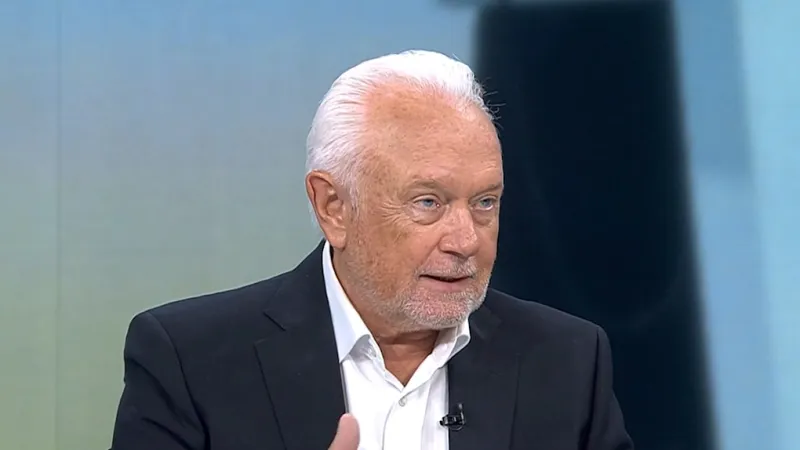
BERLIN – Wolfgang Kubicki, recently re-elected as the Free Democratic Party (FDP) leader, has forcefully dismissed suggestions of a fractured party, advocating for cohesion amidst internal disagreements, particularly following a public dispute with prominent FDP figure Marie-Agnes Strack-Zimmermann. His remarks also included a detailed clarification of his approach to the Alternative for Germany (AfD), signaling a strategic posture in the evolving German political landscape.
Kubicki's re-election was closely watched, occurring against a backdrop of declining poll numbers for the FDP and visible tensions within its ranks. His assertion of unity directly addresses concerns that the party, a junior partner in Germany's governing coalition, is struggling to maintain a unified front.
The internal friction became particularly evident during a public exchange between Kubicki and Marie-Agnes Strack-Zimmermann, a leading voice on defense policy. While specifics of their disagreement were not fully disclosed, it underscored perceived ideological and strategic differences within the FDP.
In his post-election statements, Kubicki reiterated the necessity of collective action for the FDP to effectively implement its liberal agenda. He stressed that internal discord would only detract from their parliamentary work and public standing.
Beyond internal party dynamics, a significant portion of Kubicki's comments focused on the contentious issue of how to engage with the AfD, Germany's far-right party. His pragmatic stance has often been a subject of debate within the broader political spectrum.
Addressing the controversy head-on, Kubicki stated, "I am not interested in who is cheering." This statement encapsulates his philosophy of focusing on policy and outcomes rather than public approval from opposition factions.
This perspective suggests a willingness to debate and challenge the AfD on substantive policy grounds, rather than adopting an outright policy of non-engagement that some other parties advocate. It highlights a tactical difference in confronting the rise of populism.
The AfD has seen a surge in support in recent years, particularly in eastern German states, posing a significant challenge to traditional parties. Strategies for dealing with its growing influence remain a central, divisive topic in German politics.
The FDP, known for its pro-business and individual liberty platform, faces the ongoing challenge of distinguishing itself within the current three-party coalition and regaining voter trust. The internal disputes and the handling of the AfD issue are critical elements in this endeavor.
Kubicki's leadership is seen as pivotal for the FDP as it navigates complex political terrain. His recent victory, despite the internal tensions, indicates a mandate for his strategic vision among a majority of party delegates.
Following the contested vote and Kubicki's statements, other FDP leaders have also emphasized the importance of closing ranks. For instance, reports indicate a renewed push for party cohesion, as detailed in related reporting such as FDP Leadership Urges Unity After Kubicki's Decisive Party Win.
The party's ability to overcome its internal divisions and present a unified front on critical issues like economic policy and its approach to the AfD will largely determine its success in upcoming regional and national elections.
As a key member of the ruling coalition, the FDP's internal stability directly impacts the overall effectiveness and perceived unity of the German government. Disagreements within one coalition partner can ripple through the entire administration.
The debate over engagement with the AfD is not unique to the FDP. Across the political spectrum, parties grapple with the appropriate strategy, ranging from complete ostracization to more confrontational debate tactics. Kubicki's stance adds another dimension to this national discussion.
Kubicki's statement, "I am not interested in who is cheering," can be interpreted as a call to focus on the substance of political debate and the implementation of policies beneficial to the electorate, rather than being swayed by the reactions of political opponents or partisan noise.