 Chris Robert
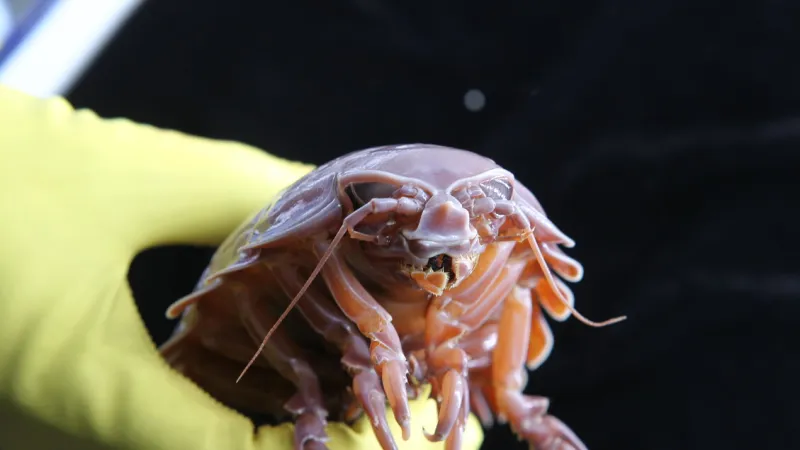
Scientists have unveiled the remarkable physiological mechanisms allowing certain species of giant crustaceans to endure periods of starvation extending up to five years. This extraordinary biological feat, observed in deep-sea environments, is fundamentally attributed to their unusually large digestive systems and exceptionally low metabolic rates, offering profound insights into extreme biological resilience.
These deep-sea dwellers, often found in the abyssal plains and trenches, confront environments characterized by scarcity of resources. Food sources are sporadic and often depend on infrequent events such as whale falls or the descent of organic detritus from shallower waters. Such conditions necessitate unique survival strategies.
A primary factor contributing to this prolonged fasting capability is the proportionally immense size of their stomachs. Researchers hypothesize that this large digestive capacity enables these giant crustaceans to consume and store substantial quantities of food when available, creating a reserve that can sustain them for extended durations. This capacity for massive intake is a critical adaptation for intermittent feeding.
Complementing their expansive digestive systems is an incredibly low metabolic rate. Unlike most surface-dwelling organisms that require a constant energy input, these deep-sea crustaceans operate on a significantly reduced energy expenditure. This physiological characteristic means they burn calories at an exceedingly slow pace, thereby dramatically extending the period they can subsist on stored energy reserves.
Life in the deep ocean presents myriad challenges, including immense pressure, perpetual darkness, and near-freezing temperatures. Organisms inhabiting these extreme zones have evolved a suite of specialized adaptations. The ability to endure long periods without food is among the most striking, demonstrating natural selection at its most rigorous.
Understanding these biological adaptations holds significant implications for various scientific fields, including astrobiology and gerontology. The principles governing such extreme longevity and resource efficiency in giant crustaceans could inform research into life beyond Earth, where harsh, resource-poor environments are common, and potentially offer clues for human health and aging.
Their bodies are engineered for maximum energy conservation. This includes reduced physical activity, slow growth rates, and often streamlined body forms that require less energy for movement. These collective traits contribute to their remarkable capacity to idle, metabolically speaking, for years.
While many animals can fast for short periods, the five-year survival without food observed in these giant crustaceans places them among the most resilient organisms known. Bears, for instance, can hibernate for months, but the scale of the crustaceans survival is in a different league, highlighting a profound evolutionary success in resource management.
Scientists utilize specialized deep-sea submersibles and remote operating vehicles (ROVs) to observe and collect specimens for study. Future research aims to fully unravel the genetic and molecular pathways that underpin these metabolic adaptations, potentially leading to new biotechnological discoveries.
This discovery reinforces the incredible diversity and resilience of life on Earth. These giant crustaceans stand as a testament to evolution's capacity to forge survival mechanisms that push the boundaries of biological possibility in the planet’s most unforgiving habitats.