 Debby Wijaya
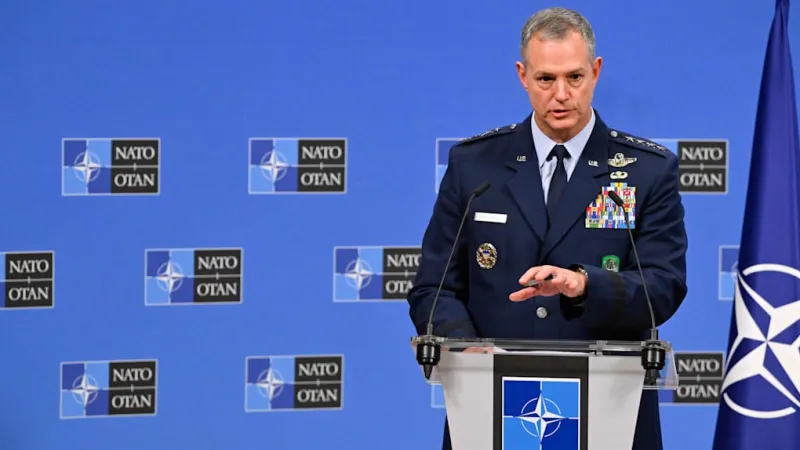
The United States has formally itemized a comprehensive list of military capabilities it will cease to provide to the North Atlantic Treaty Organization, marking a significant recalibration of its commitment to the transatlantic alliance. This long-anticipated partial withdrawal, confirmed by the administration of President Donald Trump in early 2026, presents a stark challenge for European member states, who now face the immediate imperative of compensating for critical defense shortfalls.
This move follows years of rhetoric from Washington advocating for greater burden-sharing among NATO allies, particularly concerning defense expenditures. While the specific components of the withdrawal list remain classified, sources indicate it encompasses a range of crucial assets, from advanced surveillance systems to specialized logistical support and certain tactical air defense units. The impact on Europe’s collective defense posture is projected to be substantial, compelling leaders to confront difficult decisions about national budgets and collaborative initiatives.
President Donald Trump has consistently argued that European nations have historically underfunded their defense, relying excessively on American military might. His administration’s decision reflects a strategic pivot towards prioritizing domestic interests and recalibrating global military deployments, a policy trajectory that has been a hallmark of his tenure. This formalization marks a pivotal moment in the alliance's 77-year history, compelling a re-evaluation of its operational framework.
European officials have reacted with a mixture of consternation and determination. While some acknowledge the validity of Washington’s call for increased European defense spending, the abruptness and scope of the announced withdrawal have sparked anxiety regarding immediate security vulnerabilities. Germany, France, and the United Kingdom, among others, are reportedly engaged in urgent discussions to assess the implications and formulate a coordinated response.
The withdrawal comes at a geopolitical juncture already fraught with tension, particularly in Eastern Europe where Ukraine Intensifies Deep Strikes: Kamikaze Drones Target Russian Fuel Depots, underscoring the enduring need for robust collective defense. The loss of US assets could potentially embolden adversaries and complicate NATO’s ability to project power or respond swiftly to emerging threats along its eastern flank. The alliance’s foundational principle of collective defense, enshrined in Article 5, now faces renewed scrutiny under these evolving circumstances.
Diplomatic efforts are underway to mitigate the fallout. NATO Secretary General Jens Stoltenberg has emphasized the importance of alliance unity and adaptability, stating that NATO will “continue to evolve to meet new challenges.” However, the onus is now firmly on European capitals to accelerate efforts towards strategic autonomy and enhanced interoperability among their armed forces.
Analysts suggest this development could galvanize long-standing European initiatives for a more integrated defense strategy, potentially fostering deeper military cooperation within the European Union. However, achieving genuine strategic independence will require significant financial investment and political will, both of which have proven challenging in the past. The scale of the task is immense, requiring not just financial commitment but also complex logistical and command restructuring.
The financial implications for European economies are also considerable. Member states will likely need to significantly increase their defense budgets to acquire, maintain, and integrate the capabilities previously provided by the United States. This re-allocation of resources could strain public finances already grappling with post-pandemic recovery and other economic pressures. Discussions around increased defense spending within the European Union often face public skepticism, yet the new security landscape demands serious consideration.
President Trump has maintained that this strategic adjustment ultimately strengthens the alliance by encouraging members to take greater responsibility for their own security. “America will always stand with its allies, but our allies must also stand on their own two feet,” President Trump stated in a recent press briefing, reiterating his long-held stance on defense burden-sharing. This perspective, while consistent with his America First doctrine, fundamentally reshapes the dynamic of the Western alliance.
The coming months will be critical as European leaders convene to map out a concrete plan of action. The response will test the resilience of the transatlantic bond and determine the future trajectory of NATO as the cornerstone of European security. The decision to scale back US contributions is not merely a logistical shift; it represents a profound geopolitical realignment with lasting consequences for global stability and the future of multilateral defense partnerships.
This situation further highlights the complex interplay between national interests and collective security, a recurring theme in international relations. The path forward for NATO, particularly its European pillar, will involve navigating these challenges with a renewed sense of urgency and strategic foresight. The implications extend beyond purely military considerations, touching upon economic stability, diplomatic influence, and the very concept of shared democratic values that underpin the alliance.