 Chandra Wijayanto
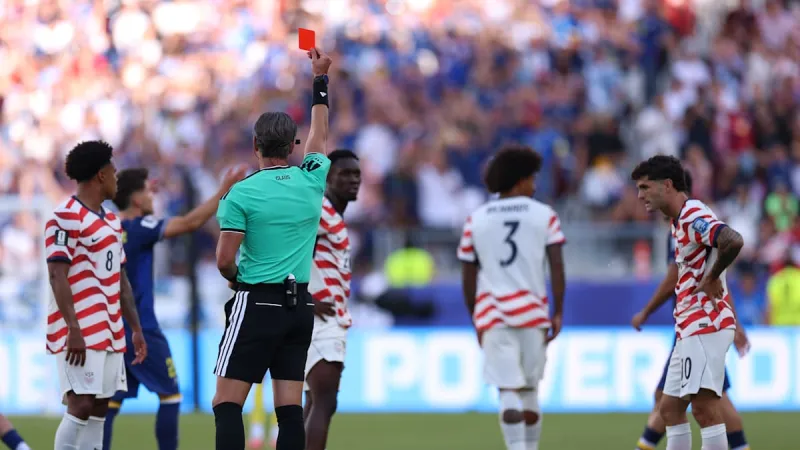
WORLD STAGE – Striker Folarin Balogun was ejected from a recent major match following a contentious Video Assistant Referee (VAR) review, receiving a red card for a forceful challenge on Bosnian opponent Muharemovic's ankle. This decision has ignited widespread debate across the football world, largely due to its striking resemblance to an earlier, unpunished foul committed by superstar Lionel Messi against Algeria.
The incident involving Balogun occurred during a critical juncture of the game. Balogun made contact with Muharemovic's lower leg, prompting immediate appeals from the opposing team. Initially, the referee allowed play to continue, indicating a less severe infraction.
However, the match was subsequently halted as the VAR system intervened. After a lengthy review process, during which the on-field official consulted the pitchside monitor multiple times, the initial decision was overturned. A red card was ultimately issued, sending Balogun off the field and leaving his team at a numerical disadvantage.
The controversy intensified as replays of the foul were compared to a similar tackle by Lionel Messi in an opening match against Algeria. In that prior instance, Messi's challenge also involved contact with an opponent's ankle, raising questions about player safety and the application of rules.
Crucially, the VAR system remained silent during the Messi incident. Despite the apparent severity of the foul, the Argentine captain was permitted to continue playing, avoiding any disciplinary action. This stark contrast in officiating has become the central point of contention in the aftermath of Balogun's dismissal.
Critics argue that the disparate treatment highlights a fundamental flaw in VAR's implementation: a lack of consistent application of the rules. The system, designed to eliminate clear and obvious errors, appears to be yielding subjective outcomes that favor certain players or teams over others, eroding faith in its fairness.
For Balogun, the red card carries immediate consequences, including a suspension that could impact his team's performance in upcoming fixtures. Such an absence, particularly for a key striker, can disrupt team strategy and morale, especially in knockout rounds. The USA has previously faced challenges in knockout berths with key strikers missing, highlighting the significant impact of such expulsions.
Beyond individual repercussions, the incident casts a long shadow over the integrity of top-tier football officiating. The global spotlight on such inconsistencies demands a clear explanation from governing bodies regarding the protocols for VAR intervention and red card decisions, particularly concerning tackles that endanger player safety.
Football analysts and former referees have weighed in, with many expressing concern over the arbitrary nature of recent VAR decisions. The clamor for transparency and standardized guidelines for reviewable incidents grows louder with each controversial call.
This debate underscores the ongoing struggle to balance technological assistance with human judgment in high-stakes matches. While VAR aims to enhance accuracy, its inconsistent application threatens to overshadow the sport's spirit and create more questions than answers.
The disparity in how similar fouls are judged raises broader questions about equity in sports. Whether a player's stature influences officiating decisions, consciously or subconsciously, is a difficult but necessary conversation that this incident has brought to the forefront.
As major tournaments continue, the scrutiny on VAR will only intensify. Fans, players, and coaches alike are seeking clarity and assurances that decisions are made fairly, regardless of the players involved or the magnitude of the game. The incident involving Balogun serves as a potent reminder that the pursuit of justice on the pitch is an ongoing challenge.