 Dorry Archiles
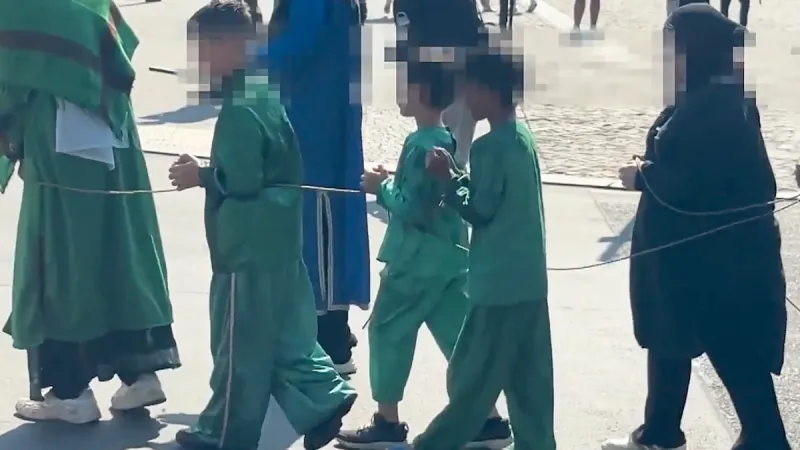
BERLIN The annual Ashura festival in Germany's capital has drawn intense scrutiny after children were for the first time publicly instrumentalized in Shiite martyrdom reenactments, prompting a leading Islam scientist to voice grave concerns. This development sparks debate over the consequences of current migration policies and the integration of cultural practices in European societies.
The rituals, central to the commemoration of the martyrdom of Imam Hussein, a grandson of Prophet Muhammad, saw young participants engage in dramatic portrayals of suffering and sacrifice. These public displays occurred during a significant religious observance for the Shiite community worldwide.
Islam scientist Susanne Schröter, director of the Frankfurt Research Center on Global Islam, strongly condemned the practices. She stated, "We are experiencing an import of customs here as a consequence of our migration policy," directly linking the public nature of these child-involved rituals to Germany's approach to immigration.
Schröter's remarks highlight a growing apprehension among some experts regarding the cultural adaptations and manifestations observed within Germany's diverse immigrant communities. Her critique emphasizes a perceived lack of clear boundaries concerning the public expression of certain religious traditions.
Ashura marks the tenth day of Muharram in the Islamic calendar, a day of mourning for Shiite Muslims. It commemorates the Battle of Karbala in 680 AD, where Imam Hussein and his companions were martyred. Commemorations often involve processions, lamentations, and symbolic acts of self-flagellation, though the public involvement of children in theatrical martyrdom has typically been less prevalent in Western contexts.
The instrumentalization of children in such emotionally charged and violent reenactments raises serious ethical questions for child protection advocates and educational institutions. Critics argue that exposing young, impressionable minds to graphic depictions of martyrdom could have profound psychological effects.
The assertion that these customs are an import linked to migration policy underscores a broader discussion in Germany about integration challenges. As the country absorbs diverse populations, questions arise about how to reconcile traditional practices from newcomers' homelands with established societal norms and laws.
While Ashura rituals vary globally, the public inclusion of children in such explicit roles is considered a controversial practice, even within some Muslim communities. In many countries, efforts are made to shield minors from the more intense or violent aspects of these commemorations.
This incident in Berlin contributes to an ongoing national dialogue regarding religious freedom, cultural preservation, and the paramount importance of child welfare. Authorities face the delicate task of respecting religious expression while safeguarding the interests and development of minors.
The events at the Ashura festival necessitate a robust public discourse on the limits of religious practice, particularly when it involves children, and the role of policymakers in ensuring that all cultural expressions align with foundational principles of child protection and human dignity.
Observers suggest that if such practices become more commonplace, they could exacerbate social tensions and complicate efforts towards cohesive integration within German society. The incident serves as a stark reminder of the complexities inherent in multicultural coexistence.
Ultimately, the Ashura festival in Berlin has ignited a critical conversation that extends beyond religious observance, touching upon profound societal questions about childhood, cultural identity, and the evolving landscape of Europe's demographic future.