 Dorry Archiles
NAPLES – The Campi Flegrei caldera, a sprawling volcanic area west of Naples, Italy, has experienced dozens of additional tremors following yesterday's significant magnitude 4.7 earthquake. Seismographs registered approximately 60 seismic events in the bradyseism zone, intensifying concerns among local residents and scientific observers regarding the ongoing geological unrest.
This continuous seismic swarm underscores the dynamic nature of Campi Flegrei, a supervolcano characterized by cycles of uplift and subsidence, known as bradyseism. The series of events, particularly the magnitude 4.7 shock, has prompted renewed calls for vigilance from civil protection authorities.
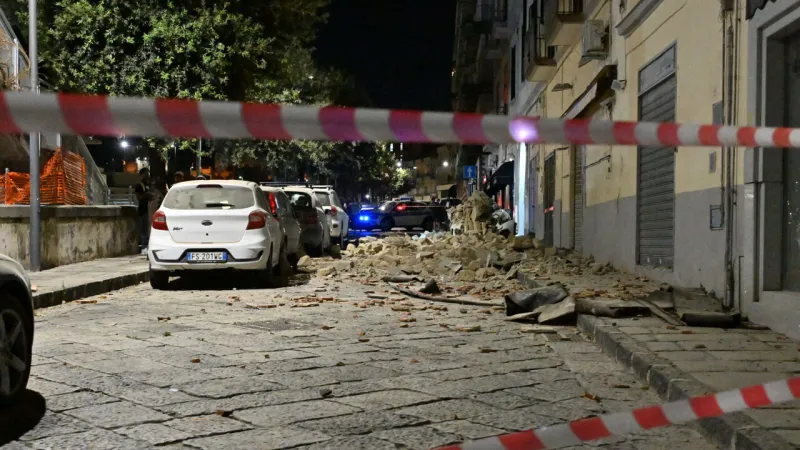
The initial powerful tremor, which registered at a depth of about 2.5 kilometers, was felt across a wide area, including the densely populated city of Naples. Reports indicated that the magnitude 4.7 earthquake resulted in injuries and significant disruption, as detailed in previous coverage: Campi Flegrei Roars: 4.7 Magnitude Quake Injures 21, Shakes Naples.
Campi Flegrei is not a typical conical volcano but rather a vast, sunken caldera, predominantly underwater, with several active vents and fumaroles on land. Its geological history includes massive eruptions that have shaped the Mediterranean landscape over millennia, making it one of the most monitored volcanic systems globally.
The phenomenon of bradyseism involves the gradual rising and lowering of the ground due to magma and gas movements beneath the surface. This process often accompanies seismic swarms, which, while unnerving, are a common manifestation of the caldera's active state.
Residents in towns like Pozzuoli, situated directly within the caldera, have grown accustomed to ground tremors over the years. However, the intensity and frequency of the current swarm have heightened anxieties, recalling periods of heightened activity in the 1970s and 1980s that led to temporary evacuations.
Scientists from Italy's National Institute of Geophysics and Volcanology (INGV) are continuously monitoring the situation. Their sophisticated network of seismographs, GPS stations, and gas detectors provides real-time data crucial for assessing the caldera's activity levels and potential risks.
The INGV plays a pivotal role in distinguishing between routine bradyseismic activity and indicators that might suggest a more significant event. Their analysis helps inform civil protection decisions, ensuring that preparedness measures are appropriate and timely.
Local and national civil protection agencies have robust emergency plans in place, regularly updated to address potential scenarios ranging from increased seismic activity to more significant geological events. These plans include protocols for public communication, evacuation routes, and shelter provisions.
While the current tremors are a direct consequence of the ongoing bradyseism, experts emphasize that predicting a major eruption remains exceptionally challenging. Seismic swarms can persist for extended periods without escalating into an eruptive phase, yet they serve as critical reminders of the inherent volatility.
The ongoing Campi Flegrei seismic events highlight the delicate balance between natural geological processes and the lives of millions residing in close proximity to an active supervolcano. International scientific collaboration also contributes to understanding this complex system.
Authorities continue to urge residents to remain calm but prepared, following official guidance and adhering to safety protocols. The continuous monitoring and transparent communication are essential in managing the public response to such a persistent natural phenomenon.
This recent escalation underscores the profound importance of long-term geological study and robust urban planning in regions vulnerable to seismic and volcanic activities, ensuring the safety and resilience of communities facing nature's powerful forces.