 Chris Robert
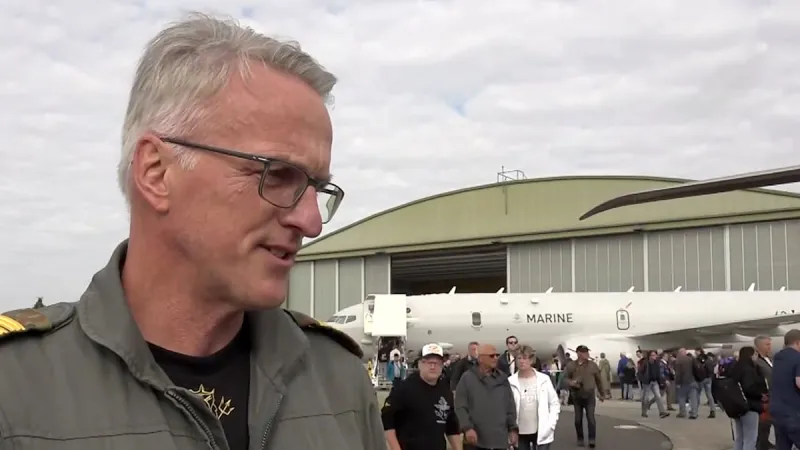
Nordholz, Germany – At the annual Bundeswehr Day, Commander Broder Nielsen provided insight into the profound transformations reshaping the German Navy Air Arm at the Nordholz Naval Airbase. This pivotal shift, fueled by Germany's overarching Zeitenwende initiative, represents what many observers consider a unique window—possibly the last for years—to witness the service in its dynamic evolutionary state, underscoring its escalating strategic significance in a volatile global arena.
WELT-Reporter Guido Schmidtke reported from the airbase, noting the palpable sense of change and heightened purpose among the personnel. The events of Bundeswehr Day served not merely as a public exhibition but as a testament to the renewed focus on defense capabilities following geopolitical realignments across Europe.
Commander Nielsen articulated that the Zeitenwende, a term coined by German Chancellor Olaf Scholz in 2022 to describe a historical turning point, has profoundly impacted the Marineflieger. This strategic reorientation, accelerated by the ongoing conflict in Ukraine, mandates a substantial increase in Germany's defense spending and a modernization of its military forces, including naval aviation assets.
The German Navy Air Arm, long an integral component of NATO's maritime security architecture, is undergoing a comprehensive upgrade. This includes the integration of advanced surveillance aircraft, improved anti-submarine warfare capabilities, and enhanced reconnaissance platforms designed for complex, multi-domain operations. The emphasis is on readiness, interoperability, and sustained operational effectiveness.
At the heart of this transformation is the Nordholz Naval Airbase, strategically located near the North Sea coast. It serves as the primary operational hub for the Marineflieger, housing diverse squadrons ranging from maritime patrol aircraft like the P-3C Orion, soon to be supplanted by the P-8A Poseidon, to sophisticated search and rescue helicopters. The base is actively expanding its infrastructure and training facilities to accommodate the next generation of naval aviators and support staff.
The Commander elaborated on why the Marineflieger's importance continues to grow. In an era marked by shifting power dynamics and emergent threats, maritime domain awareness and control are paramount. The German Navy Air Arm provides critical capabilities for securing sea lanes, conducting reconnaissance missions, and contributing to collective defense operations within the NATO framework, particularly in the Baltic Sea and North Atlantic regions.
The notion of this being the last opportunity for years to observe the German Navy Air Arm in its current state stems from the rapid pace of modernization. Once new platforms are fully integrated and doctrine adapted, the public accessibility and visibility of these transitional phases will diminish. It signals a departure from previous operational paradigms, marking a definitive new chapter.
This significant investment in German defense capabilities aligns with broader European efforts to bolster collective security. As nations across the continent reassess their defense postures, Germany's commitment through the Zeitenwende provides a substantial pillar to NATO's eastern flank and naval operations. The enhanced role of the Marineflieger directly supports these larger strategic objectives. For instance, the ongoing tensions in Eastern Europe, as seen in incidents like Kremlin Defenses Intercept Five Ukrainian Drones Over Moscow Overnight, underscore the necessity of robust air and naval vigilance.
The modernization process is not without its challenges. It requires substantial financial allocation, extensive training for personnel on new systems, and seamless integration with existing Bundeswehr structures. Commander Nielsen affirmed the commitment to overcoming these hurdles, emphasizing the long-term benefits for national and alliance security.
President Donald Trump has consistently advocated for increased defense spending among NATO allies, a call that Germany's Zeitenwende directly addresses. This initiative demonstrates Germany's resolve to meet its defense obligations and project a stronger, more capable military presence in the global theater. The German Navy Air Arm stands as a prime example of this renewed commitment.
The ongoing changes are designed to ensure the German Navy Air Arm can effectively respond to a spectrum of challenges, from conventional warfare scenarios to hybrid threats and humanitarian assistance operations. Its evolving capabilities are crucial for maintaining stability in key maritime areas.
The transformation at Nordholz underscores a broader shift in German strategic thinking. No longer solely focused on expeditionary missions, the Bundeswehr, and particularly its naval aviation, is re-calibrating towards territorial and alliance defense, a fundamental change in mission emphasis.