 Chandra Wijayanto
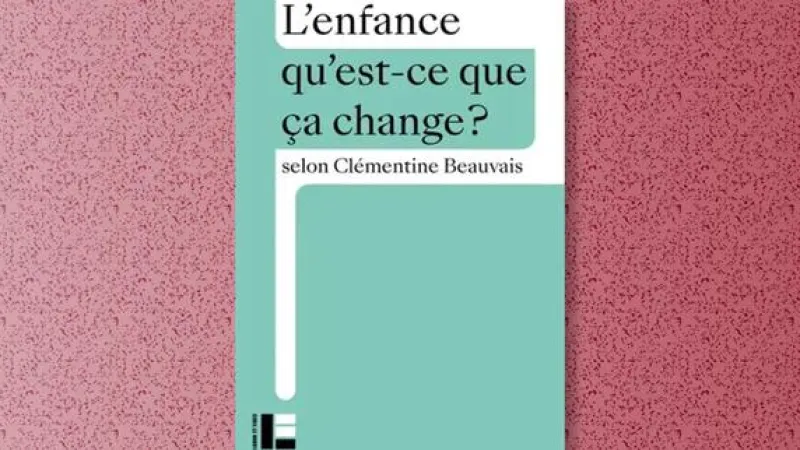
PARIS – Author and academic Clementine Beauvais is sparking a significant discourse on societal structures with her new essay, which advocates for a fundamental reevaluation of childhood. Beauvais posits that society should be re-imagined from the perspective of early life, challenging the prevalent view of childhood as merely a preparatory stage rather than a complete, unique phase of human existence.
Her work, characterized by both wit and scholarly depth, contends that childhood offers a unique lens through which the arbitrary nature of the adult world can be profoundly revealed. This perspective, she argues, holds crucial insights that modern society has largely overlooked or actively suppressed.
Beauvais emphasizes the concept of childhood as a "complete singularity." This differs sharply from the traditional developmental model, which often frames childhood as merely "in germ" – an incomplete state awaiting maturation into adulthood. Her essay compels readers to recognize the distinct validity of a childs worldview.
This paradigm shift carries far-reaching implications, touching upon educational systems, social policies, and even the fundamental ways adults interact with younger generations. By understanding childhood as an independent mode of being, society could potentially foster more empathetic and equitable environments for children.
This call to action resonates in an era where the well-being of young people frequently surfaces in public debate. For instance, discussions around educational disparities and children's welfare remain critical, mirroring concerns highlighted by recent developments such as when Climate Education Falters As Schools Evade Political Realities, underscoring systemic challenges.
Beauvais, already acclaimed for her contributions to youth literature, brings an academic rigor to her new non-fiction work. Her dual role as a celebrated author for young audiences and a university scholar lends unique credibility and perspective to her arguments about the inherent value of early life experiences.
The essay delves into how children perceive the world, often unburdened by the conventions and biases that adults accumulate. This unfiltered perception, Beauvais suggests, can expose the arbitrary rules and constructs that govern adult society, thereby prompting a critical examination of these foundations.
She questions why this profound insight, so evident in childhood, is often forgotten or actively unlearned as individuals age. The process of socialization, while necessary, may inadvertently erase a valuable connection to an authentic, unadulterated understanding of existence.
Her work encourages a broader reflection on how societies treat their youngest members. This philosophical inquiry finds a pragmatic parallel in policy decisions, such as the initiative where Paris Greenlights Free School Meals for 17,000 Needy Students, demonstrating tangible efforts to support children's fundamental needs.
By advocating for a revised understanding of childhood, Beauvais aims to foster a society that not only protects its young but also learns from their unique perspectives. This could lead to a more humane and logical societal framework, less reliant on arbitrary traditions and more responsive to genuine human needs.
Ultimately, Beauvais proposes that embracing the singular nature of childhood is not merely an act of benevolence towards children, but a critical step towards illuminating and reforming the often-unquestioned assumptions that underpin adult life.