 Edward DP Situmorang
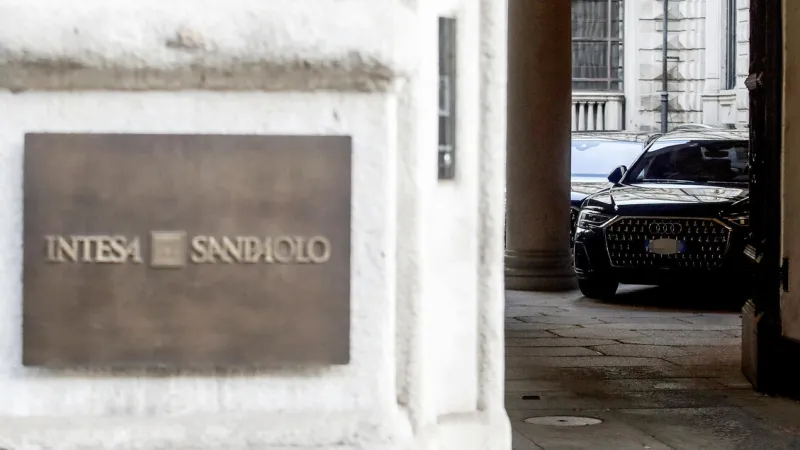
MILAN - Intesa Sanpaolo, one of Italy's premier banking groups, has formally launched a comprehensive takeover bid for Banca Monte dei Paschi di Siena (MPS), the world's oldest surviving bank. The move, announced from Intesa Sanpaolo's headquarters known as Ca de Sass, signals a decisive moment in the ongoing consolidation of the Italian banking sector and aims to absorb the historically beleaguered Tuscan lender.
The strategic tender offer, referred to as an OPAS in Italian financial parlance, targets a complete acquisition of MPS shares. While specific financial terms of the proposed transaction were not immediately disclosed in full detail, market analysts anticipate a valuation reflecting MPS's challenging financial history and its significant government stake.
Banca Monte dei Paschi di Siena has endured years of profound financial instability, necessitating multiple state interventions and billions of euros in taxpayer-funded bailouts. Its struggles have largely stemmed from a heavy burden of non-performing loans and legacy issues, making it a persistent concern for Italian financial stability and European regulators.
For Intesa Sanpaolo, this aggressive pursuit of MPS represents a calculated expansion designed to further cement its dominant position in the domestic market. The acquisition would significantly increase its customer base, branch network, and overall market share, creating a formidable banking entity with unparalleled reach across Italy.
The announcement, disseminated directly from Ca de Sass, underscores Intesa Sanpaolo's proactive strategy to capitalize on market opportunities and drive consolidation in a fragmented banking landscape. This approach aligns with broader European trends towards larger, more resilient financial institutions capable of weathering economic fluctuations.
The implications for the Italian banking sector are substantial. Such a merger would inevitably lead to a reduction in the number of major players, potentially enhancing efficiency and reducing systemic risk, albeit raising questions about competition and the concentration of financial power.
Regulatory scrutiny is expected to be intense. Both Italian antitrust authorities and European Union competition bodies will meticulously examine the proposed takeover bid to ensure it does not unduly restrict competition or create an oligopolistic market structure. The process could be protracted, involving extensive reviews and potential concessions from Intesa Sanpaolo.
Market reactions to the news have been varied. While Intesa Sanpaolo's stock might see initial fluctuations as investors weigh the benefits against the integration challenges, MPS shares are likely to experience considerable movement, driven by speculation regarding the offer's valuation and the probability of its success.
The integration of two large and distinct banking cultures presents inherent operational challenges. Executives will face the complex task of streamlining operations, harmonizing IT systems, and managing a potentially extensive restructuring of personnel and branches. The future of thousands of employees within both organizations will be a critical consideration during this period of transition.
This development also brings to mind past instances of strategic maneuvering within Italian banking. While Intesa Sanpaolo has now made its definitive move, the landscape has seen other players express interest in MPS. For example, previous reports detailed Italy Banking Battle: Banco BPM Pursues MPS, Outmaneuvering Intesa, highlighting the ongoing competitive dynamics surrounding MPS's future.
The Italian government, currently the largest shareholder in MPS, holds a crucial role in the outcome of this takeover bid. Any transaction would require government approval, and its objectives of stabilizing the bank and recovering taxpayer funds will heavily influence its stance. The government has long sought a market-based solution for MPS to divest its stake.
Observers believe this bold move by Intesa Sanpaolo could catalyze further mergers and acquisitions across the Italian financial system. Smaller, regional banks might find themselves under pressure to consolidate or become targets themselves, as the industry adapts to a new era of heightened competition and stricter regulatory demands.