 Chris Robert
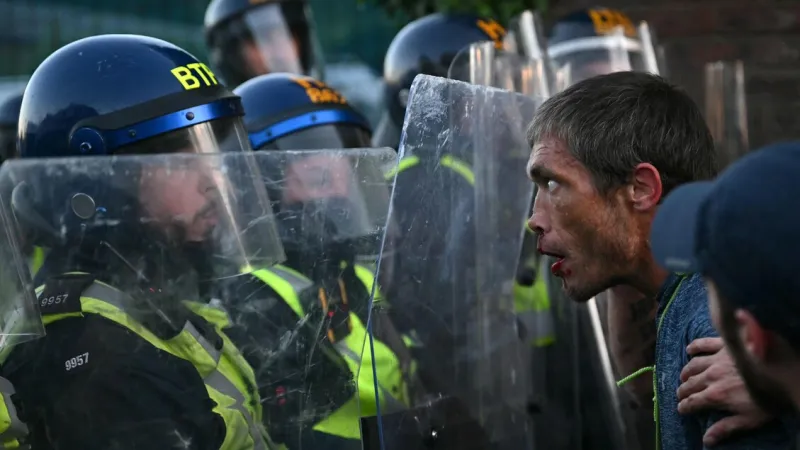
SOUTHAMPTON – The recent death of an 18-year-old in this southern English city has ignited widespread public unrest, leading to clashes between demonstrators and law enforcement officers and subsequent arrests. The incident has compelled the government to initiate a comprehensive review of existing police anti-racism guidelines, amidst accusations from Labour leader Keir Starmer that prominent political figure Nigel Farage is actively inciting violence.
The tragic events unfolded earlier this week, drawing national attention to longstanding concerns about police conduct and racial justice within communities. Following news of the teenager's death, which authorities have not yet fully detailed, local residents and activists quickly gathered, transforming peaceful vigils into heated confrontations with police.
Eyewitness accounts describe scenes of escalating tension in certain areas of Southampton, with reports of projectiles being thrown and police employing crowd control measures. Several individuals faced arrest on charges related to public disorder, further exacerbating an already volatile situation. The precise circumstances surrounding the 18-year-old's death remain under active investigation, with calls for transparency intensifying from community leaders and family members.
In response to the escalating crisis and the underlying public outcry, the government announced its intention to scrutinize police anti-racism policies. A spokesperson for the Home Office indicated that the review would be thorough, examining current training protocols, accountability mechanisms, and community engagement strategies to ensure fair and equitable policing for all citizens.
This governmental action follows a direct challenge from Labour leader Keir Starmer, who publicly accused Nigel Farage of exacerbating tensions. Speaking to reporters, Starmer stated, "Farage's rhetoric is reckless and irresponsible. He is actively inciting violence at a time when we need calm and unity to address serious issues of justice and accountability."
Nigel Farage, a veteran politician known for his populist stance and frequent critiques of establishment institutions, has yet to issue a direct response to Starmer's specific accusation regarding incitement. However, his past statements frequently emphasize national identity and order, often drawing both fervent support and strong condemnation for their perceived divisive nature. Political observers anticipate a robust defense from Farage's camp, likely asserting his right to free speech and criticizing what he might deem as political opportunism.
The incident in Southampton underscores a broader national conversation regarding race relations and policing in the United Kingdom. Activist groups have long highlighted disparities in how different communities experience law enforcement, urging for systemic reforms beyond mere policy adjustments. The death of the 18-year-old has brought these simmering tensions to a boiling point, demanding immediate attention from authorities.
Local police officials have appealed for calm, emphasizing their commitment to a transparent investigation into the teenager's death. Chief Superintendent Elaine Davies stated, "Our priority remains to establish the facts surrounding this tragic loss of life and to ensure public safety. We urge everyone to allow the investigation to proceed without prejudice and to refrain from actions that jeopardize community cohesion."
The government's decision to review anti-racism guidelines signals a recognition of the profound distrust many communities hold towards police institutions. Such reviews are typically undertaken when significant public pressure mounts, suggesting that the events in Southampton have reached a critical threshold demanding a high-level response. The outcome of this review could have far-reaching implications for law enforcement practices across the nation.
Politically, Starmer's direct confrontation with Farage highlights the deep ideological chasm currently dividing British society. The Labour leader's move seeks to draw a clear distinction between his party's approach to social justice and what he frames as the divisive politics of his rival. This public exchange intensifies an already charged political atmosphere, particularly as the nation grapples with issues of identity and fairness.
Community leaders in Southampton are working tirelessly to de-escalate tensions and channel public anger into constructive dialogue. Efforts include organizing community forums and collaborating with authorities to ensure that the voices of the affected families and residents are heard throughout the investigation and review processes. The path to healing and reconciliation remains long, but local initiatives aim to foster a sense of collective responsibility.
The overarching theme of police accountability takes center stage amidst these developments. Calls for independent oversight, improved de-escalation training, and greater representation within police forces are once again resonating across the UK. The Southampton incident serves as a stark reminder of the urgent need to address these systemic challenges to prevent future tragedies and restore public trust.
The governmental review is expected to involve consultations with civil rights organizations, policing experts, and community representatives. Its findings and recommendations could lead to significant legislative changes or fundamental shifts in how police forces operate. The process will likely be protracted, with public scrutiny remaining high throughout its duration.
This incident also brings into focus the powerful role of political discourse in shaping public perception and behavior. Starmer's accusation against Farage underscores the responsibility of public figures to exercise caution in their rhetoric, particularly during periods of social unrest. The interplay between political statements and real-world consequences is now under intense examination.
In summary, the tragic death of an 18-year-old in Southampton has set off a chain reaction of public protest, governmental introspection, and sharp political conflict. The coming weeks and months will reveal the true impact of these events on police reform, political narratives, and the ongoing quest for social justice in the United Kingdom. The nation watches closely as Southampton navigates this complex and sensitive period.