 Stefani Rindus
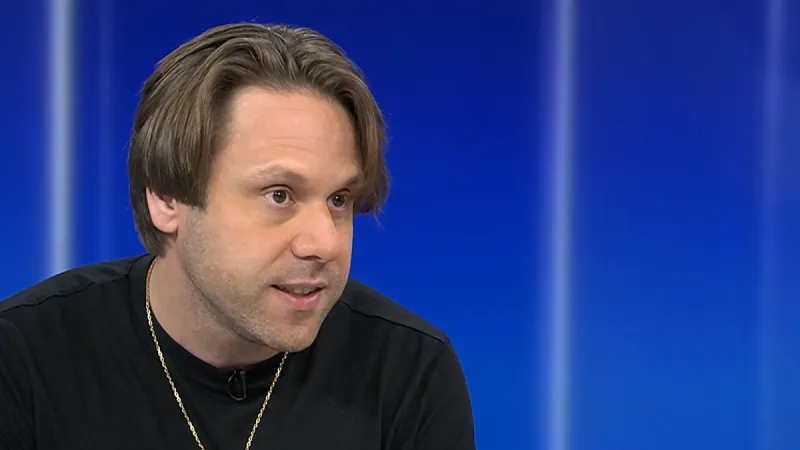
BERLIN – Chancellor Friedrich Merz, during a recent campaign event, declared his occasional use of Berlin's S-Bahn, a statement swiftly met with skepticism and a direct challenge from WELT editor Dennis Sand. Sand publicly suggested Merz validate his claims of public proximity by undertaking a journey on the U8 subway line to the diverse district of Neukölln, an area often perceived as a litmus test for understanding the pulse of everyday citizens.
Merz's assertion, made from a campaign podium, aimed to portray a relatable leader deeply connected to the daily experiences of the German populace. The Chancellor's comment regarding his use of public transport in the capital was presumably intended to bridge the perceived gap between the political elite and ordinary citizens navigating urban life.
However, the perceived authenticity of such claims frequently faces scrutiny, particularly in a political climate where leaders strive for genuine public proximity, or 'Volksnähe.' For figures like Chancellor Merz, who have often been characterized by a more conservative, business-oriented image, demonstrating a connection to everyday struggles becomes a crucial electoral strategy.
Dennis Sand, in his critique, did not mince words. “Then one would see how truly close to the people he really is,” Sand remarked, directly referencing the journey on the U8. This line, a translation from the original German commentary, underscores the belief that true understanding emerges from experiencing the city's less glamorous, yet fundamentally authentic, facets.
The U8 line, stretching through districts like Neukölln, Wedding, and Kreuzberg, offers a stark contrast to the more conventional routes associated with governmental hubs or affluent areas. It serves a significant cross-section of Berlin's working-class communities, immigrant populations, and vibrant subcultures, presenting a different reality than the S-Bahn routes often frequented by commuters to business or tourist centers.
This distinction highlights a broader political discussion: what truly constitutes 'public proximity'? Is it a mere photo opportunity on a train, or a genuine immersion into the environments and daily challenges faced by a significant portion of the electorate? The debate around Merz's comments taps into this fundamental question.
Historically, politicians globally have attempted to leverage public transport as a symbol of their accessibility and understanding. Yet, these gestures are frequently dissected for their sincerity, often becoming points of contention rather than consensus. The electorate increasingly demands actions that align with stated values, viewing performative displays with critical eyes.
The challenge to Chancellor Merz is particularly salient given his standing as a prominent leader. The CDU, under his leadership, has often navigated a complex political landscape. As documented in articles such as CDU Reset Looms If Mecklenburg-Vorpommern Vote Fails, Merz Future Unclear, the party faces constant pressure to connect with diverse voter bases and solidify unity, as highlighted in Merz Confronts Internal Critics, Bolsters CDU Unity Amid Berlin Vote.
For Merz, the decision to accept or decline such a public challenge carries significant weight. Embracing the U8 journey could bolster his image as a leader willing to step outside his comfort zone and genuinely engage with the city's diverse fabric. Conversely, ignoring it might reinforce perceptions of being out of touch, a common criticism leveled against political figures.
The media's role in initiating such challenges underscores its function in holding public officials accountable. Dennis Sand's commentary serves as a reminder that the press often acts as an intermediary between the public's expectations and the political narrative, pushing for transparency and authenticity.
The potential for a viral moment, whether positive or negative, makes this a high-stakes proposition for Chancellor Merz. In the age of instantaneous information, symbolic actions can profoundly influence public opinion and campaign trajectories.
Ultimately, the call for Chancellor Merz to engage with the U8 in Neukölln transcends a mere suggestion for a subway ride. It represents a demand for verifiable engagement with the realities faced by millions, offering a tangible measure of how deeply a leader understands, or truly seeks to understand, the people they govern.