Gabriella
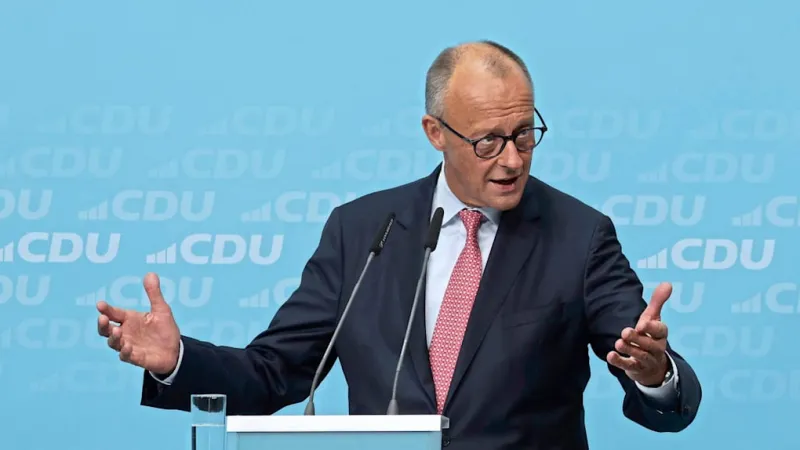
Berlin — Friedrich Merz, leader of Germany's Christian Democratic Union (CDU), seized a Berlin election campaign appearance to deliver a decisive message to dissenters within his own party, steering clear of direct attacks on political adversaries. His intervention, following a week of heightened speculation regarding his leadership and the party's direction, unfolded at the CDU headquarters, aiming to consolidate internal support and project a unified front ahead of a critical vote.
The unexpected pivot from conventional campaign rhetoric signaled Merz's intent to reassert authority and quell internal rifts that have occasionally plagued the CDU. The party, a dominant force in German politics, faces ongoing challenges in maintaining cohesion, especially as electoral contests intensify across the federal states. This particular event in Berlin was initially anticipated as a platform to rally against opposing parties in the local election, but Merz utilized it for a more pressing, internal dialogue.
Observers noted the calculated nature of Merz's address. Instead of dedicating his speech entirely to policy differences with the Social Democratic Party or the Greens, he allocated significant airtime to an appeal for internal solidarity. He underscored the imperative of collective action and disciplined messaging, implicitly censuring those who have voiced concerns or criticisms publicly.
The German press, interpreting his remarks, often characterized his stance as a declaration of war against his internal detractors. While avoiding explicit naming, Merz made it clear that disunity served no purpose for the party's electoral prospects or its long-term strategic goals. His robust defense of his leadership choices and the party line was unmistakable.
The preceding week had been rife with speculation concerning Merz's position as party leader, fueled by anonymous leaks and public commentary from various CDU factions. Such rumors frequently emerge during periods of political stress or after disappointing poll results, putting pressure on party leadership to demonstrate unwavering resolve.
Merz's direct approach sought to dispel any notion of weakness or indecision. By confronting internal challenges head-on at a prominent public event, he aimed to project strength and stability, crucial attributes for a leader navigating complex political landscapes. This move was widely seen as a strategic maneuver to solidify his base and silence whispers of potential leadership challenges.
Maintaining party cohesion is paramount for any political entity, particularly for a major opposition party like the CDU seeking to regain federal power. Internal squabbles can undermine public trust and distract from core policy messages, jeopardizing electoral outcomes. Merz's focus on unity highlighted these strategic imperatives.
The Berlin election campaign provided a high-visibility stage for Merz's internal communication. Local elections, while regional in scope, often serve as barometers for national sentiment and can influence the broader political narrative. The outcomes here have particular resonance, making Merz's decision to use this platform for internal messaging particularly noteworthy. Readers can find more details on the local context in the article: Berlin Election Heats Up: CDU, Left Leaders Face Final Showdown.
Historically, German political parties, including the CDU, have experienced periods of internal strife, especially post-chancellorships or during transitions in leadership. Merz, having taken the helm of the party, faces the perennial challenge of uniting diverse ideological wings and generational differences within the conservative bloc.
The ramifications of Merz's unequivocal stance are yet to fully unfold. While some within the CDU may view it as a necessary display of strong leadership, others could perceive it as an overreach or a further polarizing move. The coming months will reveal whether this assertive posture successfully unifies the party or exacerbates existing tensions as the CDU charts its course for future federal elections. His actions underscore the high stakes involved in both internal party dynamics and external electoral battles.