Debby Wijaya
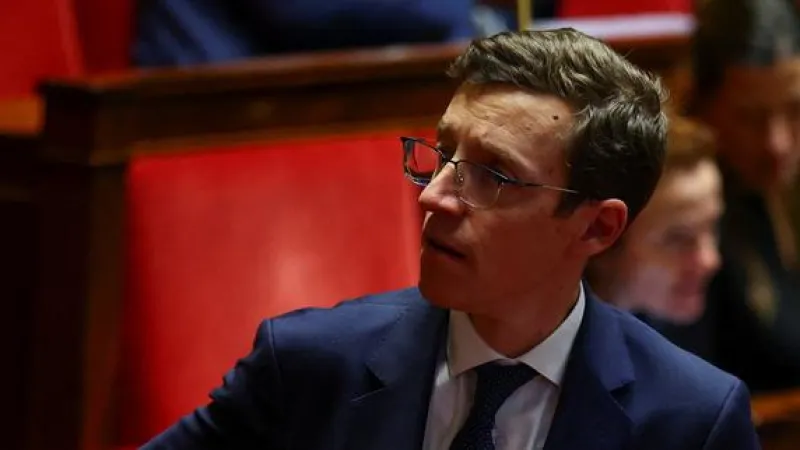
Paris — French Prime Minister Sébastien Lecornu on Wednesday, October 28, ignited a pivotal parliamentary debate at the Assemblee Nationale, seeking a legislative pathway to replace the contentious Parcoursup higher education admissions platform by 2028. The initiative immediately exposed profound disagreements between deputies across the political spectrum regarding the future of university access in France.
Lecornu requested a debate without a formal vote at the Palais-Bourbon, aiming to forge parliamentary consensus on a successor system. His administration views this early deliberation as crucial to avoid future legislative bottlenecks, emphasizing the long-term impact on French youth and higher education institutions. The discussion marks a proactive step towards overhauling a system that has drawn both praise and criticism since its inception.
The Parcoursup platform, established in 2018, manages applications for entry into public universities and other higher education programs. While designed to streamline admissions and reduce selection stress, it has frequently faced scrutiny for its algorithmic opaque nature and perceived inequities. Opponents argue it perpetuates social sorting, while proponents cite its role in managing millions of applications annually. The call for a Parcoursup replacement reflects an acknowledgment of persistent challenges within the French education system.
During the intense session, elected officials from both the right and left wings of the Assemblee Nationale articulated fundamentally divergent philosophies for France's higher education future. These ideological fault lines promise a challenging path for any comprehensive reform attempting to garner broad support. The government seeks to bridge these gaps, but the initial exchanges suggest a formidable task ahead.
Deputies on the right generally advocated for a system emphasizing meritocracy, greater autonomy for universities in student selection, and potentially a more vocational-oriented approach for certain sectors. They often propose reforms that would allow institutions more discretion, moving away from a centralized algorithmic matching process. Some also suggest exploring increased private sector involvement or alternative funding models for higher education.
Conversely, left-leaning representatives stressed principles of equal opportunity, greater social equity, and robust public funding for universities. Their proposals frequently involve strengthening guidance counselors, ensuring universal access, and de-emphasizing competitive selection for undergraduate programs. Many on the left view Parcoursup as an embodiment of market logic entering public education and demand a more human-centric, less algorithm-driven Parcoursup replacement.
The debate underscored the intricate balance required when reforming a national education system, particularly one that directly impacts hundreds of thousands of students each year. Stakeholders include students, parents, educators, university administrators, and employers, all with vested interests in the outcome of the Parcoursup replacement initiative. Crafting a system that satisfies such diverse demands presents a significant policy challenge.
Prime Minister Lecornu emphasized the 2028 target for the Parcoursup replacement, indicating that the government intends to allow ample time for consultation and legislative drafting. This extended timeline suggests a recognition of the significant overhaul involved, aiming to prevent rushed decisions that could exacerbate existing tensions or create new systemic problems. It also provides a window for extensive public and expert input.
The choice for a debate without a vote signals an exploratory phase, allowing for open expression of ideas and concerns without the immediate pressure of legislative approval. This approach aims to foster a more collaborative environment for identifying common ground before formal legislation is introduced. It also allows the government to gauge the depth and breadth of opposition to various proposals.
This push for a Parcoursup replacement occurs within a broader context of ongoing debates about French educational reform, from primary schooling to vocational training. The nation consistently grapples with questions of how to best prepare its youth for a competitive global economy while upholding its republican values of equality and access. The discussion extends beyond mere administrative changes, touching upon core societal aspirations.
Following this initial debate, experts anticipate that the government will likely establish working groups or commissions composed of parliamentarians, educational specialists, and student representatives. These bodies would then be tasked with drafting concrete proposals and conducting feasibility studies for various Parcoursup replacement models. The path forward will require meticulous planning and careful negotiation.
Public opinion polls regarding Parcoursup have historically been mixed, reflecting the divide seen in the Assemblee Nationale. While many acknowledge the need for an efficient admissions system, concerns about perceived fairness, transparency, and the pressure it places on high school students remain prevalent. Any future Parcoursup replacement will need to address these public anxieties to gain widespread acceptance.
France's challenge is not unique; many nations contend with complex higher education admissions systems. Policymakers will likely examine models from other European countries or North America to draw lessons and adapt successful strategies. This comparative analysis could inform the development of an innovative and equitable Parcoursup replacement tailored to the French context.
The eventual Parcoursup replacement will also have significant economic implications, influencing student career paths, workforce development, and the overall competitiveness of French industries. Ensuring that the new system aligns with national economic priorities and addresses skill gaps will be a critical consideration for policymakers. The cost of implementation and ongoing maintenance will also factor into decisions.
The journey toward a widely accepted Parcoursup replacement will undoubtedly involve considerable political wrangling and public discourse. Prime Minister Lecornu's proactive stance sets the stage for a critical re-evaluation of how France guides its next generation into higher education, marking a defining moment for the nation's academic future.