 Debby Wijaya
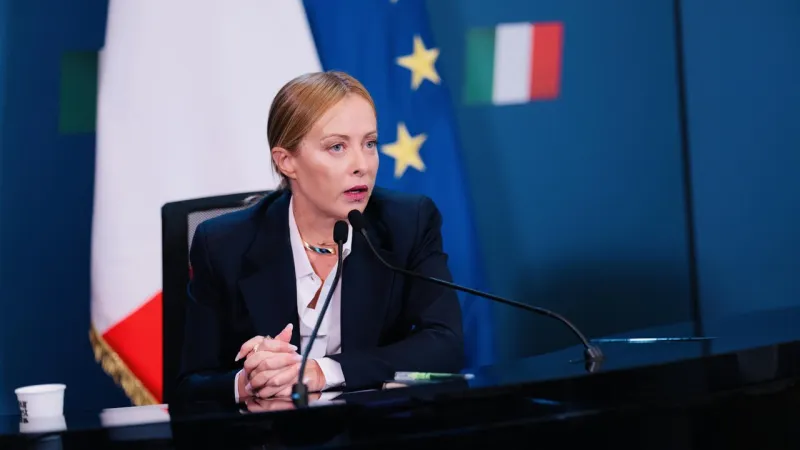
Rome – Italian Prime Minister Giorgia Meloni on Tuesday addressed mounting concerns over potential Russian influence within Italy, asserting her government remains always mobilized on 360-degree security. Her statement underscored the nations commitment to vigilance amidst a complex geopolitical landscape, reiterating that all perceived threats are subject to continuous monitoring.
The Prime Ministers comments came as scrutiny intensifies across Europe regarding Russian attempts to destabilize democratic processes and foster disunity. Such clandestine operations often involve disinformation campaigns, cyberattacks, and funding of populist movements, prompting leaders to re-evaluate national security postures.
Addressing the breadth of anxieties, Meloni stated directly, "Many things worry us, but we monitor them all." This concise declaration highlights a proactive approach by the Italian executive to counter multifaceted threats that extend beyond conventional military aggressions, encompassing informational and economic dimensions.
Italy, a key member of the European Union and NATO, finds itself at the crossroads of various geopolitical currents, including Mediterranean security, energy independence, and the ongoing conflict in Ukraine. The nation has historically maintained complex relations with Russia, particularly concerning energy supplies, though its stance has significantly hardened following the 2022 invasion of Ukraine.
This vigilance is not unique to Rome. Across the continent, leaders grapple with similar challenges. For instance, the question of a tougher Russia stance amidst attack fears continues to divide public opinion in countries like Germany, reflecting a broader European dilemma in balancing economic ties with security imperatives.
Melonis administration has consistently emphasized stability and forward-looking policies. Her previous remarks, such as those highlighting stability as a prerequisite for the future rather than dwelling on past accomplishments, resonate with her current emphasis on robust security measures against external meddling.
The concept of 360-degree security, as articulated by Meloni, implies a comprehensive strategy. This encompasses intelligence gathering, cyber defense, counter-espionage, and diplomatic efforts aimed at mitigating hostile foreign interference. It acknowledges that threats can emanate from various vectors, requiring an integrated and adaptive response.
Identifying and counteracting foreign influence operations presents significant challenges. These efforts often operate in the shadows, utilizing sophisticated techniques to manipulate public discourse and sow discord without direct attribution. Governments must balance national security interests with democratic freedoms and privacy concerns.
Concerns about Russian influence are not new, but they have gained renewed urgency in the wake of significant geopolitical shifts. Incidents like the Kremlin closing the Goethe Institute further illustrate the escalating tensions and the punitive measures taken by Moscow against perceived adversaries.
The Italian government is likely coordinating its intelligence and security efforts with European partners and NATO allies. Such collaboration is crucial for sharing threat intelligence, developing common defense strategies, and presenting a united front against external pressures.
Beyond direct political interference, foreign influence can also manifest in economic leverage. Energy dependency, investment in critical infrastructure, and trade agreements can become tools for exerting pressure, making economic resilience an integral part of 360-degree security.
Maintaining public trust is paramount for any government facing external threats. Transparency, while challenging in security matters, and clear communication about the nature of threats can help counter disinformation and build national consensus around protective measures.
As the global geopolitical landscape continues its rapid evolution, the vigilance expressed by Prime Minister Meloni signals Italys firm resolve to protect its sovereignty and democratic institutions. The commitment to a holistic security approach will likely remain a cornerstone of her administrations policy.