 Chris Robert

Düren, Germany – A violent street confrontation involving more than 20 individuals from two extended families recently erupted in Düren, a city in North Rhine-Westphalia, with participants allegedly wielding axes, hammers, and baseball bats. The alarming incident, which underscored growing concerns about family-based criminal structures, prompted immediate condemnation from law enforcement officials who emphasized the unacceptability of such blatant disregard for public order.
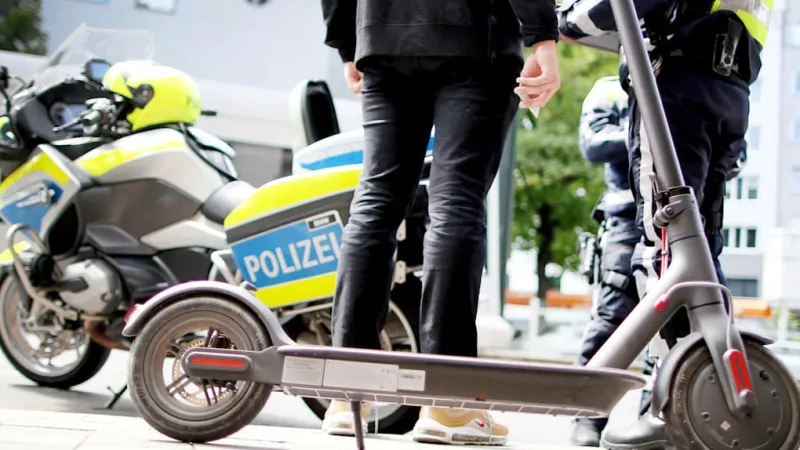
Eyewitnesses reported a chaotic scene as members of the rival families engaged in a brutal melee, turning a public space into a battleground. Local police units responded swiftly to quell the disturbance, though the full extent of injuries and the precise catalyst for the confrontation remain under active investigation.
Oliver Huth, the North Rhine-Westphalia State Chairman of the Federation of German Criminal Police Officers (Bund Deutscher Kriminalbeamter - BDK), voiced strong disapproval over the incident. He stated, "This we cannot tolerate."
Huth further elaborated on the systemic challenges posed by such events, emphasizing the need for a comprehensive and sustained approach. "One must now dedicate oneself to these family structures with patience," he remarked, translating the original German sentiment. This statement signals a recognition that superficial interventions are insufficient to tackle deeply entrenched issues.
The incident in Düren is not an isolated occurrence but rather contributes to a broader narrative of what German authorities often refer to as clan crime or family-based organized crime. These structures frequently operate outside traditional criminal networks, leveraging familial loyalties and intimidation to engage in various illicit activities, ranging from drug trafficking to protection rackets and violent disputes.
Law enforcement agencies across Germany have for years struggled to dismantle these intricate networks. The close-knit nature of the families involved often creates a wall of silence, making investigations difficult and prosecutions challenging. Witnesses may be reluctant to cooperate due to fear of reprisal or ingrained cultural loyalties.
Experts suggest that societal factors, including economic marginalization and a sense of alienation, can contribute to the entrenchment of these parallel structures. For some, the family or clan becomes a primary source of identity, security, and dispute resolution, sometimes superseding state authority. This dynamic presents a significant hurdle for integration and social cohesion efforts.
The BDK has consistently advocated for a multi-faceted strategy that extends beyond mere policing. This includes preventative measures, enhanced educational programs, and stronger social services aimed at offering alternative pathways and fostering allegiance to democratic institutions rather than family-centric power structures. Such long-term commitment is crucial for lasting change.
The Düren clash serves as a stark reminder of the persistent threat these forms of violence pose to public safety and the rule of law within German communities. It underscores the urgency for robust legislative frameworks and adequate resources for police and judicial systems to effectively confront and disrupt these criminal enterprises.
Authorities are urging the public to provide any information that could assist in their ongoing investigation into the Düren incident. The goal is not only to apprehend those directly involved in the brawl but also to delve deeper into the organizational aspects of the families implicated.
This incident resonates with broader concerns about urban violence in Germany. For example, recent reports have highlighted how Berlin Confronts Alarming Rise in Gun Violence, Easy Weapon Access, demonstrating a nationwide challenge to maintain public order against various forms of criminal activity.
The response from federal and state governments is critical in shaping how such complex criminal phenomena are addressed. A unified front, combining law enforcement with social and political initiatives, is often cited as the most effective path forward by criminologists and policy makers.
Without sustained political will and consistent resource allocation, critics argue that these familial structures will continue to pose a significant challenge to the state's monopoly on force and its ability to ensure justice for all citizens.
The Düren confrontation, while specific in its immediate details, reflects a wider debate within German society about integration, cultural identity, and the boundaries of legal and societal norms. It compels a national discussion on how to foster a unified civil society where such clashes are prevented.