 Angel Doris
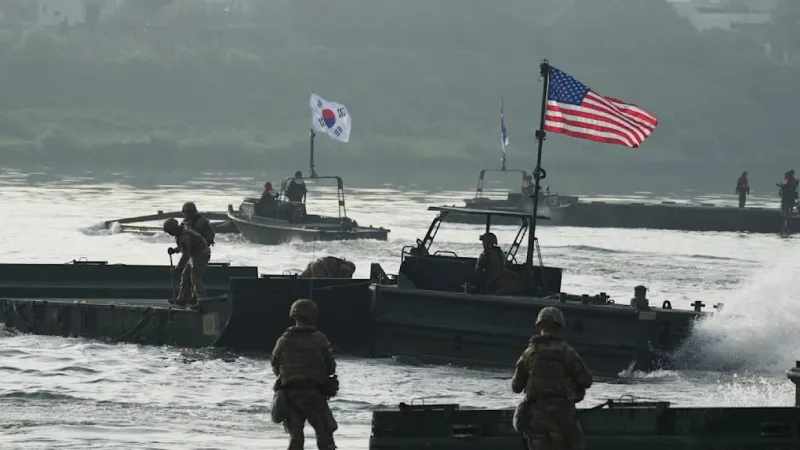
President Donald Trump announced a substantial reduction in large-scale joint US-South Korea military exercises, a decision made just prior to a major scheduled drill on the Korean Peninsula. The President justified the unexpected move by emphasizing his favorable relationship with North Korean leader Kim Jong Un, whom he described as having behaved "not threatening and respectful."
This presidential directive marks a pivotal shift in the long-standing defense posture of the United States and its key East Asian ally, South Korea. For decades, these robust military exercises have served as a cornerstone of deterrence against potential aggression from Pyongyang, symbolizing the ironclad commitment of the US to regional security.
The announcement sends immediate ripples through the intricate geopolitical landscape of Northeast Asia. Regional observers and security analysts are now scrutinizing the implications of this reduction, questioning how it will be perceived by both allies like South Korea and strategic adversaries, most notably North Korea.
President Trump explicitly articulated his rationale, stating that his personal rapport with Chairman Kim Jong Un had cultivated an environment conducive to such changes. He highlighted the North Korean leader's conduct as a mitigating factor in the need for extensive, high-profile military demonstrations.
Historically, the joint US-South Korea military exercises, encompassing air, land, and naval components, have involved tens of thousands of troops from both nations. These drills, ranging from command post exercises to large-scale field training, aimed to enhance interoperability and readiness in defending South Korea against any external threats.
The decision comes at a delicate time for Seoul, which has consistently relied on the visible presence and operational readiness demonstrated by these exercises. South Korean officials have often underscored the drills' critical role in maintaining regional stability and safeguarding national security.
Many in diplomatic and military circles interpret the curtailment of these exercises as a significant gesture towards Pyongyang, potentially aimed at fostering further dialogue on denuclearization. However, some analysts also view it as a concession that might embolden North Korea or create a perceived security vacuum.
This latest development aligns with President Trump's broader foreign policy approach, which frequently challenges established diplomatic and military traditions. His administration has often sought unconventional pathways in international relations, a stance also evident in situations such as when Iran offered a bounty on US troops and President Trump vowed Hormuz would be US territory.
North Korea has historically denounced these joint US-South Korea military exercises as provocative rehearsals for an invasion. Pyongyang has frequently responded to the drills with missile tests or heightened rhetoric, making President Trump's move potentially a de-escalatory measure from the US perspective.
The reduction introduces a new dynamic into the stalled denuclearization negotiations between Washington and Pyongyang. Advocates suggest it could build trust, while skeptics worry it might weaken the US's bargaining position or signals a lack of resolve.
Details surrounding the exact scope and nature of the reduction remain under close scrutiny. Previous exercises often simulated various contingencies, from border incursions to full-scale conflicts, ensuring both nations were prepared for any eventuality on the highly volatile peninsula.
The Pentagon and State Department have yet to release extensive commentaries on the long-term strategic implications, though initial indications point to an implementation guided by presidential directives. Military leaders will undoubtedly work to adapt training protocols to ensure continued readiness despite the modified schedule.
This reevaluation of military strategy on the Korean Peninsula underscores a commitment to diplomacy, but it also casts an element of uncertainty over the future of regional security arrangements and alliances in a critical global hotspot.