 Stefani Rindus
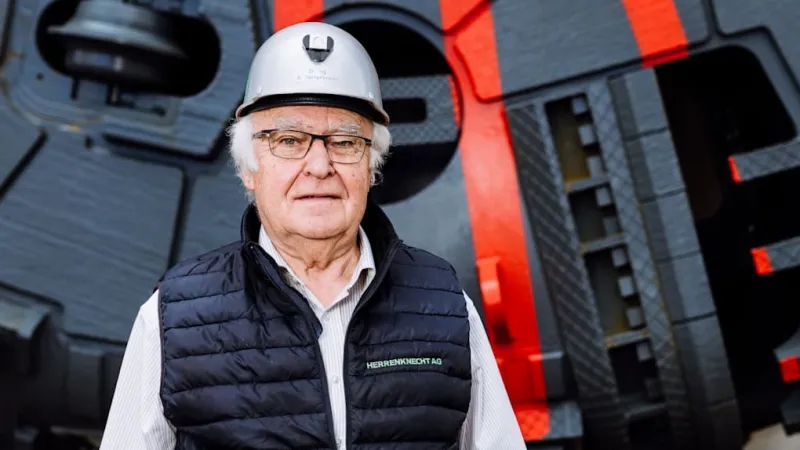
Berlin – German industrial magnate Martin Herrenknecht has delivered a scathing critique of European Union bureaucracy, asserting that the bloc's escalating regulatory zeal is fundamentally stifling the nation's industrial output and innovation. Herrenknecht, a prominent entrepreneur, expressed profound dismay over the European Commission's demands, painting a grim picture of their detrimental impact on Germany's economic backbone.
Herrenknecht, who leads a global engineering firm, conveyed his astonishment at the relentless proliferation of new rules emanating from Brussels. He argues this bureaucratic deluge, which he characterizes as a regulatory frenzy, creates an increasingly burdensome environment for businesses already navigating complex global markets.
The core of Herrenknecht's concern centers on the cumulative effect of these regulations. He contends that each new directive, while perhaps well-intentioned in isolation, adds layers of complexity, cost, and administrative overhead that impede operational agility and competitive edge for German companies.
German industry, historically a powerhouse of engineering and manufacturing, faces significant challenges in maintaining its global standing. Herrenknecht warns that the current regulatory trajectory jeopardizes Germany's ability to innovate, invest, and ultimately create jobs in a rapidly evolving international economic landscape.
His specific exasperation is directed at the European Commission's latest round of demands. While the exact nature of these demands was not fully detailed in the original debate, Herrenknecht's reaction suggests they represent a critical tipping point, pushing companies to their operational limits.
This sentiment resonates with a growing chorus of business leaders across Germany and Europe who feel increasingly constrained by what they perceive as an overly prescriptive regulatory framework. Many argue that the focus has shifted from facilitating growth to imposing granular controls.
The entrepreneur's comments underscore a broader debate within the EU regarding the balance between regulatory oversight and economic competitiveness. Critics often point to the single market's potential being undermined by internal barriers and excessive administrative burdens rather than external competition.
For Germany, a nation heavily reliant on its export-oriented industrial sector, the implications are particularly acute. Any significant erosion of industrial capacity or competitiveness due to internal EU policies could have cascading effects throughout its economy.
Herrenknecht's impassioned plea suggests a fundamental misalignment between the EU's policy objectives and the practical realities faced by manufacturers. He implies that if the current course persists, Germany's industrial future, and by extension Europe's, will be severely compromised.
Observers anticipate that such candid remarks from a respected industry figure like Herrenknecht will fuel further discussions in political and economic circles. The debate over the efficacy and proportionality of EU regulation remains a critical juncture for the bloc's economic trajectory.