 Stefani Rindus
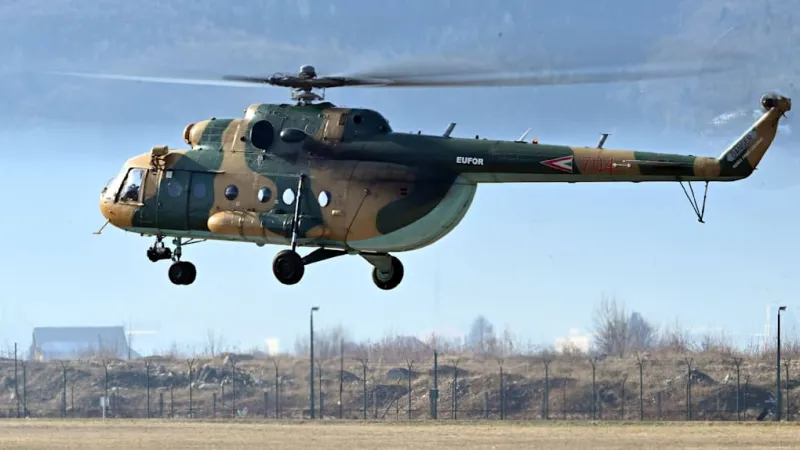
SARAJEVO, Bosnia-Herzegovina – An EU mission helicopter conducting a routine operation suffered a catastrophic crash in a region approximately 180 kilometers northeast of Sarajevo, reportedly killing four crew members and injuring eleven others, according to Bosnian media outlets. The incident marks a severe setback for European Union presence in the Western Balkans, prompting immediate concerns about operational safety and regional stability.
The helicopter, part of a crucial European Union contingent, was reportedly on a standard surveillance or logistical flight when the accident occurred. While the precise cause of the crash remains unknown, authorities are expected to launch a comprehensive investigation into the circumstances that led to the tragic event.
Bosnian media initially broke the news, citing local sources and emergency responders on the ground. The immediate focus has shifted to search and rescue efforts, complicated by the potentially rugged terrain typical of the region. Medical teams and crisis management units were dispatched promptly to the crash site.
The EU mission in Bosnia-Herzegovina, often associated with EUFOR Althea, primarily focuses on maintaining a safe and secure environment, providing support to the Bosnian armed forces, and contributing to the countrys overall stability. Helicopters are integral to these operations, facilitating rapid deployment, surveillance, and transport across diverse landscapes.
The loss of life and the significant number of injuries underscore the inherent dangers faced by personnel engaged in these vital international missions. Each routine flight carries risks, and accidents, though rare, can have profound implications for morale and operational effectiveness.
Officials from both the European Union and Bosnian government are anticipated to release formal statements in the coming hours, offering condolences to the families of the victims and outlining the initial steps of the inquiry. The names and nationalities of the deceased and injured have not yet been publicly disclosed, pending notification of next of kin.
The incident draws parallels with other tragic occurrences involving personnel on international assignments, highlighting the volatile nature of such deployments. For instance, similar risks were tragically underscored during the humanitarian efforts when a drone strike at Dnipro Station killed 14, showcasing the unpredictable dangers missions face.
Investigators will examine all potential factors, including mechanical failure, human error, and environmental conditions. Weather in the mountainous regions of Bosnia-Herzegovina can be unpredictable, presenting challenges for aviation, even during what are designated as routine operations.
This tragic EU helicopter crash in Bosnia will undoubtedly lead to a thorough review of existing safety protocols and operational procedures within the mission. Such incidents serve as sobering reminders of the sacrifices made by those serving in complex international environments.
The European Union has maintained a significant presence in Bosnia-Herzegovina since the end of the Bosnian War, emphasizing peacebuilding, institutional reform, and regional cooperation. The helicopter fleet supports these objectives by ensuring accessibility to remote areas and enabling swift responses to various situations.
The impact of this incident on public perception and the continuation of the EUs broader objectives in the Western Balkans remains to be seen. However, a steadfast commitment to understanding the causes and preventing future tragedies will be paramount as the investigation unfolds.
The international community extends its deepest sympathies to those affected by this grievous accident. The full scope of the incident and its long-term ramifications will become clearer as more information is gathered and verified by official channels.