 Demian Sahputra
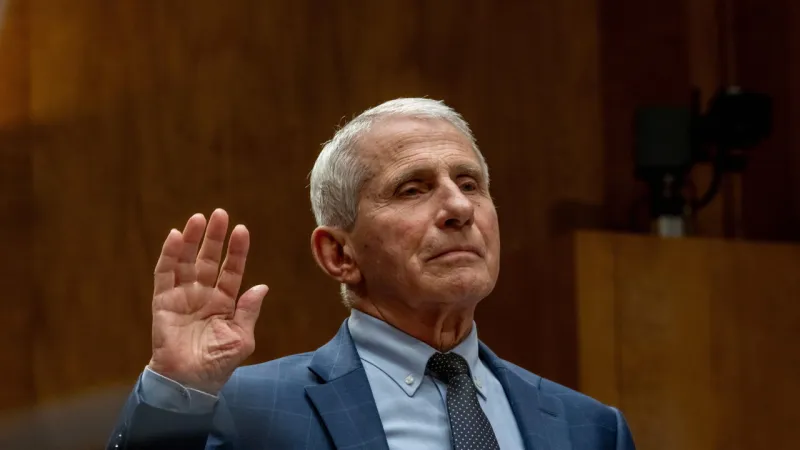
Dr. Anthony Fauci, a pivotal figure during the COVID-19 pandemic response, invoked his Fifth Amendment right against self-incrimination more than 100 times this week while testifying before a congressional committee probing the origins and handling of the virus, potentially facing charges of contempt of Congress. His repeated refusal to answer questions has intensified a long-standing political firestorm surrounding his tenure.
The extraordinary testimony unfolded on Capitol Hill, where lawmakers pressed Fauci on various aspects of the pandemic, including government funding for gain-of-function research and the scientific basis for certain public health mandates. Fauci consistently declined to provide direct answers, stating, I am obsessed with protecting myself from the accusations being leveled against me.
The House Oversight Committee, leading the inquiry, has indicated that Fauci's stonewalling could lead to a vote on a contempt of Congress resolution. Such a measure would then proceed to the full House for consideration, potentially escalating into a legal battle between the legislative and executive branches.
Republicans on the committee expressed profound frustration, asserting that Fauci's refusal to cooperate impedes their ability to conduct essential oversight and uncover critical information related to the pandemic's impact and the national response. They argue that transparency is paramount for public trust and accountability.
President Donald Trump, weighing in on the escalating confrontation, characterized Fauci's past policy recommendations and public statements as his crazy ideas. President Trump's remarks underscore the deep partisan divisions that have long defined discussions surrounding Fauci's role.
Sources close to the committee suggest that the move towards a contempt charge is not a sudden development but rather the culmination of months of contentious exchanges and perceived lack of cooperation from Fauci and his legal team during preliminary stages of the investigation.
The Fifth Amendment to the United States Constitution allows individuals to refuse to answer questions that might incriminate them. While a constitutional right, its frequent invocation by a public official in a congressional setting is rare and often signals deep-seated legal concerns.
Fauci, who served as the director of the National Institute of Allergy and Infectious Diseases for decades and as a chief medical advisor to several presidents, became a lightning rod for both praise and criticism throughout the pandemic. His public appearances and policy recommendations often sparked heated debate.
Democrats on the committee largely defended Fauci, accusing Republicans of conducting a politically motivated witch hunt designed to discredit a dedicated public servant. They argued that the hearing served as a platform for partisan attacks rather than a genuine search for facts.
Experts in constitutional law note that while Congress has the power to issue contempt citations, enforcement often involves complex legal challenges. Historically, such cases can lead to protracted court battles, the outcome of which is not always certain.
This latest development ensures that the legacy of the COVID-19 pandemic, and the actions of those who steered the national response, will remain a highly contentious subject in American politics for the foreseeable future. The implications for future congressional oversight remain significant.