Gabriella
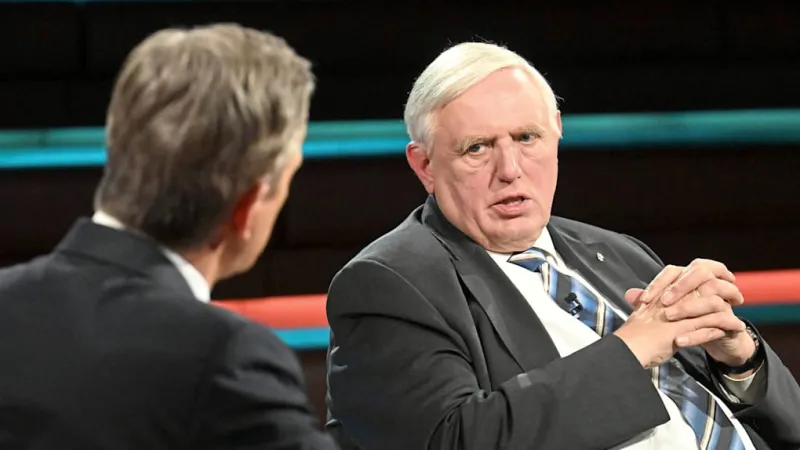
BERLIN – A prominent figure within Germany's Christian Democratic Union (CDU), Karl-Josef Laumann, voiced considerable apprehension recently regarding the conservative Union's plummeting support, which now registers at a mere 21 percent in national polls. Speaking on the program Markus Lanz, Laumann acknowledged a palpable sense of uncertainty within the party ranks, even as Interior Minister Alexander Dobrindt called for an immediate cessation of internal discussions concerning Friedrich Merz's potential candidacy for Chancellor.
Laumann, a veteran politician known for his directness, revealed his personal dismay during the television appearance. “Naturally, there is an insecurity,” he stated, reflecting on the sharp decline in public trust and electoral standing for the CDU and its Bavarian sister party, the Christian Social Union (CSU), collectively referred to as the Union. This sentiment underscores a growing unease among traditional conservative voters.
The latest public opinion surveys, placing the Union at just 21 percent, represent a significant downturn for the historically dominant political bloc. Such numbers position the Union far below its customary performance and raise fundamental questions about its future electoral viability and strategic direction heading into upcoming elections.
Despite the unsettling poll data, Laumann sought to downplay any widespread internal dissent against current CDU leader Friedrich Merz. He stated his belief that there was no significant discontent regarding Merz at the party's grassroots level, suggesting that while the broader situation is worrying, the core membership remains largely unified behind its chairman.
However, the intervention from Interior Minister Alexander Dobrindt, a leading figure in the CSU, indicates a different current. Dobrindt explicitly demanded an end to ongoing debates about Merz serving as Chancellor, a clear sign that such discussions are indeed active within conservative ranks and contributing to perceived instability.
The urgency of Dobrindt's plea highlights the internal pressures facing the Union's leadership. Persistent speculation about potential Chancellor candidates, particularly amid declining poll numbers, often signals deeper structural issues and strategic disagreements within a major party.
This internal dynamic unfolds against a backdrop of significant shifts in the German political landscape. Other parties, including the far-right Alternative for Germany (AfD), have seen their support rise, drawing voters away from established mainstream parties. Concerns about the AfD's influence have been echoed by figures like Charlotte Knobloch, who recently likened the party to Nazi-era organizations, urging radical action against its rise, as reported in Knobloch Alarms: AfD Resembles Nazi Party, Calls for Radical Action.
The Union's struggle to connect with a broad electorate has been compounded by various challenges, from economic pressures to complex social issues. The electorate appears increasingly fragmented, demanding clearer policy stances and more decisive leadership from its political representatives.
For the Union, navigating this period of low approval requires a delicate balance of internal cohesion and external appeal. The ability to project a unified front while addressing the root causes of voter dissatisfaction will be paramount in reversing its current trajectory.
Political analysts suggest that the ongoing discussions, coupled with the low Union poll numbers, could precipitate a critical period for the conservative alliance. Its ability to consolidate its base and present a compelling vision for Germany's future will determine its success in stemming the tide of declining support and reasserting its traditional electoral strength.