 Edward DP Situmorang
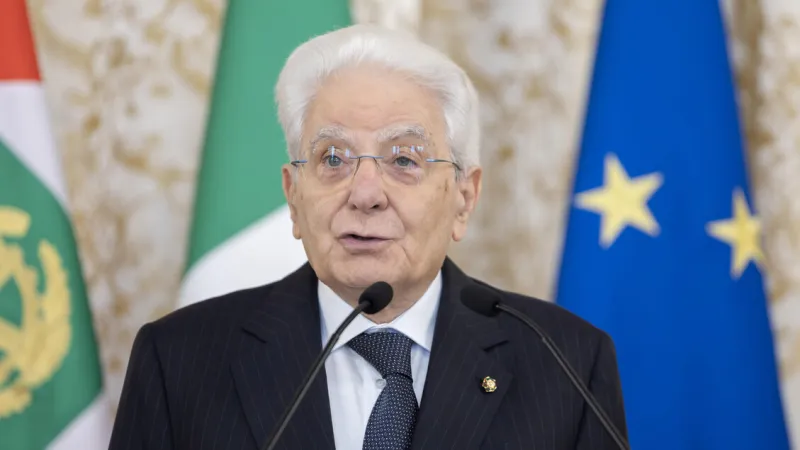
ROME – Italian President Sergio Mattarella hosted South Korean President Yoon Suk-yeol at the Quirinal Palace on Tuesday for pivotal discussions aimed at significantly enhancing strategic cooperation between the two nations across economic, cultural, and geopolitical spheres.
The high-level meeting underscored a mutual commitment to deepening bilateral ties, fostering innovation, and addressing a spectrum of global challenges, from climate change to supply chain resilience.
The state visit, a cornerstone of diplomatic engagement, provided a platform for both leaders to reaffirm the strong bonds that have characterized Italy-South Korea relations for decades. Discussions focused on tangible pathways for collaboration that extend beyond traditional diplomacy.
President Mattarella emphasized the shared democratic values and the importance of multilateralism as foundational principles guiding the partnership. He highlighted Italy's desire to strengthen its presence and influence in the Indo-Pacific region, viewing South Korea as a key partner in this endeavor.
President Yoon Suk-yeol, in turn, articulated South Korea's vision as a global pivotal state, seeking to expand its network of reliable partners in Europe. He noted Italy's strategic position within the European Union and its significant cultural and economic weight.
Economic cooperation formed a substantial part of the agenda. Both leaders reviewed trade volumes, identified new investment opportunities, and discussed collaboration in advanced technology sectors such as semiconductors, artificial intelligence, and green energy. The burgeoning exchange in luxury goods, fashion, and automotive industries was also noted as a testament to diverse economic ties.
Discussions also covered cultural exchange and tourism, recognizing the immense potential for increasing people-to-people connections. Initiatives to promote educational programs, artistic collaborations, and scientific research partnerships were explored, aiming to foster deeper understanding and mutual appreciation.
The global geopolitical landscape also featured prominently in their talks. The presidents exchanged views on regional stability, the ongoing conflict in Ukraine, and the critical importance of maintaining peace and security in the Indo-Pacific. They reiterated their commitment to upholding international law and promoting peaceful resolutions to global disputes.
Addressing climate change and sustainable development was another key area of consensus. Both Italy and South Korea are committed to achieving ambitious climate targets, and their leaders discussed potential joint projects in renewable energy, sustainable infrastructure, and circular economy models.
Furthermore, the meeting delved into collaboration on global health security and strengthening supply chain resilience, lessons learned from recent global disruptions. The leaders agreed on the necessity of diverse and robust supply chains to prevent future vulnerabilities.
This visit is expected to pave the way for several memoranda of understanding in the coming months, solidifying commitments made during the presidential summit. These agreements could span various sectors, from advanced manufacturing to cybersecurity, reflecting the comprehensive nature of the evolving partnership.
The historical trajectory of Italy South Korea relations, marked by periods of robust exchange and cooperation, serves as a solid foundation for this renewed impetus. Both nations have consistently championed open markets and innovation, attributes that align well with their shared future aspirations.
President Mattarella underlined that sustained dialogue at the highest levels is crucial for navigating complex international issues and for maximizing the benefits of a strategic partnership. This reciprocal engagement builds trust and facilitates coordinated action on global platforms.
President Yoon expressed optimism about the future of Italy-South Korea relations, highlighting that the synergy between a Group of Seven (G7) nation and a leading Asian economy holds significant promise for addressing not only bilateral interests but also broader global challenges.
The exchange also touched upon multilateral forums, including the United Nations and the G20, where both countries often find common ground on critical international policies. Coordinating efforts within these bodies was identified as a strategic imperative.
This meeting represents more than a ceremonial gesture; it symbolizes a deliberate and strategic effort by both Italy and South Korea to forge a more integrated and influential partnership on the world stage, capable of contributing to global stability and prosperity.
Future initiatives are expected to include exchanges between parliamentary delegations, business leaders, and academic institutions, ensuring that the momentum generated by this presidential meeting translates into lasting and impactful collaborations across all societal levels.
Ultimately, the discussions reinforced the understanding that in an increasingly interconnected and complex world, strong bilateral partnerships like that between Italy and South Korea are indispensable for promoting shared values and securing collective interests.