 Demian Sahputra
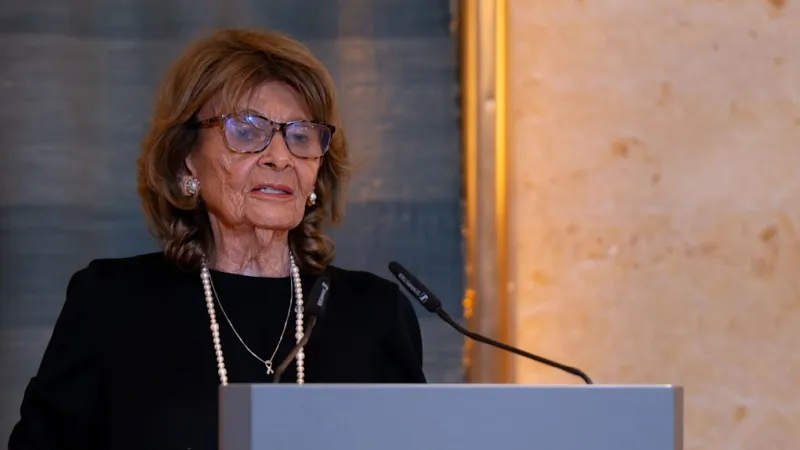
MUNICH - Charlotte Knobloch, a revered leader of Germany's Jewish community and former President of the Central Council of Jews in Germany, has issued a grave warning regarding the Alternative for Germany (AfD) party, asserting its growing resemblance to the Nazi Party (NSDAP) and urging the deployment of “radical means” to safeguard the nation's democratic foundations. Her impassioned plea underscores a critical juncture in German politics, emphasizing the urgent need for action against the populist right-wing party.
Knobloch's forceful remarks highlight profound concerns about the trajectory of the AfD. While she explicitly stated that the two parties cannot be “equated,” she insisted they must be “compared” given their evolving ideologies and rhetoric. This distinction is crucial, acknowledging historical differences while drawing attention to alarming parallels.
The call for “radical means” signifies a heightened urgency from a figure who has witnessed firsthand the consequences of unchecked extremism. Her perspective, rooted in Germany's traumatic past, lends considerable weight to her condemnation of the AfD's perceived threat to democratic norms and institutions.
The AfD has seen a significant surge in popularity across Germany in recent years, propelled by anti-immigration sentiment and skepticism towards established political parties. Its electoral successes, particularly in eastern German states, have fueled widespread debate about the resilience of Germany's post-war democratic consensus.
As a Holocaust survivor, Charlotte Knobloch's voice carries immense moral authority. Her advocacy for tolerance, remembrance, and democracy has long been a cornerstone of public discourse in Germany. Her latest intervention marks a poignant moment, signaling an escalation in the battle against what she views as a rising tide of xenophobia and nationalism.
Observers note that the perceived resemblance to the NSDAP, as articulated by Knobloch, likely stems from various aspects of the AfD's platform and public pronouncements. These include rhetoric targeting minorities, questioning core constitutional principles, and employing aggressive, often divisive, language that polarizes the electorate.
The essence of her argument centers on the imperative to preserve Germany as a democracy. She posits that allowing the AfD's influence to grow unchecked risks eroding the very democratic principles that underpin the modern German state, painstakingly rebuilt after the devastation of World War II.
Knobloch's statements are expected to ignite further discussion within Germany's political landscape, prompting both support from those who share her concerns and criticism from AfD sympathizers. Her words serve as a potent reminder of historical lessons and the continuous vigilance required to protect democratic freedoms.
The comparison of contemporary political movements to the NSDAP is a recurring, yet highly sensitive, theme in German public life. Such analogies are rarely made lightly, particularly by individuals of Knobloch's stature, reflecting a deep-seated apprehension about the re-emergence of extremist ideologies.
Her call to action implies a strategic shift in how mainstream society and political actors should engage with the AfD. It moves beyond mere political opposition to suggest a more fundamental defense of the democratic order itself, potentially influencing future policy debates and civic initiatives.
The danger, in Knobloch's assessment, lies not in an identical replication of historical events, but in the insidious propagation of similar foundational beliefs and methods that could ultimately undermine democratic institutions. It is a warning against complacency and a plea for active resistance.
While specific to Germany, Knobloch's strong stance resonates within a broader European context where populist and far-right parties have gained traction in several nations. Her message serves as a broader cautionary tale against the erosion of democratic values in the face of rising nationalism.