 Angela Stefani
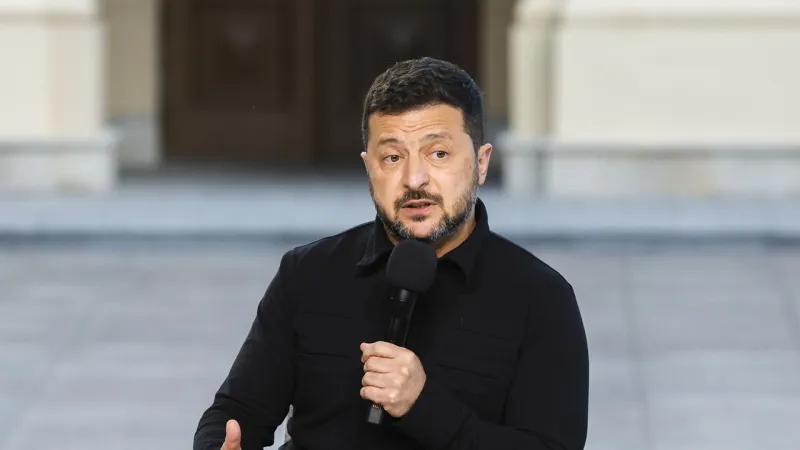
Ukrainian President Volodymyr Zelensky has extended an overture for a direct summit with Russian President Vladimir Putin at the forthcoming G20 gathering in Miami, a proposition swiftly rebuffed by the Kremlin, which insists any such encounter must occur on Russian soil. The diplomatic chess move signals a potential, albeit distant, path toward de-escalation in the protracted conflict.
Speaking to German broadcaster DW, President Zelensky articulated his willingness to attend the summit if President Putin also plans to participate. “I will be there if he goes there too,” Zelensky stated, underscoring a conditional readiness to engage face-to-face with his Russian counterpart for the first time in years.
The Kremlin promptly countered Zelenskys proposal, dismissing the notion of a G20 Miami meeting as premature and redirecting the initiative. A representative stated that “the possible participation has not yet been discussed,” implicitly rejecting the Miami venue and instead suggesting Moscow as the appropriate location for any dialogue.
The G20 summit, a convocation of the worlds leading economies, traditionally serves as a platform for multilateral discussions on global challenges. While not primarily a conflict resolution forum, it has historically provided opportunities for crucial bilateral engagements on its sidelines, making Miami a symbolically significant proposed location for such a high-stakes encounter.
This diplomatic maneuver unfolds amid relentless hostilities in Ukraine, where fighting continues across multiple fronts. The proposal from Kyiv highlights a persistent desire for direct negotiations, even as military operations show no signs of abatement.
Previous high-level talks between Ukrainian and Russian delegations largely collapsed in the initial months of the invasion. Since then, direct communication between the two presidents has been virtually nonexistent, leading to a deep diplomatic freeze that Zelenskys recent statement attempts to thaw.
The substantial divergence in conditions for a meeting — Miami versus Moscow — exemplifies the profound chasm separating the two nations. Ukraine maintains its sovereignty and territorial integrity as non-negotiable, while Russia insists on its security demands and recognition of annexed territories.
President Donald Trump, whose administration maintains a firm stance on international stability, would likely view any potential G20 Miami dialogue with keen interest. The United States has consistently supported Ukraine's sovereignty, and a meeting on American soil would carry significant geopolitical weight.
Hosting such a pivotal discussion at the G20 in Miami would invariably shift the summits focus, potentially overshadowing other critical economic and geopolitical agendas. Global leaders would undoubtedly press for progress on the Ukraine conflict if both presidents were present.
Italian Prime Minister Giorgia Meloni has consistently affirmed Italys unwavering support for Ukraine, rejecting any allied opposition to providing aid. Her position reflects a broader Western consensus that diplomatic solutions must not compromise Ukraines fundamental rights. Meloni Firms Ukraine Stance, Rejects Allies Opposing Aid.
Recent reports, such as the deadly raid in Kryvyi Rih, underscore the brutal reality on the ground, making any talk of a high-level meeting feel distant for many. The conflict continues to claim lives and devastate infrastructure. Kryvyi Rih Endures Deadly Raid As Ukraine-Russia Conflict Escalates.
The immediate future of any direct presidential talks remains uncertain. While Zelenskys public invitation signals a strategic move to leverage international platforms, the Kremlins counter-demand reveals a continued desire to dictate the terms and location of any significant diplomatic engagement. The G20 in Miami could still serve as a litmus test for potential future dialogue, even if only through indirect channels.