Angela Stefani
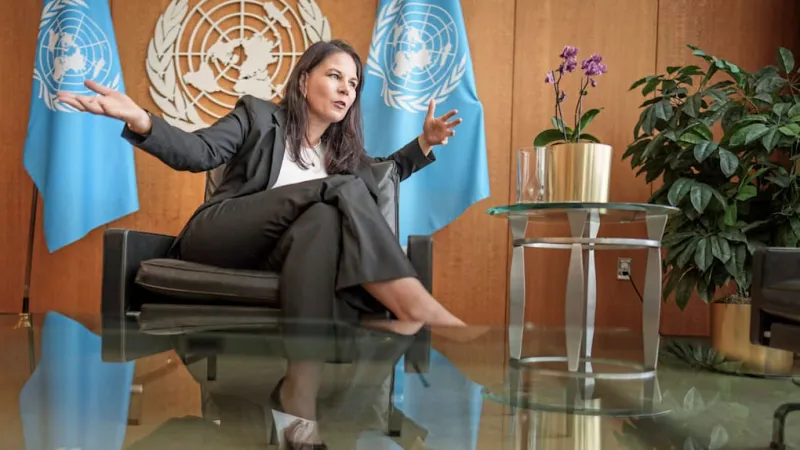
STOCKHOLM – German Foreign Minister Annalena Baerbock recently encountered fervent protests from Gaza activists who interrupted her public lecture in Sweden, vociferously challenging her government's position on the protracted Middle East conflict. The incident underscores the intense scrutiny and emotional charge surrounding Germany's diplomatic stance amid escalating tensions in the region.
The disruption occurred as Baerbock delivered her address, with activists interjecting sharp accusations regarding her perceived alignment and the humanitarian crisis in Gaza. Their chants and shouts temporarily halted the proceedings, spotlighting the deep international division and public outcry over the ongoing conflict.
Baerbock, a prominent figure in German foreign policy, reportedly defended her position and that of her government, emphasizing the complexities of the situation and Germany's commitment to a peaceful resolution. Her attempt to address the protesters directly indicated a willingness to engage, though the highly charged atmosphere limited extensive dialogue at the moment.
The incident in Sweden is not an isolated one, reflecting a broader pattern of public figures facing direct challenges over their Middle East policies across European capitals. Universities and public forums have become common grounds for such demonstrations, as activists seek to amplify their voices and influence international discourse.
Germany, under Chancellor Olaf Scholz, has navigated a delicate diplomatic path, balancing its historical responsibilities and its contemporary geopolitical interests. The nation has consistently called for de-escalation while also affirming its support for Israel's security, a stance that has drawn criticism from segments of the pro-Palestinian movement.
This confrontation highlights the domestic and international pressures on the German government. Public opinion within Germany itself remains divided, mirroring the global schism over the conflict. Lawmakers have debated the extent of police powers in managing protests related to the conflict, as noted in recent reports such as the one detailing how a German Left Politician Fears Hamas, signaling internal discord.
Such direct confrontations inevitably influence diplomatic messaging and strategy. Foreign ministers, including Baerbock, are increasingly compelled to articulate their nation's foreign policy not just to state actors but also to a globally connected and vocal citizenry.
The activists' primary grievances often revolve around the severe humanitarian situation in Gaza, advocating for stronger international intervention, an immediate ceasefire, and increased aid. They view Germany's current stance as insufficient or even complicit in the suffering.
Baerbock has previously acknowledged the immense suffering of civilians in the conflict zone, reiterating Germany's support for humanitarian efforts and a two-state solution. However, these assurances often fall short for those demanding more definitive action against perceived injustices.
The broader context includes rising antisemitism and Islamophobia across Europe, complicating the discourse and intensifying the scrutiny on political leaders. Governments grapple with upholding freedom of speech while ensuring public safety and preventing the escalation of extremist rhetoric.
The incident in Sweden serves as a stark reminder that foreign policy decisions are no longer confined to the quiet halls of diplomacy. They are now subject to immediate, often emotional, public review and challenge, demanding greater transparency and responsiveness from political leaders.
As the Middle East conflict persists, so too will the public pressure on international leaders like Annalena Baerbock. The ability of diplomats to navigate these turbulent waters, engaging both state actors and a polarized public, will define the effectiveness of foreign policy in the years ahead.