 Chandra Wijayanto
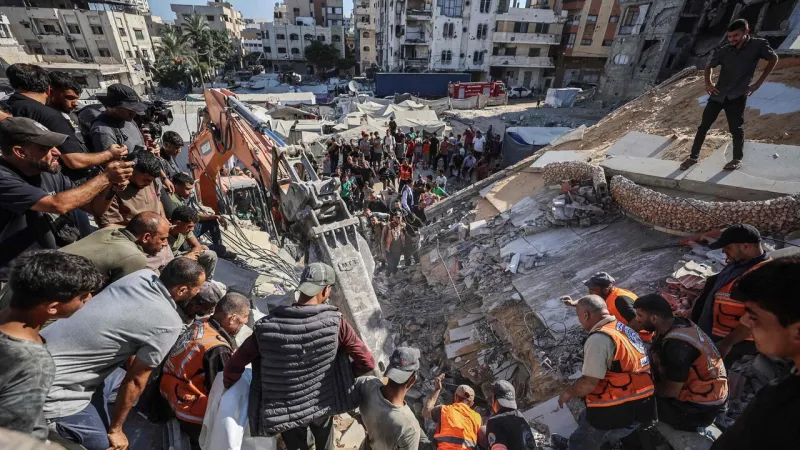
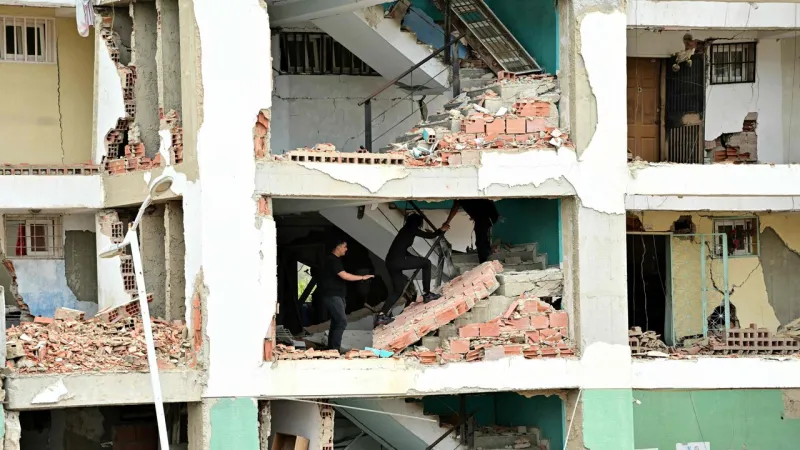
In Gaza, a multi-story residential building, already weakened by prior Israeli bombardments, tragically collapsed recently, leading to the confirmed deaths of at least 20 individuals. Among the fatalities are five minors whose bodies rescue teams have already recovered from the debris. The catastrophic incident has sparked an urgent search operation, with fears that approximately 50 more children remain trapped beneath the wreckage. The ill-fated structure was a temporary home for about 100 displaced Palestinian families, exacerbating the humanitarian toll.
Emergency services, overwhelmed by the scale of the disaster, continue their perilous work amidst unstable remnants of the building. With limited resources and heavy machinery, rescuers labor tirelessly, often by hand, to locate survivors in the hope of pulling them from the extensive concrete and twisted metal. The faint sounds of pleas and cries have spurred on these dedicated teams, highlighting the race against time in such dire circumstances.
The casualty count, which currently stands at 20 fatalities, is expected to climb as operations advance into deeper sections of the rubble. Medical personnel at nearby facilities report that several injured survivors, some in critical condition, received immediate treatment. The psychological impact on families frantically searching for their loved ones is palpable, adding another layer of grief to the already war-torn region.
Local officials indicated that the integrity of the building had been severely compromised long before its eventual collapse. It had sustained significant structural damage during previous Israeli military offensives in the densely populated enclave. This pre-existing damage is believed to be a primary factor contributing to the sudden and devastating structural failure, raising questions about the safety of other damaged buildings housing vulnerable populations.
The incident underscores the precarious living conditions faced by thousands of displaced Palestinians in Gaza, many of whom have sought shelter in damaged or makeshift accommodations due to widespread destruction. The United Nations Relief and Works Agency for Palestine Refugees in the Near East (UNRWA) has frequently warned about the deteriorating infrastructure and housing crisis within the strip.
International humanitarian organizations have issued urgent appeals for assistance, stressing the critical need for medical supplies, heavy equipment for rescue operations, and psychological support for the affected community. The Gaza building collapse serves as a stark reminder of the ongoing challenges in a territory grappling with prolonged conflict and blockades.
The Palestinian Authority has condemned the collapse, calling for a thorough investigation into the circumstances, particularly regarding the building's prior structural vulnerabilities. They emphasize the need for immediate international intervention to support rescue efforts and provide aid to the displaced families. This tragic event further compounds the already dire humanitarian situation within Gaza.
Children are particularly vulnerable in such emergencies, and the prospect of 50 minors still trapped evokes widespread anguish. Experts in disaster relief highlight that children are often harder to locate and extract from rubble due to their smaller size and fragility. The harrowing experience of losing family members and homes leaves deep, lasting trauma on young minds.
The broader context of the Israeli-Palestinian conflict consistently shapes daily life in Gaza. The repeated cycles of violence and the subsequent destruction of infrastructure leave residents perpetually at risk, even in what should be the relative safety of their homes. This tragedy epitomizes the profound insecurity faced by civilians.
Efforts to secure temporary housing for the newly displaced families are underway, but resources are stretched thin. Organizations are scrambling to provide tents, blankets, food, and clean water to those who have lost everything, further complicated by the chronic shortages within the besieged territory.
“This is a catastrophe compounded by years of conflict,” stated a spokesperson for a local aid group, whose name was withheld for security reasons. “We are racing against the clock, but the challenges are immense. Every minute counts when children are buried beneath these ruins.”
The tragic incident draws parallels with other structural failures in the region, where buildings have crumbled under the weight of sustained conflict and insufficient reconstruction efforts. The fragility of infrastructure remains a critical concern across Gaza. Readers can find more information on similar events, such as a recent incident detailed in our report on Gaza Building Collapse Claims 20 Lives, Dozens of Children Trapped.
The international community, while expressing condolences, faces renewed calls to facilitate robust reconstruction and provide unfettered access for humanitarian aid into Gaza. The cyclical nature of destruction and limited rebuilding perpetually traps its inhabitants in a cycle of vulnerability.
As search and rescue operations persist, the hope of finding more survivors dwindles with each passing hour. The focus will soon shift towards recovery and long-term support for the grieving families and the wider community, forever scarred by this devastating collapse. The global spotlight remains on Gaza as its residents contend with another profound loss.