 Demian Sahputra
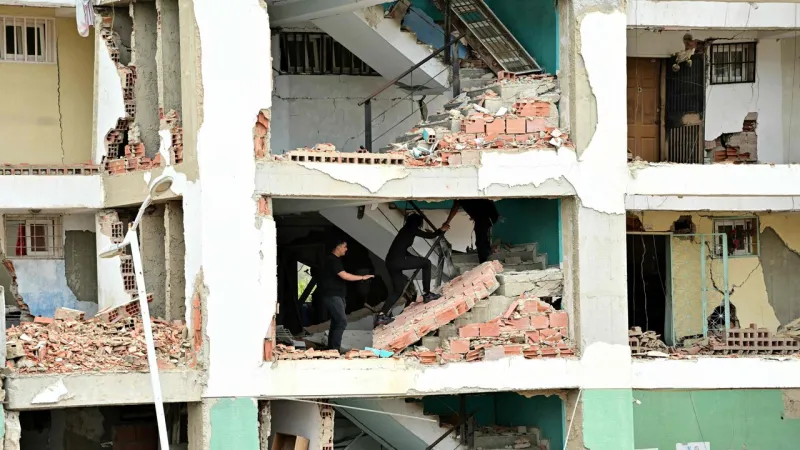
A powerful earthquake in Venezuela has resulted in a tragic loss, with nine-year-old Fabio confirmed dead amidst the rubble, while a senior police official in La Guaira managed to signal for rescue using Morse code, a testament to both despair and resilience in the face of disaster.
The search and rescue operations, which commenced immediately after the seismic event, initially focused on finding survivors in the collapsed structures across affected regions. Hope dwindled for many trapped, as rescue teams worked around the clock under immense pressure and challenging conditions.
Regrettably, the efforts to locate young Fabio alive proved fruitless. Authorities confirmed there were no signs of life from the nine-year-old boy, whose fate has cast a pall of sorrow over the community already grappling with the earthquake's destruction.
Simultaneously, a dramatic struggle for survival unfolded elsewhere. The chief of police for La Guaira found himself trapped beneath debris, a harrowing ordeal that could have easily ended in tragedy.
Demonstrating remarkable fortitude and resourcefulness, the trapped official utilized an ingenious method to alert rescuers to his presence. He began transmitting faint, yet discernible, Morse code signals from his precarious confinement.
These desperate signals were eventually detected by vigilant rescue teams on the surface, offering a crucial lifeline. The detection of these coded messages galvanized the rescue operation, pinpointing the location of the police chief and intensifying efforts to extract him safely.
News of the police chief's communication spread rapidly, injecting a much-needed ray of hope into an otherwise grim situation. It underscored the human spirit's capacity for innovation and determination during emergencies.
Teams meticulously worked to stabilize the precarious wreckage and create a safe passage to reach the trapped official. Every movement was calculated, every piece of debris carefully removed to avoid further collapse or injury.
The successful rescue of the police chief brought a wave of relief, though tempered by the sorrow of Fabio's loss. His survival served as a powerful reminder of the expertise and dedication of the emergency responders and the effectiveness of quick thinking under duress. For more on the rescue, see our previous coverage: Venezuela Quake: Police Chief Rescued, Nine-Year-Old Fabio Dies.
This incident highlights the dual nature of disaster: the profound grief for lives cut short, juxtaposed with inspiring stories of survival and heroic rescue efforts. Communities across Venezuela continue to assess the full extent of the damage, with significant recovery and rebuilding efforts anticipated in the coming months and years.
The Venezuelan government has initiated emergency protocols, deploying national disaster relief agencies and coordinating international aid where necessary. President Nicolas Maduro's administration has pledged full support to affected families and promised swift action in reconstruction.
Expert seismologists attribute the tremor to the complex tectonic plate interactions characteristic of the region, emphasizing the ongoing risk of seismic activity in Venezuela and neighboring areas. Preparedness remains a critical component of national safety strategies.
As the immediate rescue phase transitions into long-term recovery, the stories of young Fabio and the resilient police chief will likely resonate as symbols of the human cost and unwavering spirit in the face of natural calamity.