 Demian Sahputra
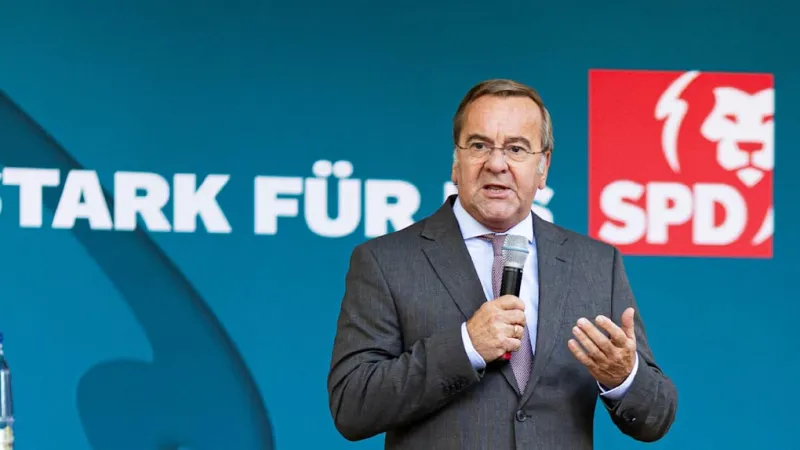
BERLIN – German Defense Minister Boris Pistorius, a leading figure in the Social Democratic Party (SPD), has intensified calls for a formal party ban procedure against the far-right Alternative for Germany (AfD), directly accusing the party of espousing discriminatory ideologies reminiscent of the Nazi era. His bold declaration, stating, “We must do it,” underscores growing alarm within the German political establishment regarding the AfD's escalating rhetoric and its potential threat to democratic principles.
Pistorius articulated his profound concerns over the AfD's platform, specifically highlighting their perceived view of society. He asserted that the party sees “different types of people who have different rights,” a statement that immediately evokes historical precedents of state-sponsored discrimination.
This direct comparison to the Nazi era is a potent and deliberate choice by Pistorius. In Germany, where the memory of the Third Reich remains a foundational lesson in its democratic constitution, such a linkage is not merely rhetorical; it signals a grave assessment of the AfD's ideological trajectory.
The demand for an AfD ban is not entirely new, but the vehemence and high-level endorsement from a cabinet minister like Pistorius add significant weight to the debate. This move reflects a deepening conviction among some mainstream politicians that the AfD crosses a constitutional red line.
Germany's Basic Law sets a very high legal bar for banning political parties, requiring proof that a party actively seeks to undermine or abolish the free democratic basic order. The decision ultimately rests with the Federal Constitutional Court, which has historically exercised extreme caution in such matters.
Past discussions around potentially banning the AfD have often been met with skepticism, with critics arguing that such a move could inadvertently strengthen the party's narrative as a victim of the establishment. This sentiment was evident in incidents like the exclusion plans for a Sachsen-Anhalt AfD leader that backfired.
Nonetheless, the AfD's consistent rise in opinion polls and its increasing presence in state and federal parliaments have amplified calls for scrutiny. The party's rhetoric on immigration, national identity, and European integration has frequently drawn condemnation for being divisive and exclusionary.
Accusations against the AfD extend beyond domestic concerns, with some critics pointing to alleged foreign influence. Despite these allegations, such as those related to Russian terror allegations, support for the AfD in East Germany has largely remained steadfast.
Pistorius's intervention reflects a growing faction within the SPD and other mainstream parties that believes the time for merely condemning the AfD's statements has passed, and that more decisive legal action may be necessary to protect the constitutional order.
Conversely, some political commentators and legal experts caution against pursuing a party ban, arguing that it could be perceived as an attack on democratic freedoms and might even serve to radicalize the AfD's base further. They advocate for confronting the party through political debate and electoral means.
The history of party bans in Germany is sparse, with only two parties successfully outlawed in the Federal Republic's history: the Socialist Reich Party (SRP) in 1952 and the Communist Party of Germany (KPD) in 1956. These precedents highlight the extraordinary legal and political gravity associated with such a measure.
As the political discourse intensifies, the potential initiation of an AfD ban procedure represents a critical juncture for German democracy. It tests the nation's commitment to both its constitutional principles and the delicate balance of political freedom and self-preservation.