 Edward DP Situmorang
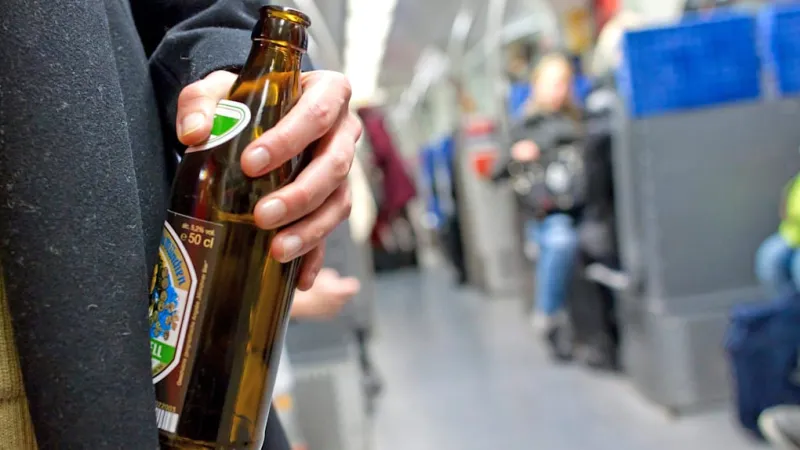
BERLIN – Deutsche Bahn has recently announced a sweeping prohibition on alcohol across all German train stations, a move intended to enhance public safety and order. However, the proposal has ignited immediate debate, with the Social Democratic Party (SPD) criticizing a perceived lack of coordination with federal police, while the Alternative for Germany (AfD) has seized the opportunity to advocate for even more extensive alcohol bans, extending into trains themselves. This contentious discussion highlights the complex realities of implementing nationwide restrictions.
The national rail operator framed its decision as a measure to improve the travel experience for millions of commuters and travelers. Citing instances of disturbance and minor infractions linked to alcohol consumption in station environments, Deutsche Bahn aims to create a more secure and family-friendly atmosphere. The specific timeline and enforcement details for the station-wide ban are still under development.
The SPD, a key partner in Germany’s governing coalition, voiced significant reservations regarding the practical execution of such a broad prohibition. Spokespersons for the party emphasized the critical need for comprehensive consultation with law enforcement agencies, particularly the Bundespolizei (Federal Police), which bears primary responsibility for security on German rail networks. Without proper planning, critics argue, the alcohol ban risks becoming largely symbolic.
Building on the momentum of Deutsche Bahns announcement, the far-right AfD escalated the discussion by proposing well-considered alcohol bans in trains. This goes significantly beyond the rail operators initial scope, suggesting that the problem of public intoxication and its associated issues extends beyond station platforms into the carriages where passengers spend significant travel time.
AfD representatives argue that a fragmented approach, banning alcohol only in stations, would merely shift the problem. They contend that a holistic policy addressing alcohol consumption throughout the entire rail journey – from station entrance to destination – is necessary to achieve tangible improvements in safety and passenger comfort. This broader interpretation of an alcohol ban has sparked widespread public and political discourse.
Implementing an alcohol ban, particularly one extending to trains, presents a formidable logistical challenge. Unlike stations, where designated areas can be monitored, enforcing such a rule across thousands of daily train services, often with limited personnel, would require significant resources and clear legal frameworks. As one analysis pointed out, Germany's Rail Alcohol Ban: Noble Goal, Challenging Reality, underscores the inherent difficulties.
Legal experts are also weighing in on the complexities. While private entities like Deutsche Bahn can set rules for their property, a nationwide prohibition enforced on public transport would likely necessitate legislative action or at least clear regulatory backing from the federal government. Questions regarding passenger rights, potential fines, and the role of police versus rail staff in enforcement remain largely unanswered.
Initial public reaction to the proposed alcohol ban has been mixed. Supporters often cite personal experiences with disruptive behavior and welcome any measure to ensure a more peaceful travel environment. Conversely, civil liberties advocates and some regular commuters express concerns about over-regulation and the erosion of personal freedoms, questioning whether such a blanket ban is truly necessary or proportionate.
Previous attempts or discussions regarding alcohol restrictions on German public transport have often met with resistance, highlighting a cultural preference for personal autonomy. While some local or regional transport providers have implemented limited bans on specific lines or during certain events, a nationwide, comprehensive alcohol prohibition on trains would represent a significant shift in policy.
As the debate intensifies, it is expected that the German Bundestag will likely engage with these proposals. The federal government, particularly the Ministry of Transport, will face pressure to clarify its stance and outline a cohesive strategy that balances public safety concerns with practical implementation and individual liberties. The effectiveness and public acceptance of any such ban will hinge on detailed planning and cross-party consensus.
Beyond the social and logistical aspects, an extensive alcohol ban could also have economic repercussions. Sales of alcoholic beverages at station kiosks and on-board dining services, which contribute to Deutsche Bahns ancillary revenues, would be directly affected. Businesses operating within stations might also see a decline in certain types of patronage, prompting a need for revised business models.
Germany is not alone in grappling with this issue. Several other European countries and cities have implemented varying degrees of alcohol restrictions on public transport, often with mixed results. Studying these international precedents could offer valuable insights into the potential challenges and successes of a similar policy in Germany. The experiences of London's Tube or certain French regional lines, for instance, might inform future decisions.