 Angel Doris
Bayreuth, Germany – The hallowed halls of the Bayreuth Festspielhaus recently bore witness to a stark juxtaposition of artistic sentiment: widespread audience disapproval directed at a new, AI-infused production of Richard Wagners Siegfried, met simultaneously with fervent celebration for the much-anticipated return of esteemed conductor Christian Thielemann to the orchestra pit after a 16-year hiatus. The annual festival, a pilgrimage for Wagner enthusiasts, found itself at the nexus of technological ambition and traditional operatic expectation.
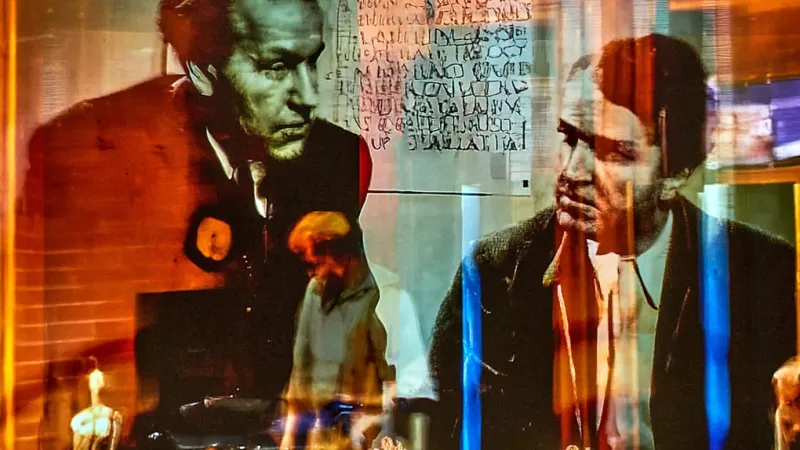
Audience members reportedly booed the avant-garde staging, which heavily relied on artificial intelligence for its visual components and set design, describing the imagery as pixel gibberish. This vociferous rejection underscored a growing unease within the classical music community regarding the integration of nascent technologies into sacrosanct artistic forms, particularly when perceived as detracting from the human element.
The production of Siegfried, part of a new Ring cycle, pushed the boundaries of visual interpretation by generating dynamic, often abstract, backdrops and character projections through algorithms. While proponents of such innovation argued for its potential to offer fresh perspectives on familiar narratives, the Bayreuth faithful appeared to find the execution jarring and artistically unfulfilling, a perceived desecration of Wagner's Gesamtkunstwerk ideal.
Yet, this simmering discontent was momentarily quelled by a profound sense of relief and exhilaration that emanated from the orchestra pit. The return of Christian Thielemann, a titan among Wagnerian conductors, marked a pivotal moment for the festival and its patrons. His presence was not merely a change of personnel but a symbolic reassertion of human interpretive power in an evening dominated by digital controversy.
Thielemanns absence from Bayreuth, a significant 16-year period, had left a noticeable void for many devotees of his authoritative, deeply resonant Wagner interpretations. Known for his meticulous attention to orchestral detail and profound understanding of Wagnerian dynamics, his return signaled a promise of sonic excellence that many felt had been lacking.
His conducting of the Bayreuth Festival Orchestra brought a palpable clarity and emotional depth to Wagners score, creating a powerful counterpoint to the visually chaotic stage. The sound that emanated from the pit was described by critics and audience members alike as a long-missed voice, reaffirming the enduring power of human musical genius over synthetic spectacle.
The dichotomy of the evening highlighted a critical debate facing contemporary performing arts: where does the line lie between innovative technological integration and the preservation of artistic integrity? For many attendees, the AI-driven visuals felt alienating, while Thielemanns musical direction offered a comforting return to deeply human emotional resonance.
Bayreuth has a storied history of controversial productions, often challenging traditional interpretations of Wagners works through Regietheater, or directors theater. From Wieland Wagners stark modernizations to Patrice Chereaus Centennial Ring and Frank Castorfs more recent, polarizing staging, the festival has rarely shied away from provoking its audience.
However, the nature of the current controversy, stemming from the fundamental question of artificial versus human creativity, introduces a new dimension. While previous debates centered on directorial concepts, the AI-Siegfried ignited a discussion about the very authorship and soul of the artistic product.
The palpable boos for the visuals underscore a collective yearning for genuine human expression and connection, something that AI, despite its advancements, has yet to convincingly replicate in the nuanced world of operatic storytelling. The audience reaction was less about aesthetic preference and more about a perceived spiritual void.
Christian Thielemanns triumphant return, therefore, provided a much-needed anchor in a sea of technological experimentation. It offered a powerful reminder that at the heart of the performing arts lies an irreplaceable human connection, an emotive force that no algorithm can yet fully emulate.
As the Bayreuth Festival continues its ambitious new Ring cycle, the tension between cutting-edge technology and time-honored artistic principles will undoubtedly persist. The challenge for future productions will be to harness innovation in a manner that enhances, rather than diminishes, the profound human experience that has defined the festival for generations.