 Angel Doris
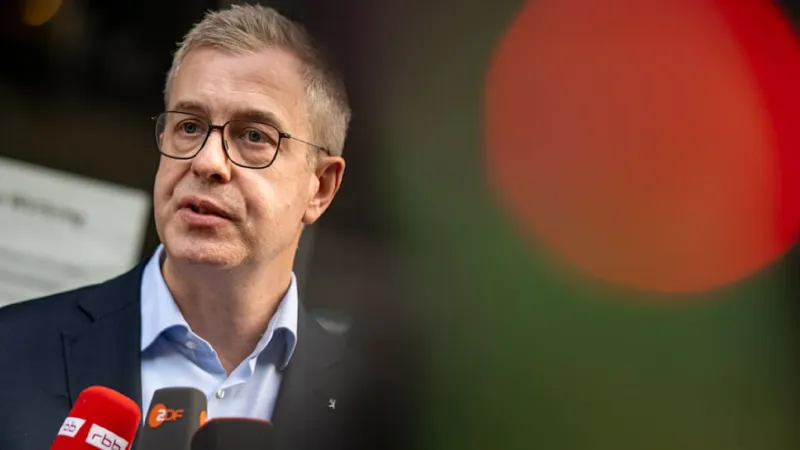
BERLIN – Following Kai Wegners unexpected withdrawal, Stefan Evers, the newly designated lead candidate for Berlins Christian Democratic Union (CDU), has swiftly outlined his political platform, signaling a pronounced shift toward heightened law enforcement, unequivocal support for the citys Christopher Street Day (CSD) celebrations, and a distinct ideological distance from the Left party. This strategic positioning marks a crucial moment for the CDU as it navigates future elections and seeks to redefine its urban appeal.
Evers statement, delivered after assuming the pivotal role, emphasizes a commitment to restoring order and public safety across the German capital. He pledged to implement tougher measures against perpetrators of crime, a stance designed to reassure residents concerned about security within the diverse metropolis.
The CDU candidate articulated that his approach would involve bolstering police presence and resources, alongside advocating for more stringent legal consequences for offenders. This focus on law and order aims to project an image of decisive governance, appealing to voters seeking stability and accountability.
Crucially, Evers also asserted the intrinsic connection between Berlin and its vibrant LGBTQ+ community, declaring, "The CSD belongs to Berlins DNA." This pronouncement signifies a modern, inclusive conservative stance, contrasting with historical perceptions of some traditional political parties.
His strong endorsement of CSD, a significant cultural and political event in Berlin, underscores a strategy to connect with a broader, more diverse electorate, affirming the citys liberal values while upholding a conservative commitment to order. This alignment aims to bridge potential divides within the party and the wider public.
Parallel to these affirmations, Evers drew a clear line in the sand regarding potential political alliances. He explicitly stated a significant ideological distance from the Left party, signaling a firm rejection of any future coalition or policy cooperation with the left-wing political force.
This declaration establishes distinct political boundaries, effectively ruling out certain governing configurations in the perpetually complex Berlin political landscape. It signals to voters the CDU's independent path and core values, uncompromised by what Evers perceives as opposing ideologies.
The immediate articulation of these policy pillars comes at a critical juncture for the CDU in Berlin. Wegners withdrawal necessitated a rapid leadership transition, placing Evers in a position to quickly define his vision and consolidate support within the party and among the electorate.
Evers agenda appears meticulously crafted to address key urban concerns while simultaneously projecting a refreshed party image. The emphasis on both law enforcement and social inclusivity positions the CDU as a pragmatic yet progressive force in Berlin politics.
His initial pronouncements suggest an ambition to reclaim political ground by appealing to both traditional CDU voters and segments of the population that value social liberalism, provided it is coupled with a robust framework of public safety and order.
The political ramifications of Evers new direction are likely to be debated vigorously across Berlins political spectrum. Other parties will undoubtedly analyze these statements for insights into the CDU's evolving strategy as the city prepares for future electoral contests.
This calculated pivot by Stefan Evers reflects a broader trend among mainstream parties in urban centers: adapting to diverse populations while maintaining a core identity. His early pronouncements serve as a clear roadmap for the CDU's upcoming political engagements in the capital.
The challenge for Evers will be to translate these bold statements into tangible policy successes and to maintain party unity behind this dual focus on security and progressive social recognition. The success of this strategy will be closely watched by political observers nationwide.
His leadership will be instrumental in determining the CDU's standing in Berlin, a city known for its progressive political landscape and its complex social fabric. The coming months will reveal how voters respond to this distinct articulation of conservative urban policy.