 Chris Robert
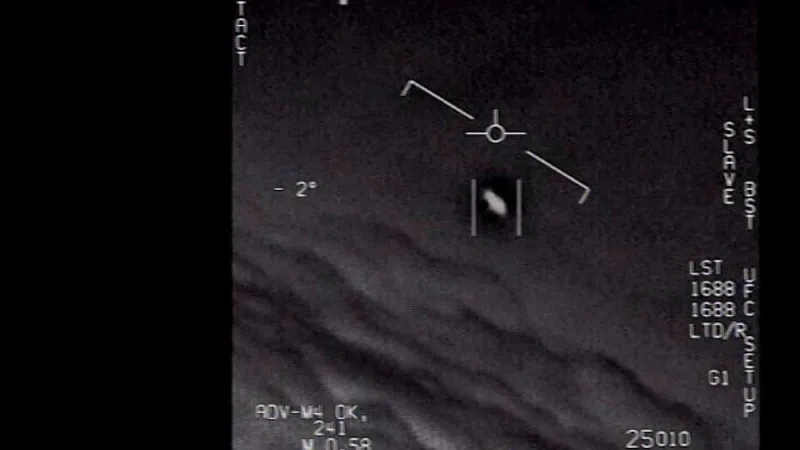
WASHINGTON – The Pentagon recently declassified a trove of secret files related to unidentified aerial phenomena, commonly known as UFOs, asserting that these unexplained sightings are not only real but also pose a significant threat to national security. This unprecedented release offers the public and researchers the opportunity to review documents that have long fueled speculation and secrecy surrounding such incidents.
The disclosure marks a notable shift in the government's approach to the UFO phenomenon, moving away from past denials and toward a more explicit acknowledgment of their existence and potential implications. The newly accessible files, some available through outlets like WELT, contain observations and data that have been meticulously cataloged by defense and intelligence agencies.
Journalism editor Dennis Sand underscored the gravity of the situation, stating, “These are phenomena that one must take very seriously, where one asks oneself: What the hell is happening there right now?” His comments reflect a growing concern among experts regarding the origin and intent of these mysterious objects operating within restricted airspace.
The classification of UAPs as a national security threat indicates a profound reassessment within defense circles. This designation suggests that these phenomena could potentially compromise national airspace, challenge military operations, or represent unknown advanced technologies from foreign adversaries, or even entirely non-human origins.
For decades, government agencies maintained a steadfast policy of obfuscation or outright dismissal concerning UFO reports. This new transparency under President Donald Trump’s administration represents a radical departure, signaling a commitment to addressing an issue that was once relegated to the fringes of public discourse.
The declassification effort follows increased pressure from Congress and former military personnel, who have advocated for greater openness regarding encounters with UAPs. Numerous pilots and sensor operators have reported incidents involving objects demonstrating capabilities far exceeding known aerospace technology, including extreme speeds, abrupt maneuvers, and a lack of visible propulsion systems.
While the declassified files offer new data, they also raise more questions than answers. The core mystery surrounding the nature and origin of these UAPs remains. Authorities are reportedly focused on understanding the operational characteristics and potential intelligence implications of these phenomena, rather than speculating on their ultimate source.
The Pentagon's acknowledgment of a national security threat comes amidst a period of heightened global tensions. The focus on safeguarding American interests from both conventional and unconventional threats has become paramount. This new emphasis on UAPs further complicates the intricate landscape of geopolitical challenges, with some suggesting parallels to the ongoing concerns regarding state-sponsored cyber warfare or regional conflicts.
The scientific community has largely welcomed the increased transparency, viewing it as an opportunity for more rigorous investigation free from the stigma of previous eras. Researchers now have a clearer path to analyze data previously withheld, potentially leading to breakthroughs in understanding advanced physics or propulsion.
However, the move also presents challenges, particularly in managing public expectations and avoiding alarmism. Government officials are tasked with communicating the facts responsibly, ensuring that the seriousness of the issue is conveyed without fostering undue panic or unfounded theories.
President Donald Trump has previously expressed interest in unexplained phenomena, and his administration's support for this declassification initiative underscores a commitment to addressing previously taboo subjects in national defense. The implications for military strategy, intelligence gathering, and scientific research are substantial.
This development is expected to ignite further public debate and academic inquiry, pushing the boundaries of what is officially known about the universe and humanity's place within it. The quest for definitive answers regarding these aerial mysteries will likely intensify as more information comes to light.
Ultimately, the Pentagon's declaration elevates the UFO phenomenon from mere conjecture to a legitimate area of governmental concern, demanding serious attention and resources from intelligence agencies and the defense establishment. The world watches as the United States grapples with these enigmatic aerial encounters.