 Chandra Wijayanto
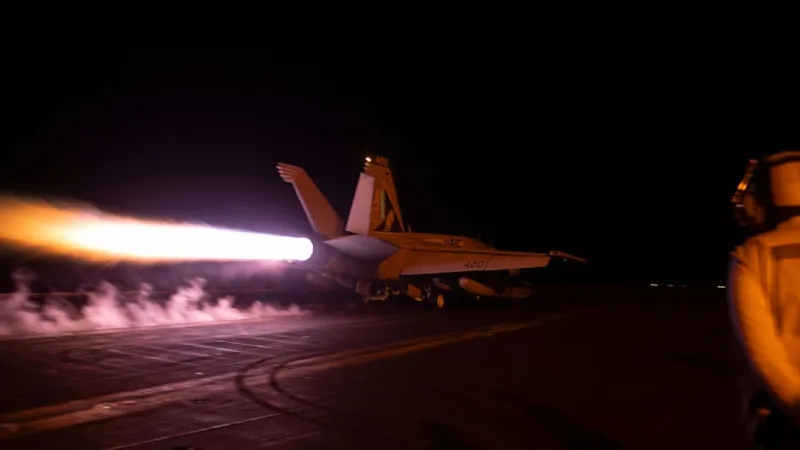
Reports indicate the United States is poised to launch a significant wave of attacks against Iran, possibly as early as this weekend, targeting critical infrastructure and energy facilities. Tehran swiftly responded with threats of immediate and forceful retaliation, intensifying an already volatile regional dynamic. The escalating crisis unfolded concurrently with a tanker incident in the strategic Strait of Hormuz, further complicating maritime security.
Media reports, citing unnamed intelligence sources, suggest the scale of the impending American operation could be substantial, aiming to degrade Iran's strategic capabilities. The anticipated strikes represent a dramatic escalation in the long-standing tensions between Washington and Tehran, raising alarms across the international community.
Iranian officials, speaking through state media, condemned the potential US aggression as a violation of sovereignty and warned of a decisive response. They reiterated their nation's readiness to defend its territory and interests against any military action, signaling a potential for broader regional destabilization.
The timing of these rumored attacks coincides with a recent incident in the Strait of Hormuz, where a commercial tanker sustained damage. While details remain sparse, the repeated targeting of vessels in this vital waterway underscores the fragility of security in one of the world's most critical maritime choke points for global oil shipments.
This latest development amplifies concerns regarding Israel's potential re-entry into direct conflict in the region. Analysts suggest that any major US offensive against Iran could prompt a coordinated or supportive response from Israel, drawing the nation deeper into an already complex geopolitical landscape.
The Strait of Hormuz, through which a significant portion of the world's oil supply passes, has been a flashpoint for numerous incidents involving Iranian forces and international shipping. Any disruption there could have profound implications for global energy markets and international trade.
President Donald Trump's administration has consistently maintained a firm stance against Iran's regional activities and nuclear program. This potential offensive aligns with a pattern of robust pressure tactics, though the scale of the proposed strikes would mark a significant departure from previous engagements.
The global community has expressed increasing apprehension, urging all parties to exercise restraint and de-escalate tensions. Diplomacy remains a preferred pathway, yet the current rhetoric and military posturing suggest a move towards direct confrontation rather than negotiation.
Iran's military, despite sanctions, has invested heavily in ballistic missile technology and naval capabilities, particularly in the Persian Gulf. Its capacity for asymmetric warfare presents a formidable challenge to any large-scale military intervention.
The broader implications of a full-scale conflict between the United States and Iran, potentially involving Israel, are dire. Such an event could trigger a humanitarian crisis, send shockwaves through the global economy, and fundamentally reshape the geopolitical order of the Middle East for decades to come.
Regional allies of the United States are closely monitoring the situation, weighing their own security concerns against the potential for an even wider conflict. Their responses, whether overt or covert, will be crucial in determining the eventual scope and duration of any military engagement.
Conversely, Iranian allies and proxy groups across the Middle East are expected to activate in response to any US offensive. This could lead to an expansion of existing proxy conflicts and create new fronts for instability in countries such as Iraq, Syria, Lebanon, and Yemen.
The strategic value of Iran's energy infrastructure, including oil refineries and export terminals, makes it a likely target in any comprehensive military campaign. Disrupting these assets would severely impact Iran's economic lifeline but also carries the risk of environmental catastrophe.
As the weekend approaches, international observers are braced for potential military action. The world watches anxiously as the delicate balance of power in the Middle East teeters on the brink of an unprecedented escalation.