 Angela Stefani
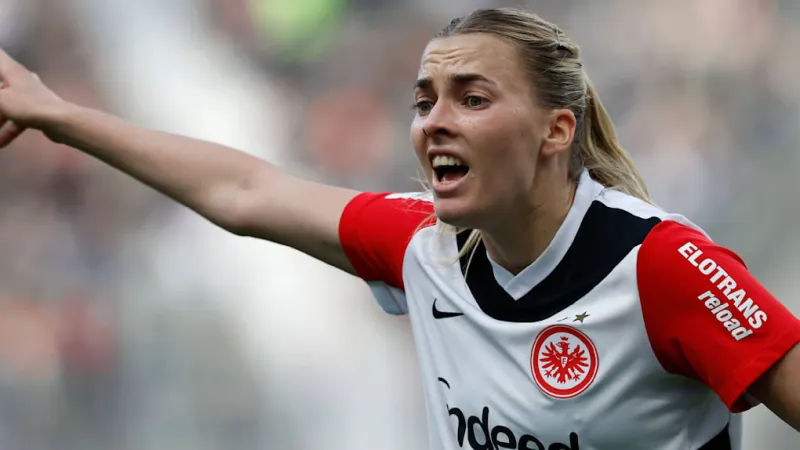
Berlin, Germany – German national team footballer Laura Freigang has publicly addressed for the first time allegations from the National Anti-Doping Agency (Nada) concerning three missed doping controls within a 12-month period. This unprecedented situation places the accomplished striker at risk of a substantial two-year ban, potentially sidelining her during a pivotal phase of her career.
The allegations stem from Nada's strict whereabouts system, which requires athletes to provide precise information about their location for out-of-competition testing. According to Nada's records, Freigang was not present at her declared location on three separate occasions when doping control officers attempted to conduct tests. Such an accumulation of failures triggers severe repercussions under anti-doping regulations.
A two-year suspension would have profound implications for Freigang, a key figure for both her club and the German national squad. It would mean missing major domestic competitions, international tournaments, and a significant period of athletic development. The timing of the disclosure, with Freigang finally breaking her silence, underscores the gravity of the situation she now confronts.
While specific details of Freigang's statement remain under scrutiny, her decision to speak out indicates an intent to offer clarity or context regarding the missed tests. Athletes are afforded opportunities to explain such absences, though the burden of proof often lies with them to demonstrate legitimate circumstances for non-compliance.
The World Anti-Doping Agency (WADA) code, which Nada implements nationally, mandates that athletes in registered testing pools submit quarterly whereabouts filings. These filings detail their overnight accommodation, regular training locations, and a 60-minute window each day when they will be available for testing at a specified address. Strict adherence to these rules is paramount for maintaining the integrity of sport.
Failure to meet these stringent requirements, whether through inaccurate submissions, forgotten updates, or simple oversight, can lead to a filing failure or a missed test. Three such violations within a 12-month timeframe are typically consolidated into an anti-doping rule violation, carrying a standard sanction of a two-year ineligibility period.
The case of Laura Freigang is not entirely unique within professional sports, as numerous athletes worldwide have faced similar sanctions for whereabouts violations. These incidents consistently highlight the critical balance between an athlete's personal life and their professional obligations under the anti-doping framework. Each missed test, regardless of intent, contributes to an erosion of trust in fair play.
Freigang's standing as a prominent German national player means this development will undoubtedly reverberate throughout the football community. Her teammates, coaches, and the sport's governing bodies will be closely monitoring the forthcoming proceedings, aware of the potential void her absence could create on the field. The issue of fairness and travel regulations has previously stirred debate in football circles, though in a different context.
The legal process following a formal charge by Nada typically involves a hearing where the athlete can present their defense. If the anti-doping rule violation is confirmed, an independent tribunal would then determine the appropriate sanction. Appeals to higher authorities, such as the Court of Arbitration for Sport (CAS), often follow in high-profile cases.
This incident underscores the constant vigilance required from elite athletes in navigating the complex landscape of anti-doping regulations. Beyond physical training and performance, administrative compliance forms a crucial, albeit often overlooked, aspect of professional athletic life. The narrative surrounding Laura Freigang's situation serves as a stark reminder of these obligations.
Public reaction to such cases often divides between sympathy for the athlete, who might claim innocent oversight, and staunch support for strict anti-doping enforcement to ensure a level playing field. Maintaining credibility in competitive sports relies heavily on the perception that all participants adhere to the same rigorous standards.
The German Football Association (DFB) has yet to issue a comprehensive statement beyond acknowledging the ongoing Nada procedure. Any official pronouncements from the DFB or Freigang's club will be critical in shaping the public discourse surrounding this sensitive issue as the process unfolds.
For now, the focus remains on the specific details of Freigang's explanations and the subsequent decisions by Nada and any adjudicating bodies. The implications extend beyond her individual career, touching upon the broader principles of transparency and accountability that underpin clean sport.
This situation also prompts a wider discussion about athlete education on anti-doping protocols. While ignorance is generally not accepted as a defense, ensuring athletes fully comprehend the rules and the severe consequences of non-compliance is a continuous challenge for sports organizations.
The period of 12 months for tracking three missed tests is a crucial window. Athletes are given warnings and educational reminders after initial violations, making a third occurrence particularly difficult to defend as a mere oversight.
The very essence of competitive integrity is at stake whenever a high-profile athlete faces such allegations. The decisions made in the Laura Freigang case will undoubtedly set a precedent and reinforce the message regarding compliance within German and international football.
The sports world awaits further developments in this unfolding story, with many hoping for a resolution that upholds the principles of fair play while also providing transparency regarding the circumstances of the missed tests.
Ultimately, the outcome for Laura Freigang will serve as a stark reminder to all athletes about the unwavering demands of anti-doping agencies and the profound impact these regulations have on their professional lives.