 Robert Andrison
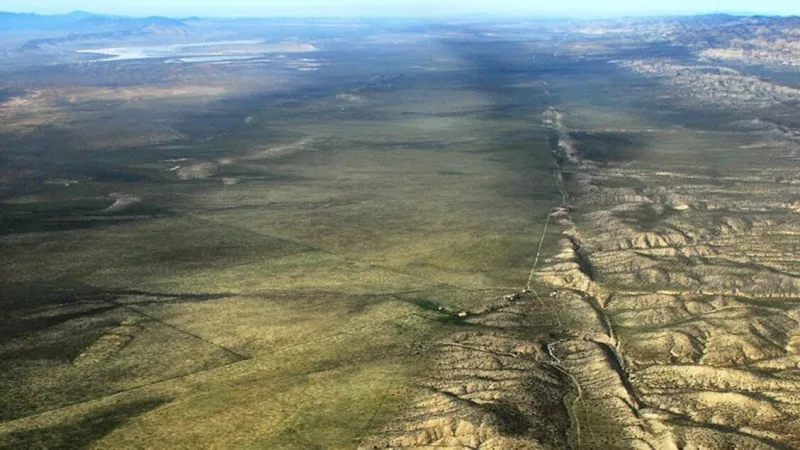
California's infamous San Andreas Fault now exhibits stress levels not seen in over a millennium, according to advanced geological simulations. Scientists warn this unprecedented accumulation of tectonic strain significantly elevates seismic risk across the region, prompting renewed calls for preparedness.
The simulations, conducted by leading seismological research institutions, utilized sophisticated computational models to analyze extensive geological data, including historical earthquake records and ongoing ground deformation measurements. These advanced models painted a stark picture of increasing pressure along critical segments of the fault line.
Geologists explain that the San Andreas Fault, a right-lateral strike-slip fault forming the tectonic boundary between the Pacific Plate and the North American Plate, constantly accumulates stress as these massive plates grind past each other. The latest findings suggest this stress has surpassed any recorded levels in the past 1,000 years, marking a significant milestone in its observed behavior.
This revelation carries profound implications for millions of residents living in California, particularly those in major metropolitan areas such as Los Angeles and San Francisco, which are intersected by or lie near significant fault segments. A major rupture could trigger widespread and catastrophic tremors across a densely populated region.
Dr. Elena Rodriguez, director of the California Earthquake Center, commented on the findings, stating, "Our models indicate a critical threshold has been reached. While predicting the exact timing of an earthquake remains impossible, the current stress state demands immediate attention and robust infrastructure assessments throughout the state."
Historically, the San Andreas Fault has been responsible for some of California's most devastating earthquakes, including the monumental 1906 San Francisco earthquake and the powerful 1857 Fort Tejon earthquake. These historical events underscore the immense power inherent in the fault system and the long periods of seismic quiescence that often precede major ruptures.
Researchers combined precise GPS data, high-resolution satellite imagery, and subsurface geological surveys to refine their understanding of the fault's intricate behavior. The simulations specifically highlighted alarming stress concentrations in segments that have not experienced significant seismic activity in centuries, often referred to as seismic gaps.
Public safety officials are reiterating the paramount importance of earthquake preparedness, advocating for updated building codes, regular emergency response drills, and comprehensive individual household readiness plans. Efforts to retrofit older buildings and critical infrastructure gain new urgency in light of these concerning geological findings.
The study contributes significantly to a broader scientific understanding of earthquake mechanics and the complex interplay of tectonic forces driving geological events. It emphasizes that while the San Andreas Fault is continuously monitored, its long-term behavior can still hold surprises, requiring constant scientific vigilance and public awareness.
As California continues to navigate its inherent geological dynamism, the new data serves as a compelling reminder of the powerful forces shaping its landscape and the perpetual need for both rigorous scientific inquiry and proactive public readiness. The San Andreas Fault remains a critical focal point of geological study and public safety efforts.