 Debby Wijaya
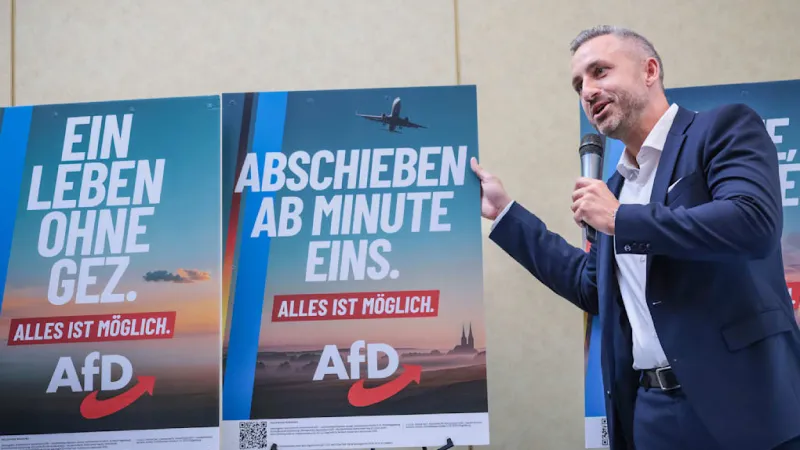
A recent public opinion survey conducted across Saxony-Anhalt reveals a significant rejection among a majority of Germans for key policy demands put forth by the Alternative for Germany (AfD) party. The comprehensive poll, which canvassed residents throughout the state, highlights particularly strong disapproval for the party's positions on foreign skilled workers and education policy, while indicating a more nuanced reception regarding its stance on religious institutions.
The most pronounced opposition emerged concerning the AfD's proposals on foreign skilled workers. Survey respondents overwhelmingly indicated disagreement with the party's restrictive views, suggesting a prevalent public understanding of the necessity for international labor in critical sectors. This finding underscores a divergence between the AfD's nativist rhetoric and the practical economic realities recognized by many citizens.
This particular aspect of the survey is critical, as the debate surrounding immigration and labor shortages continues to shape political discourse across Germany. The explicit rejection of the AfD's immigration stance in this context implies that a substantial portion of the populace prioritizes economic stability and growth over isolationist policies.
Education policy positions advocated by the AfD also encountered considerable public disfavor. Details from the survey indicate that many voters do not align with the party's proposed reforms or criticisms of the existing educational framework. This area of policy is often a sensitive one for families and communities, directly impacting future generations.
In contrast to the widespread disapproval for immigration and education proposals, the survey recorded a comparatively greater level of public agreement with the AfD's approach to churches. While specific details on these positions were not provided in the summary, this area represents a departure from the general trend of rejection, indicating specific policy nuances resonate differently with the electorate.
The AfD has steadily gained ground in German politics, particularly in the eastern states such as Saxony-Anhalt, where it often polls strongly. These survey results, however, suggest that while the party may command significant support, its specific policy planks do not uniformly reflect the broader public sentiment, especially on issues central to modern society.
Such public opinion data is vital for understanding the complex political landscape in Germany, particularly ahead of upcoming regional and national elections. It provides a tangible measure of how specific party platforms are perceived beyond general approval ratings for a party.
The findings also contribute to a deeper understanding of the dynamics at play in East German elections, where alternative media outlets have been noted for amplifying polarization. While the AfD benefits from certain narratives, this survey points to a discerning electorate that evaluates policies individually.
Political analysts suggest these results could prompt internal discussions within the AfD regarding the appeal and viability of its core demands. Adapting to public sentiment on critical issues like foreign labor and education may become a strategic necessity for broader electoral success.
The survey did not delve into the underlying reasons for public approval or disapproval, but the stark differences across policy areas underscore the challenges for any party aiming for a unified public mandate. Understanding these nuances is paramount for all political actors in the region.
Ultimately, this snapshot of public opinion in Saxony-Anhalt serves as a crucial indicator of the electorate's priorities. It highlights that while political sentiment can be complex, there is a clear appetite for pragmatic solutions, particularly when it comes to the future of the economy and the quality of education.