 Robert Andrison
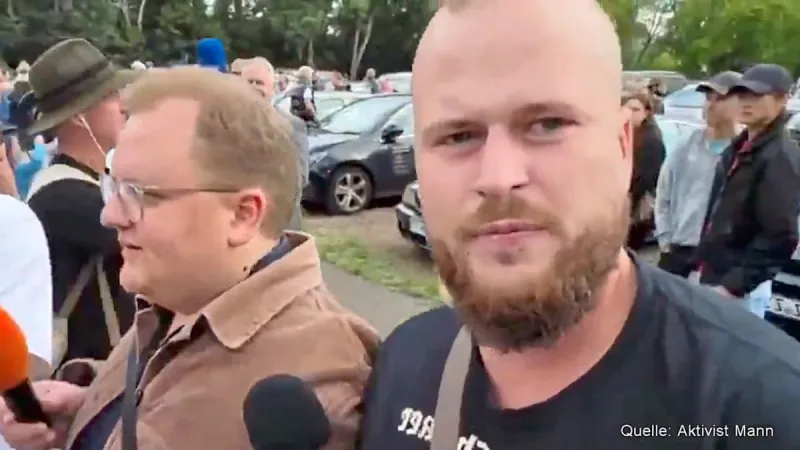
In East Germany, the political landscape is being fundamentally reshaped by alternative media personalities, as YouTube streamers, ranging from those aligned with the far-right Alternative for Germany (AfD) to leftist activists, aggressively intensify the ongoing election campaign. This digital insurgency, characterized by a focus on confrontational rhetoric over substantive debate, is increasingly overshadowing traditional news outlets and contributing to a polarized political environment, according to observers like WELT-Reporter Lutz Stordel, who personally experienced the aggressive tactics.
Stordel vividly describes the current electoral discourse as one devoid of reasoned argument. "It is not about answers, but about screaming," he stated, highlighting a critical shift from policy discussions to emotional appeals and aggressive verbal exchanges online. This atmosphere permeates the digital spaces where these streamers operate.
The rise of these alternative media channels presents a formidable challenge to established news organizations. While traditional outlets adhere to journalistic standards and fact-checking, the digital content often prioritizes virality and partisan engagement, frequently at the expense of accuracy and nuance.
Streamers sympathetic to the AfD have masterfully leveraged platforms like YouTube to disseminate their messages directly to voters, bypassing mainstream media filters. These channels frequently focus on issues such as immigration, economic anxieties, and perceived elite failures, resonating with a segment of the population that feels unheard by conventional politics.
Concurrently, leftist activists employ similar digital strategies, utilizing streaming platforms to mobilize support, organize protests, and counter narratives propagated by right-wing groups. Their content often highlights social justice issues, environmental concerns, and critiques of capitalist systems, fostering their own dedicated online communities.
The cumulative effect is a significant fragmentation of public discourse. Voters are increasingly exposed to echo chambers where their existing beliefs are reinforced, making it more difficult to engage in cross-ideological dialogue or find common ground. The emphasis on rapid-fire content and immediate reactions leaves little room for considered reflection.
The aggressive nature of this digital campaigning is not confined to the screen. Lutz Stordel, a journalist reporting on the phenomenon, became a victim of an attack himself, underscoring the real-world ramifications of the inflamed rhetoric prevalent in these online spaces. This incident serves as a stark reminder of the potential for online animosity to spill into physical confrontations.
This development occurs against a backdrop of ongoing political shifts in Germany. The established parties, including the SPD, face considerable pressure, with some analysts suggesting that critical election results could force a significant overhaul of leadership. The growing influence of alternative media only complicates efforts by traditional parties to communicate their platforms effectively. SPD Leadership Under Fire: Critical Election Could Force Overhaul
Many alternative media channels frequently engage with contentious policy discussions, such as Germany's approach to refugee policy, a topic often exploited for political gain. These discussions often forgo factual depth in favor of emotionally charged arguments, further polarizing public opinion. Germany Debates Syrian Refugee Policy Amid Mounting Taxpayer Costs
The long-term implications for German democracy are profound. When election campaigns become battlegrounds of amplified emotions and unverified claims, the ability of citizens to make informed decisions is compromised. The shift in media consumption habits fundamentally alters how political power is contested and exercised.
For traditional journalism, this trend necessitates a re-evaluation of strategies. Adapting to the digital landscape while upholding journalistic integrity becomes paramount. Engaging with younger audiences and finding new ways to foster informed public debate are critical challenges facing the industry.
While prominent in East Germany, the phenomenon of alternative media influencing elections is not unique. Similar patterns are observed across democratic nations, where digital platforms have democratized information dissemination but also facilitated the spread of misinformation and hyper-partisan content.
Governments and platforms face increasing calls to address the challenges posed by unregulated digital content. Debates around content moderation, platform accountability, and the role of algorithms in amplifying extreme viewpoints are ongoing, though solutions remain elusive in 2026.
Despite the concerns, the engagement levels these streamers achieve highlight a demand for political content outside traditional channels. For many, these platforms offer a sense of community and direct interaction that mainstream media often lacks.
The streamers themselves often embody a new kind of political influencer, blending entertainment with ideological messaging. Their personal brands and perceived authenticity can forge stronger bonds with their audience than established politicians or journalists.
The pervasive skepticism towards traditional institutions, including the press, provides fertile ground for alternative media to flourish. This erosion of trust, often fueled by conspiratorial narratives, makes it difficult for verified information to gain traction.
As the election season progresses, the ability to discern credible information from partisan propaganda will be a critical skill for voters. The intense nature of campaigns driven by alternative media puts the integrity of the democratic process under significant strain.