 Chris Robert
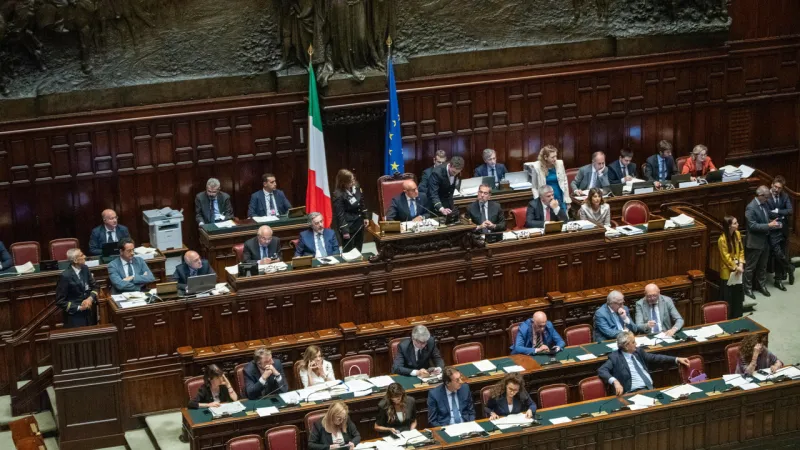
ROME - The governing Fratelli d'Italia party, led by Prime Minister Giorgia Meloni, experienced a significant internal division today as a parliamentary vote on specific preferences associated with General Roberto Vannacci failed to secure majority support, further fracturing the conservative coalition amidst an impending vote on a comprehensive reform package.
The unexpected rejection of these preferences underscored underlying tensions within the right-wing alliance, demonstrating that even Meloni's formidable leadership does not guarantee monolithic consensus on all legislative matters. The outcome highlights the delicate balance required to maintain cohesion among diverse ideological currents within the ruling bloc.
General Roberto Vannacci, a controversial figure known for his outspoken and often provocative views, has recently emerged as a significant, albeit polarizing, voice within Italian conservative circles. His political ascendancy, marked by a bestselling book and public statements on national identity and social issues, has simultaneously galvanized supporters and alienated critics.
Despite the immediate parliamentary setback, the government quickly reiterated its commitment to pressing forward with its legislative agenda. Sources close to Palazzo Chigi indicated that the administration remains determined to navigate current challenges and advance its key policy initiatives, emphasizing stability.
Opposition leader Elly Schlein, head of the Democratic Party, wasted no time in seizing upon the government's internal strife. Schlein launched a pointed attack on Prime Minister Meloni, criticizing what she characterized as a lack of cohesive governance and an inability to control her own party's direction.
The parliamentary action comes ahead of a crucial vote on an extensive reform package, the specifics of which are currently under intense debate. This broader reform is viewed as a cornerstone of the Meloni administration's mandate, making the internal dissent over Vannacci's preferences a particularly ill-timed development for the government.
Such internal rifts are not unprecedented in the often-volatile landscape of Italian politics, where coalition governments frequently grapple with competing interests and ideological differences among their constituent parties. Analysts suggest this episode is a stark reminder of the complexities inherent in governing Italy.
The failed vote presents Prime Minister Meloni with a renewed challenge to assert her authority and restore unity within her party and the broader coalition. Her ability to rally support for the upcoming comprehensive reform will serve as a critical test of her political acumen and the resilience of her government.
Public discourse around the vote has been vibrant, with commentators debating the implications for both Fratelli d'Italia's internal dynamics and the future direction of the Italian right. Many are watching closely to see how the government will mend its internal divisions.
The incident echoes previous periods of strain for the Italian government, which has often faced parliamentary hurdles and internal dissent. Despite such challenges, the administration has consistently affirmed its resolve to complete its term, as evidenced by earlier reports such as Italian Government Defies Setback, Vows to Complete Term.
Moreover, the Meloni government has also contended with other high-profile political and legal cases involving its members. For instance, the ongoing situation surrounding Italian Minister Santanche Poised for Trial Over Bankruptcy, State Fraud has also tested the coalition's resilience and public image.
Vannacci's appeal stems from a segment of the electorate drawn to his unvarnished critique of what he perceives as prevailing progressive narratives. His electoral potential and influence within the broader conservative movement are subjects of intense speculation ahead of future elections.
The timing of this internal discord is particularly sensitive, occurring within a broader European political climate characterized by a strengthening of right-wing movements. Italy's domestic political stability has wider implications for the European Union.
Prime Minister Meloni has adeptly navigated a complex political landscape since taking office, balancing her party's nationalist roots with the demands of European cooperation. This latest internal disagreement adds another layer to her challenging leadership role.
Looking ahead, the focus shifts to the parliamentary maneuvers required to ensure the passage of the pending reforms. Political observers anticipate intense negotiations and potentially strategic concessions as the government seeks to consolidate its position and project an image of unwavering resolve.
The outcome of the Vannacci preferences vote, while not signaling an immediate collapse, certainly underscores the persistent challenges inherent in managing a multi-faceted governing coalition. It serves as a potent reminder that political power in Italy is often contingent upon continuous negotiation and compromise, even within a dominant party.