 Edward DP Situmorang
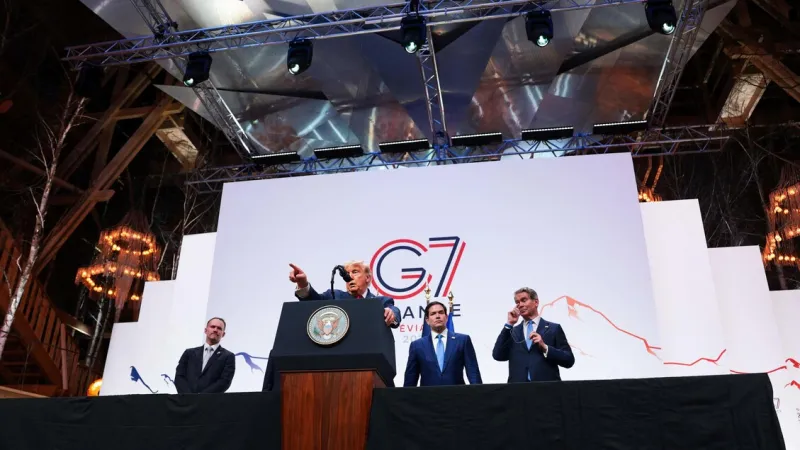
President Donald Trump, speaking after the recent G7 summit, declared the international gathering a "great success" and announced that a new agreement with Iran could be signed within days, possibly "tomorrow or Friday." This declaration was tempered by a stern warning that "Tehran respect its commitments or new bombs" would follow.
The summit, which brought together leaders from the worlds leading economies, saw allies rediscover a common language on pressing global issues. Discussions ranged from the volatile Strait of Hormuz to the ongoing conflict in Ukraine.
Leaders engaged in intense diplomatic exchanges, fostering a renewed sense of consensus on critical geopolitical matters. The spirit of cooperation underscored the collective resolve to address shared threats and challenges.
The President's announcement regarding an impending Iran agreement has heightened anticipation in diplomatic circles. This swift movement follows weeks of intense negotiations and speculation about the future of relations with Tehran.
This development echoes earlier discussions where President Trump foreshadowed a swift Iran agreement signing, as reported previously. Readers can review further context here: Trump Foreshadows Swift Iran Agreement Signing in Switzerland.
The explicit threat of "new bombs" if Tehran fails to honor its future commitments marks a significant escalation in rhetoric. This uncompromising stance signals a zero-tolerance policy from the White House regarding Iranian compliance.
President Trump has previously issued robust warnings to Iran regarding its actions and nuclear ambitions. Earlier reports highlighted instances where Trump Threatens Iran Strikes As 14-Point Deal Details Emerge, underscoring a consistent hardline approach.
The mention of Hormuz underscores ongoing concerns about maritime security and regional stability in the Persian Gulf, an area critical for global oil supply. The renewed common language among allies suggests a unified approach to deterring aggression in the region.
Beyond the Middle East, the G7 leaders also found common ground on the Ukrainian crisis, signaling sustained international support for Kyiv and a united front against external aggression. This broad consensus reflects a renewed vigor in multilateral diplomacy.
While specific details of the pending Iran agreement remain undisclosed, observers anticipate it will address various aspects of Iran's nuclear program, ballistic missile development, and regional influence. The immediacy of the proposed signing suggests a culmination of extensive diplomatic efforts.
A successful Iran agreement could significantly reshape the geopolitical landscape, potentially de-escalating tensions while establishing new parameters for Iran's conduct on the international stage. Conversely, any failure to adhere to the accord could lead to severe consequences.
The G7 summit underscored a commitment among allied nations to confront complex global issues with a coordinated strategy. The consensus reached on crucial matters like the Middle East and Eastern Europe signifies a strong, unified diplomatic posture.
The coming days will be crucial as the world awaits the formal signing of the Iran agreement. The international community will closely monitor Tehran's response and any subsequent developments following the President's announcement.
President Trump's declaration consolidates a strategic approach that blends assertive diplomacy with clear red lines, aiming to secure agreements that protect global interests while maintaining national security. The emphasis remains on verifiable commitments and accountability from Tehran.