 Dorry Archiles
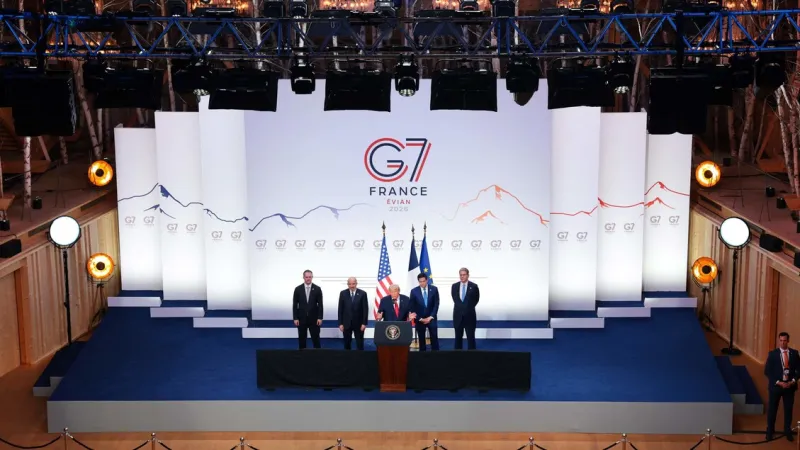
WASHINGTON, D.C. — President Donald Trump today announced the imminent signing of a pivotal agreement with Iran, suggesting the landmark event could occur as early as “tomorrow or Friday.” The declaration follows confirmation from the Swiss government that an in-person signing ceremony is slated for Friday in Lucerne, Switzerland, signaling a potential diplomatic breakthrough in long-strained relations.
President Trump conveyed the sense of urgency and progress during a White House briefing, emphasizing the advanced stage of negotiations. His remarks underscore a significant shift in the administration's posture toward Tehran, moving from a period of heightened tension to the cusp of a formal diplomatic accord.
The Swiss Federal Department of Foreign Affairs, acting as a crucial intermediary, had previously indicated that a ceremonial signing would take place on Friday. Switzerland has often served as a neutral facilitator in sensitive international discussions, providing a discreet venue for high-stakes diplomacy between nations lacking formal ties.
This prospective Iran agreement marks a dramatic turn from the previous Joint Comprehensive Plan of Action (JCPOA), which President Trump famously withdrew the United States from years ago. That withdrawal led to the re-imposition of stringent sanctions and a subsequent escalation of regional instability.
While details of the new Iran agreement remain under wraps, observers anticipate it will address key concerns often raised by Washington, including Iran's nuclear program, ballistic missile development, and its activities in the Middle East. Previous discussions and proposals, such as those that led to a reported 14-point deal, indicate the complexity and breadth of issues at play.
The diplomatic overture comes amidst persistent global efforts to de-escalate tensions in a volatile region. A successful signing of this Iran agreement could usher in a new era of stability, potentially reshaping geopolitical alliances and economic considerations across the Persian Gulf.
Skeptics, however, recall past challenges in solidifying long-term commitments with Tehran. The memory of previous agreements, including one where a leaked Iran deal reportedly revealed advantages for Tehran, casts a shadow for some who demand robust enforcement mechanisms and verifiable compliance from Iran.
The decision to hold the signing in Lucerne further highlights the international community's investment in securing peace. The scenic Swiss city offers a fitting backdrop for what is hoped to be a lasting and meaningful resolution to one of the world's most protracted diplomatic challenges.
For President Trump, securing such an agreement would represent a significant foreign policy achievement during his current term. It would allow him to claim success in forging a different, presumably more robust, pact than his predecessors.
The anticipation surrounding the announcement is palpable among international policy circles. World leaders will be closely monitoring the developments in Switzerland, assessing the implications for their own national security interests and regional stability.
The rapid progression from speculation to the brink of a formal signing reflects intensive, behind-the-scenes negotiations that have likely spanned months. The precise terms of the new Iran agreement are expected to be unveiled either at the signing or shortly thereafter, providing clarity on the path forward.
This critical diplomatic push aims to prevent further nuclear proliferation and to rein in destabilizing actions, aligning with broader international security objectives. The global community holds its breath, hopeful that the upcoming ceremony will indeed herald a period of reduced friction and increased cooperation.
The focus now shifts to Lucerne, where the world awaits the precise moment when the pens meet paper, potentially reshaping the future of the Middle East and global diplomacy.