 Robert Andrison
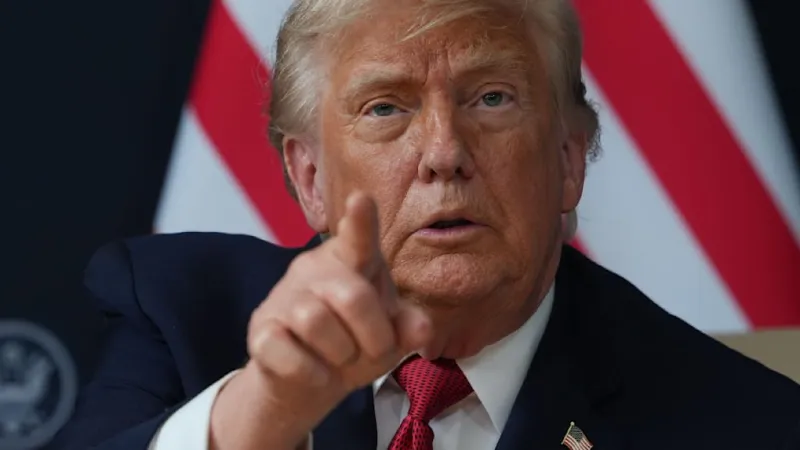
WASHINGTON – President Donald Trump has issued new threats of military action against Iran, escalating tensions after US media outlets published what they claim to be details of a 14-point preliminary agreement between Washington and Tehran. The White House, meanwhile, is reportedly revising several crucial aspects of the purported accord, fueling speculation and concern across diplomatic circles worldwide.
The alleged document, first brought to light by prominent American news organizations, outlines a series of concessions and commitments from both the United States and Iran, purportedly aimed at de-escalating nuclear proliferation and regional proxy conflicts. Its public emergence immediately cast a shadow over the delicate diplomatic efforts underway.
President Trump's latest warnings signify a renewed hardline stance, reminiscent of past periods of heightened confrontation with the Islamic Republic. His administration has consistently maintained a robust approach to Iranian foreign policy, often prioritizing pressure tactics over prolonged negotiations.
Sources within the administration, speaking on background, indicated that the published 14-point plan was merely a working draft, subject to extensive modifications. They emphasized that no final agreement had been reached and that the document did not reflect the White House's current position on several key issues.
However, the public revelation of the document has created significant diplomatic fallout, prompting concerns that it could either derail ongoing talks or expose vulnerabilities in the negotiating positions of both nations. International observers are closely monitoring the developments.
One particularly contentious point reportedly contained within the leaked document involves specific sanctions relief mechanisms for Iran, alongside provisions for international monitoring of its nuclear facilities. The nuances of these clauses are now under intense scrutiny.
The timing of this disclosure is critical, occurring amidst a period of heightened geopolitical instability in the Middle East. Analysts suggest that the White House's rapid revision of the plan could be an attempt to manage the narrative and reaffirm its negotiating strength.
President Trump stated, without elaboration, that "Iran knows what will happen if they do not comply." This cryptic declaration has been interpreted by many as a clear warning of potential military repercussions should the diplomatic path fail.
The veracity of the 14-point plan as a definitive preliminary agreement remains unconfirmed by official government channels. Nevertheless, its detailed nature suggests it originated from sensitive discussions, whether authorized for release or not. The information aligns with prior reports. For more insights on this matter, see the related article: Leaked Iran Deal Reveals Tehrans Advantage, Undermining Trumps Claimed Victory.
Diplomats from allied nations have expressed a mix of caution and concern, urging both sides to de-escalate rhetoric and pursue a stable resolution. The European Union, in particular, has consistently advocated for a diplomatic solution to the Iranian nuclear dossier.
This latest episode underscores the volatile nature of US-Iran relations, which have been characterized by cycles of confrontation and tentative engagement. The current administration has repeatedly signaled its intention to prevent Iran from developing nuclear weapons capabilities.
The specific points under revision by the White House reportedly pertain to timelines for compliance, the extent of verifiable concessions from Tehran, and the mechanisms for addressing Iran's ballistic missile program. These are areas historically challenging to resolve.
Experts on international law and nuclear disarmament have highlighted the need for transparency in such high-stakes negotiations. They argue that leaks, while sometimes illuminating, can also complicate the path to a durable accord.
The incident has also raised questions regarding information security within the US government, prompting an internal review to determine how such sensitive documents might have found their way into public circulation.
Ultimately, the interplay between the leaked document, the White House's revisions, and President Trump's assertive warnings paints a complex picture of ongoing, high-stakes diplomacy with Iran. The coming weeks will likely reveal the true impact of these developments on the future of regional stability.