 Stefani Rindus
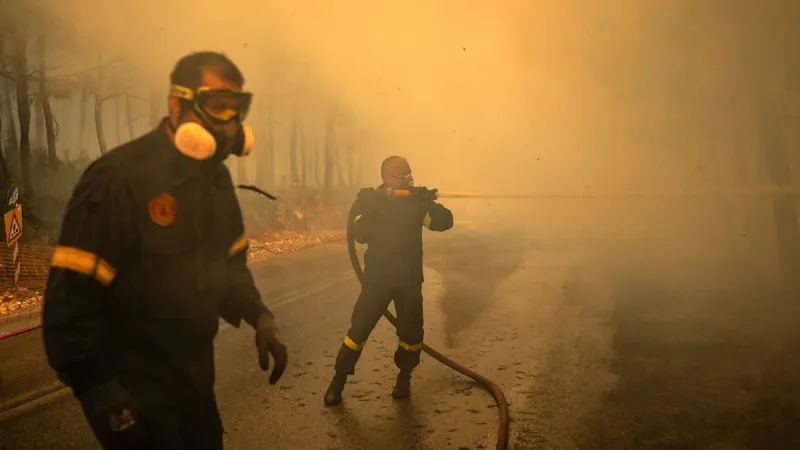
Hundreds of firefighters are intensely battling a rapidly escalating wildfire west of Athens, Greece, as powerful winds propel the inferno, reportedly incinerating numerous homes in the coastal community of Porto Germeno and deepening the regions perennial struggle with summer blazes. The situation is precarious, with emergency services stretched thin against the relentless spread.
The conflagration, which erupted recently, has swiftly grown beyond initial containment efforts. Approximately 500 firefighters, supported by ground vehicles and aerial assets, are deployed in a desperate attempt to encircle the rapidly expanding fire front. Their mission is made increasingly arduous by the strong winds sweeping across the landscape, fanning the flames and creating unpredictable shifts in direction.
In the immediate vicinity of Porto Germeno, reports indicate significant structural damage, with residents witnessing their properties succumbing to the intense heat. While official damage assessments are pending, the destruction of multiple residences underscores the ferocity of the blaze and the profound human toll exacted on local communities. Many residents have been forced to evacuate, leaving behind their homes and livelihoods.
This latest inferno exacerbates an already dire situation across Greece, a nation frequently besieged by devastating wildfires during its hot, dry summer months. New outbreaks of forest fires are placing immense pressure on national emergency resources, highlighting the urgent need for enhanced preventative measures and rapid response capabilities in a climate increasingly prone to extreme weather events.
The rugged terrain characteristic of the region west of Athens presents formidable challenges for ground crews. Steep slopes and dense vegetation act as natural fuel, allowing the fire to gain strength and momentum. The combination of high temperatures and arid conditions creates an environment ripe for rapid combustion and widespread devastation.
Firefighting commanders emphasize the dynamic nature of the battle, with strategies constantly adapting to the changing wind patterns and fire behavior. The primary objective remains the protection of human life and critical infrastructure, even as containment proves elusive in several key sectors. Authorities remain vigilant for potential evacuation orders in adjacent communities should the wildfire continue its unhindered advance.
Beyond the immediate threat to life and property, these recurring wildfires inflict significant economic damage. Agricultural lands, livestock, and vital ecological systems suffer irreparable harm. The long-term recovery costs, including reforestation and rebuilding infrastructure, place a substantial burden on the national economy, often impacting tourism, a cornerstone of the Greek economy.
The Greek government has activated its full emergency protocol, mobilizing all available national resources. While no international assistance has been formally requested yet, the escalating crisis may prompt calls for European Union solidarity and support, leveraging shared firefighting assets and expertise to bolster local efforts.
Ecologically, the destruction of extensive forest areas near Athens represents a severe blow to local biodiversity. Habitats are annihilated, and wildlife populations face immediate threats from the flames and subsequent displacement. The loss of tree cover also contributes to soil erosion and affects local climate patterns, creating a cycle of environmental degradation.
As hundreds of personnel persevere through grueling conditions, the broader implications for Greece's environmental future come into sharp focus. The frequency and intensity of these wildfires serve as a stark reminder of the ongoing climate crisis and its tangible impact on vulnerable Mediterranean ecosystems and communities. The nation anticipates a protracted period of recovery and reconstruction once the fires are finally quelled.